
The Short Answer
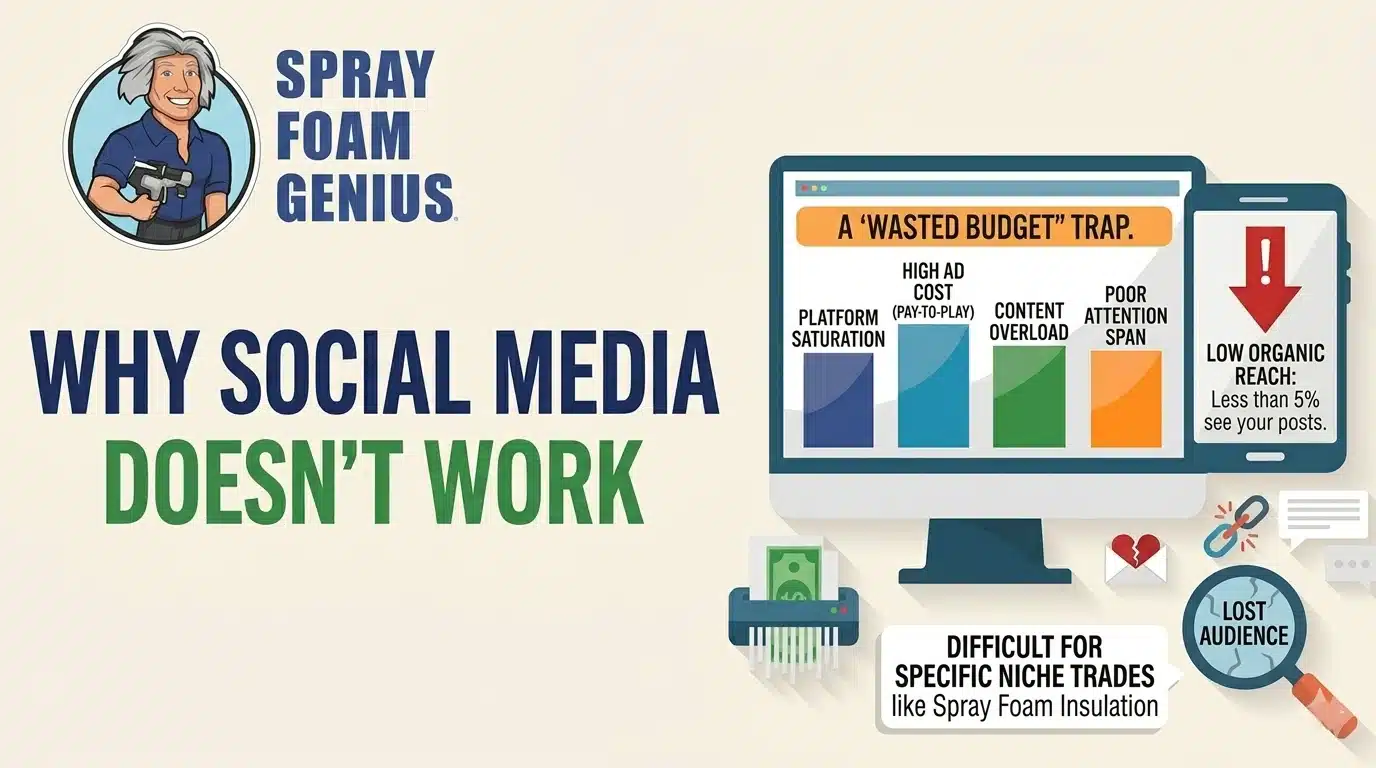
Most insulation companies are disappointed with social media because it attracts the wrong kind of attention. Likes and shares from people who are not planning to insulate are not leads. Facebook and Instagram are good places to build trust and show your work, but for a high-ticket local service, they usually work best as support for search, reviews, referrals, and follow-up, not as the main source of new jobs.
That does not mean you should delete your pages. Homeowners often check them before they call. It means you should know what job social media can realistically do for you and put your main effort where buyers are already looking for someone to hire.
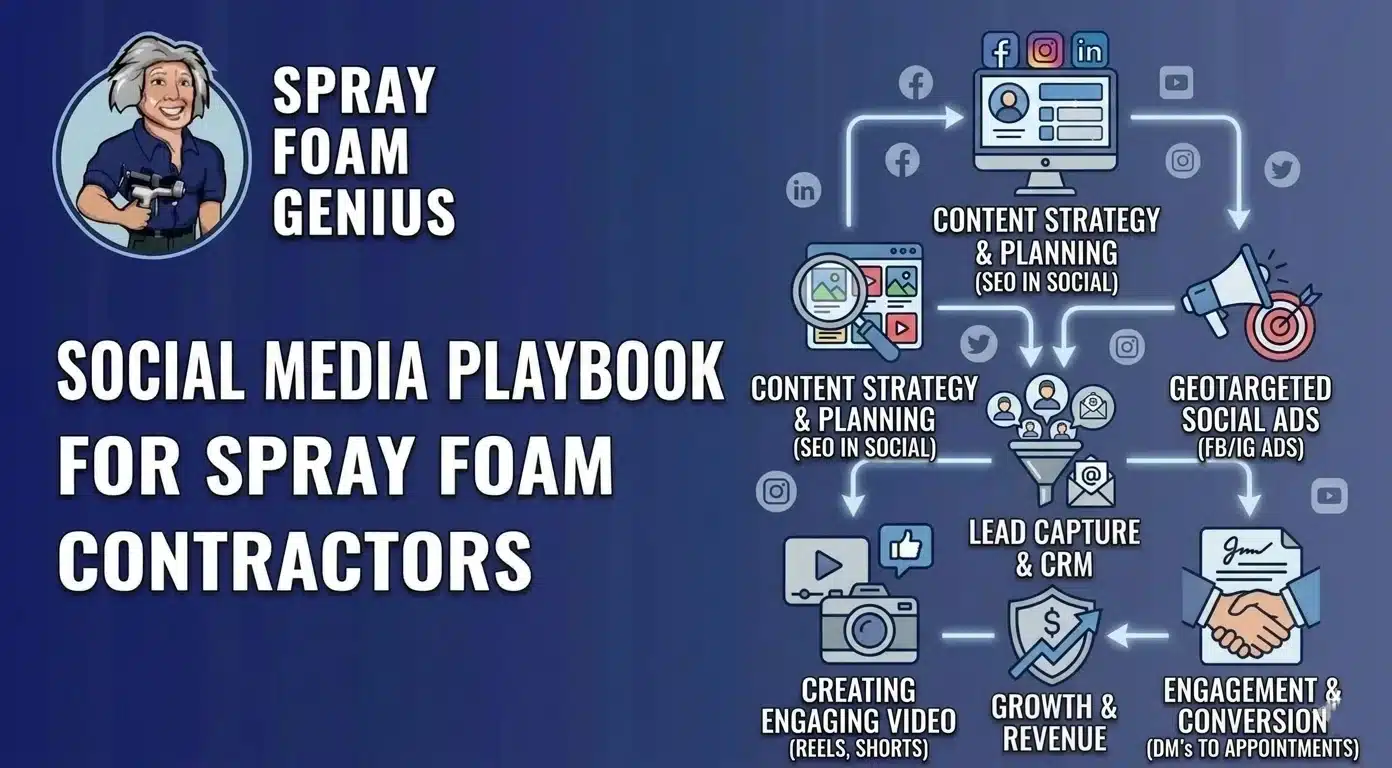
Related reading: The Social Media Playbook for Spray Foam Contractors
Why Social Media Falls Short as a Lead Source
People are scrolling, not shopping
Someone who searches Google for attic insulation or spray foam contractors near them has a problem and wants it fixed. Someone scrolling Facebook is there to see friends, news, and entertainment. Your post may get a like, but the person is rarely ready to book. High engagement with few inquiries is common.
Generic posts do not prompt a call
Insulation is technical, local, and often a considered purchase. Posts about eco-friendly insulation or winter savings tips may get polite reactions, but they rarely prompt an inquiry unless they speak to a specific problem, a specific place, and a clear next step.
It is easy to treat it like a billboard
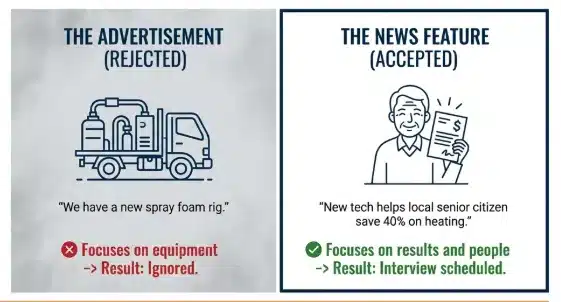
Posts that say best insulation in town or call us today give people no reason to care. Social platforms reward content that informs, shows something interesting, or starts a conversation. Constant sales messages usually get ignored.
It is not connected to the rest of your marketing
Posts that do not link to a useful page, a call button, or a lead form leave interest with nowhere to go. If social media runs on its own, with no tracking and no follow-up, you will never know whether it produces work.
It does not fix a lead source problem
Some contractors turn to social media after being burned by shared leads that were sold to several companies at once. Social media does not solve that on its own, but building your own presence reduces the need for them. See our guide on high-quality leads versus cheap leads for the trade-offs.
Why Your Posts Get No Engagement
If you post and hear nothing back, the usual causes are fixable:
- Posts are mostly promotions. People respond to help, curiosity, and proof, not repeated sales pitches.
- Posts have no image or video. Insulation is a visual transformation business, and photos from real jobs stand out.
- Posts talk about products instead of problems. Homeowners care about a cold room, high energy bills, drafts, or a damp crawl space, not about technical terms.
- There is no plan, so posts are random, irregular, and have no clear audience.
- There is no call to action, so interested people do not know what to do next.
- Nobody replies. Unanswered comments and messages tell people the page is not active.
A simple post formula
Use five parts: a hook that names a homeowner problem, a short explanation of the cause, your solution, proof such as a photo or video from a real job, and a call to action. For example: are your upstairs rooms always hotter than the rest of the house? This attic was losing conditioned air until the space was sealed and insulated. Here is what it looked like before and after. Message us to ask whether your attic is a candidate.
Avoid promising a specific savings figure unless you can show where it came from. Use plain language, real photos, and a person from your crew in the frame when you can. For more ideas, see our social media playbook for spray foam contractors.
What Social Media Is Good For
Used with realistic expectations, social media does a few things well:
- Shows proof. Before-and-after photos, short process videos, and crew introductions help a stranger feel comfortable hiring you.
- Backs up your reputation. Sharing reviews and testimonials supports what people find on Google. Our guide on using social proof to build credibility covers this in more depth.
- Keeps you visible locally between jobs, through community posts, local groups, and neighborhood tags.
- Supports ads and retargeting, so people who visited your website see a reminder.
- Gives you a place to answer questions and be responsive.
Think of it as a trust amplifier. It helps customers choose you after they find you, rather than finding you in the first place.
What Usually Works Better for Leads
Local search and your Google Business Profile
Homeowners searching for a contractor near them have high intent. Claim and verify your Google Business Profile, keep services and hours accurate, add real photos, and ask for reviews. Google says that more reviews and positive ratings can help a business's local ranking, per Google's guidance on improving local ranking. Pair that with a website that has pages for each service and area you cover.
Paid search
Google Ads can put you in front of people actively searching for your services in the areas you serve. Use service and location keywords, track calls and form fills, and send traffic to pages built to convert. See our Google Ads for spray foam contractors page.
Referrals and partnerships
Past customers, builders, HVAC companies, roofers, and energy auditors are trusted sources of work. A simple referral request and a few partner relationships can outperform cold audiences. We compare the two approaches in SEO versus referral marketing.
Helpful content on your own site
Pages and articles that answer cost, comparison, and how-it-works questions attract people who are researching a purchase. Case studies, before-and-after galleries, and honest explanations of open-cell versus closed-cell foam build trust where buyers are already looking.
Fast follow-up and tracking
A lead you answer quickly beats one that waits. Use a CRM or even a spreadsheet to track where each lead came from and which became jobs. Measure cost per lead, lead-to-job rate, average job value, and cost per customer. If your leads are coming in but not turning into jobs, read why your insulation company is not getting leads for the next place to look.
If You Keep Social Media, Keep It Light
A small, steady effort is better than a big one that fades. Here is a lean approach:
- Choose one or two platforms. Facebook and Instagram suit most residential contractors. Add LinkedIn if you pursue commercial work.
- Post a few times a week, as much as you can sustain. Consistency matters more than volume.
- Mix real job photos, short videos, a customer review, a helpful tip, and an occasional offer.
- Put your location, phone number, and website in every profile and keep them matching your Google profile.
- If you run ads, send them to a focused landing page and measure cost per lead and cost per job, not clicks.
- Reply to comments and messages quickly.
How to Handle Negative Comments
A critical comment can hurt more than a quiet page, and ignoring it usually makes it worse. A calm, quick response also shows future customers how you treat people when something goes wrong.
Pause, then respond with A.C.T.
Do not reply while angry. Read the comment twice and work out whether the issue is the product, the crew, the schedule, or the price. Then use a simple three-step approach:
- Acknowledge: recognize the person's frustration without arguing.
- Care: show that you take the concern seriously and that this is not how you want customers to feel.
- Take it offline: give a phone number or email so the details can be handled privately.
Tell real complaints from trolls
Real complaints usually include specifics, such as a date, the type of foam, or something about the crew. Vague, aggressive comments from new or empty profiles may be fake or spam. Ask for job details publicly and politely. If the person will not provide them and keeps posting abuse, stop replying. Delete only spam and abusive comments, not honest complaints, because deleting real feedback looks like hiding something.
Monitor and follow up
Turn on notifications for your pages and check your Google profile and social pages every day or two, so problems do not sit unanswered. Our reputation management guide goes deeper on reviews and responses.
Get a Free Marketing Audit
If you are not sure whether social media is earning its place in your marketing, we offer a free marketing audit. We will review your social pages, website, Google profile, and lead sources and tell you plainly where we would put effort first. Call 877-840-3626 (USA) or email info@sprayfoamgeniusmarketing.com.
Frequently Asked Questions
Can social media work for an insulation company?
Yes, mainly for credibility and visibility. It tends to support leads that come from search, reviews, referrals, and ads rather than replace them.
Should an insulation company be on social media at all?
Usually yes, in a lightweight way. Homeowners often look at your pages before calling, so a current page with real work builds trust. You do not need to be everywhere.
Which platform is best for insulation contractors?
Facebook is the usual starting point for homeowners. Instagram suits visual proof, YouTube suits longer educational videos, and LinkedIn suits commercial outreach.
What content gets the most engagement?
Real before-and-after photos, short videos of the work, customer testimonials, and plain-language answers to homeowner questions generally earn the best response.
Should insulation contractors advertise on Facebook or Instagram?
It can work as part of a plan, especially for retargeting and local offers, if you have a landing page, quick follow-up, and tracking. Do not expect social ads to replace search-based lead sources.
How should you respond to a bad review or comment?
Respond quickly and calmly, acknowledge the concern, and move the details offline. Do not argue in public. Delete only spam or abusive comments.
How do you tell whether social media is working?
Track calls, messages, and form fills that come from it, and ask new customers how they found you. Judge it by booked jobs and cost per job, not by likes.