When contractors talk about spray foam insulation, the conversation usually centers on energy savings and R-values. But there’s another compelling benefit that deserves attention: indoor air quality. As a spray foam contractor, understanding how your work directly impacts the health and comfort of your clients’ homes can be a powerful differentiator in a competitive market.
Indoor air quality has become a hot topic, especially as homeowners spend more time indoors and become increasingly aware of environmental health concerns. The Environmental Protection Agency estimates that indoor air can be two to five times more polluted than outdoor air. This is where properly installed spray foam insulation plays a crucial role in creating healthier living environments.
The Air Sealing Advantage
Unlike traditional insulation materials like fiberglass or cellulose, spray foam creates an airtight barrier that fundamentally changes how a building interacts with its environment. When you apply spray polyurethane foam, it expands to fill every crack, gap, and crevice, creating a continuous seal that prevents uncontrolled air infiltration.
This matters more than most homeowners realize. Those tiny gaps around windows, doors, electrical outlets, and wall penetrations aren’t just letting conditioned air escape—they’re allowing outdoor pollutants, allergens, and contaminants to enter. Pollen, dust, vehicle exhaust, pesticides, and industrial pollutants can all infiltrate through these pathways. By creating a comprehensive air barrier, spray foam significantly reduces the entry of these unwanted particles.
The air sealing capability of spray foam can reduce heating and cooling costs by up to 40 percent while simultaneously improving air quality. This dual benefit makes it an attractive option for homeowners focused on both efficiency and health.
Moisture Management and Mold Prevention
One of the most significant threats to indoor air quality is mold growth, and moisture control is your first line of defense. Spray foam insulation, particularly closed-cell formulations, acts as both an insulator and a vapor barrier, preventing moisture infiltration that can lead to mold, mildew, and structural damage.
When warm, humid air meets cold surfaces inside wall cavities, condensation occurs. This creates the perfect environment for mold spores to flourish. Closed-cell spray foam’s impermeability to water vapor prevents this condensation from forming, essentially eliminating one of the primary conditions mold needs to thrive.
For contractors working in humid climates or in homes with previous moisture issues, this property of spray foam is particularly valuable. By controlling humidity levels and preventing moisture accumulation, you’re not just insulating—you’re creating a healthier building envelope that protects occupants from respiratory irritants and allergens associated with mold growth.
Allergen and Pollutant Barrier
Beyond moisture control, spray foam serves as an effective barrier against common allergens that plague many homeowners. Pollen, dust mites, and outdoor pollutants that would typically enter through air leaks are blocked by the continuous seal that spray foam creates.
For clients with asthma, allergies, or other respiratory sensitivities, this benefit can be life-changing. The reduction in airborne irritants means fewer symptoms, better sleep quality, and an overall improvement in daily comfort. As a contractor, being able to articulate these health benefits alongside energy savings creates a more compelling value proposition.
The airtight seal also prevents pest infiltration, which contributes to better air quality by eliminating pest dander, droppings, and the chemicals often needed to control infestations. This creates a cleaner, more controlled indoor environment.
Proper Installation: The Critical Factor
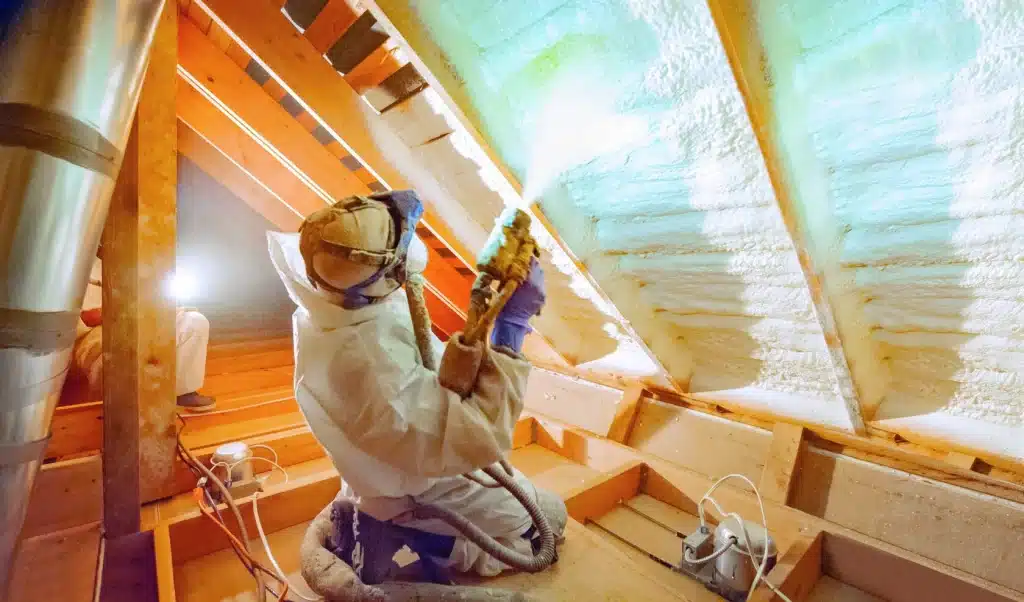
Here’s the reality that every professional contractor knows: spray foam insulation only improves indoor air quality when it’s properly installed. Improper mixing ratios, incorrect temperature during application, inadequate ventilation during curing, or rushing the process can lead to ongoing off-gassing and poor indoor air quality—the exact opposite of what you’re trying to achieve.
This is why working with trained, certified applicators is non-negotiable. The chemistry of spray foam requires precise conditions and expert application. When done right, the foam cures completely within 24 to 48 hours, and any VOC emissions dissipate quickly. When done incorrectly, homeowners may experience persistent odors and air quality issues that are difficult and expensive to remediate.
As contractors, emphasizing your training, certifications, and commitment to proper installation protocols isn’t just marketing—it’s a crucial part of delivering the health and efficiency benefits that spray foam promises.
Ventilation Remains Essential
While spray foam creates an excellent air barrier, it’s important to educate clients that this doesn’t eliminate the need for proper ventilation. In fact, because spray foam homes are so well-sealed, mechanical ventilation becomes more important, not less.
Energy recovery ventilators or heat recovery ventilators should be part of the conversation when you’re sealing a home with spray foam. These systems provide controlled fresh air exchange while maintaining energy efficiency, ensuring that the home breathes properly without sacrificing the air quality benefits you’ve worked to create.
Ready to Position Your Spray Foam Business as the Indoor Air Quality Expert?
Homeowners are more concerned about indoor air quality than ever before. They’re searching for solutions that protect their families’ health while reducing energy costs. But are they finding your business when they search online?
At Spray Foam Genius Marketing, we specialize in helping spray foam contractors dominate their local markets with proven digital marketing strategies that attract high-quality leads. We understand the technical aspects of your work and know how to communicate the health, comfort, and efficiency benefits that set professional contractors apart.
Get Started Today
USA: 877-840-FOAM
Canada: 844-741-FOAM
Email: [email protected]
Frequently Asked Questions
Does spray foam insulation release harmful chemicals after installation?
When properly installed and fully cured, spray foam insulation should not release harmful chemicals. The curing process typically takes 24 to 48 hours, after which any VOC emissions dissipate. However, improper installation can lead to ongoing off-gassing, which is why working with certified, experienced contractors is essential for both safety and performance.
How does spray foam prevent mold growth?
Spray foam prevents mold growth through two primary mechanisms: it creates an air barrier that reduces moisture infiltration, and closed-cell formulations act as a vapor barrier that prevents condensation within wall cavities. By eliminating the moisture that mold needs to grow, spray foam creates an inhospitable environment for mold spores.
Can spray foam help with asthma and allergies?
Yes, properly installed spray foam can significantly benefit people with asthma and allergies by creating an airtight seal that prevents outdoor allergens like pollen, dust, and pollutants from entering the home. This reduction in airborne irritants can lead to fewer symptoms and improved respiratory health for sensitive individuals.
Is there a difference between open-cell and closed-cell spray foam for air quality?
Both types improve air quality through air sealing, but closed-cell spray foam offers superior moisture control due to its vapor barrier properties. Closed-cell foam is impermeable to water, making it the better choice for moisture-prone areas or humid climates where mold prevention is a priority.
How long should homeowners wait before re-entering after spray foam application?
Homeowners should typically wait 24 to 48 hours after spray foam application before re-entering the space. This allows the foam to fully cure and any VOCs to dissipate. Proper ventilation during this period is crucial. Always follow the manufacturer’s recommendations and your local building codes for re-entry times.
Sources:
- Spray Polyurethane Foam Alliance – Indoor Air Quality
- U.S. Department of Energy – Air Sealing Your Home

- Best Practices for Spray Foam Insulation Website SEO - February 14, 2026
- Proven Email Marketing Tips for Spray Foam Insulation Contractors - February 14, 2026
- Creating a Content Strategy for Your Spray Foam Business: A Comprehensive Guide - October 29, 2025