
Spray foam insulation remains one of the most misunderstood building materials in the construction industry. From safety concerns to cost misconceptions, contractors face an uphill battle against persistent myths that cost them valuable projects. This article debunks five common spray foam myths with factual, research-backed information that helps contractors educate clients and close more deals with confidence.
The Cost of Misinformation in Your Sales Pipeline
As a spray foam contractor, you’ve likely lost deals to prospects who “heard somewhere” that spray foam is dangerous, toxic, or causes health problems. These myths don’t just damage your bottom line—they prevent homeowners and building owners from accessing one of the most effective insulation solutions available.
Understanding the facts behind these misconceptions isn’t just about winning arguments. It’s about positioning yourself as a trusted expert who can educate clients and provide real value beyond the installation itself.
Myth #1: Spray Foam Insulation Is Toxic and Unsafe

The Reality: When properly installed and fully cured, spray foam insulation is completely safe for occupied spaces. The confusion stems from the installation phase, when isocyanates and polyols react chemically to form the foam.
Professional-grade spray foam systems undergo rigorous testing and meet strict building codes and safety standards. According to the EPA and industry research, properly cured spray foam is inert and does not off-gas harmful chemicals. The key is proper installation by certified contractors who follow manufacturer guidelines for ventilation, curing time, and protective equipment.
The American Chemistry Council’s Center for the Polyurethanes Industry has published extensive research confirming spray foam’s safety profile when applied correctly. Problems arise from improper mixing ratios, inadequate ventilation during installation, or using low-quality products—all issues that certified, professional contractors avoid.
Myth #2: Spray Foam Costs Too Much Compared to Traditional Insulation
The Truth: While spray foam has a higher upfront cost per square foot than fiberglass batts, this comparison ignores the total value equation. Spray foam delivers superior R-value per inch, creates an air seal that traditional insulation cannot match, and lasts significantly longer without settling or degrading.
Energy savings alone typically offset the initial investment within 5-7 years for most residential applications. Spray foam reduces HVAC runtime, minimizes air infiltration, and can increase property values. For commercial applications, the air sealing properties reduce humidity control costs and protect against moisture-related structural damage.
Forward-thinking clients understand that lowest initial cost rarely equals best long-term value. Your job as a contractor is to frame the conversation around lifecycle cost and performance, not just installation price.
Struggling to communicate value to price-sensitive clients? Our team at Spray Foam Genius Marketing creates comparison guides, ROI calculators, and educational content that does the heavy lifting for you. Email [email protected] to learn more about our contractor marketing solutions.
Myth #3: Spray Foam Traps Moisture and Causes Mold

The Facts: This myth confuses cause and effect. Closed-cell spray foam is hydrophobic (water-resistant) and vapor-impermeable, making it an excellent moisture barrier. Open-cell spray foam is vapor-permeable but still resists water accumulation when properly installed.
Mold requires three conditions: moisture, organic material, and appropriate temperature. Spray foam itself is not a food source for mold. When mold appears in buildings with spray foam, it’s typically due to pre-existing moisture problems, improper building envelope design, or water intrusion from sources unrelated to the insulation.
In fact, spray foam often prevents mold by eliminating air leakage pathways that allow humid air to reach cold surfaces where condensation occurs. Building science research consistently shows that air sealing is one of the most effective mold prevention strategies.
Myth #4: Any Contractor Can Install Spray Foam Successfully
The Reality Check: This dangerous myth leads to project failures that damage the entire industry’s reputation. Professional spray foam installation requires specialized equipment, technical knowledge, ongoing training, and manufacturer certification.
Variables like ambient temperature, humidity, substrate conditions, mix ratios, and application technique all affect the final result. Improperly installed spray foam can fail to adhere, cure incorrectly, or underperform thermally. These failures then become the “evidence” that perpetuates other myths.
Certified contractors invest in proper training, calibrated equipment, and quality control processes that DIY applicators and untrained installers simply cannot match. Your certification and experience are valuable differentiators—make sure your marketing communicates this expertise.
Myth #5: Spray Foam Makes Buildings “Too Tight” and Causes Air Quality Issues
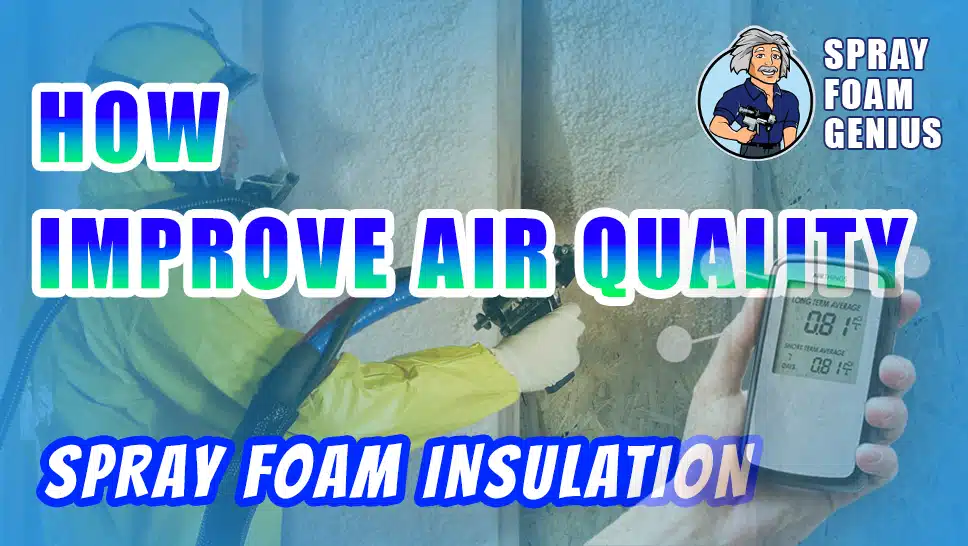
The Science: Modern building codes require mechanical ventilation in tightly sealed buildings—this isn’t a spray foam problem, it’s a building science requirement. The “buildings need to breathe” concept is outdated and contradicts current energy efficiency standards.
Controlled mechanical ventilation (like ERV or HRV systems) provides better indoor air quality than relying on random air leakage through walls and ceilings. Spray foam enables this controlled approach by eliminating uncontrolled infiltration while planned ventilation systems exchange stale indoor air with filtered outdoor air.
The ASHRAE standards for residential and commercial ventilation specifically address tight building envelopes and provide clear guidance for achieving both energy efficiency and excellent indoor air quality simultaneously.
Stop Losing Sales to Myths—Start Educating Your Market
Every objection based on misinformation is an opportunity to demonstrate expertise and build trust. But you can’t be everywhere at once, and you can’t personally educate every potential client before they call a competitor.
That’s where strategic content marketing becomes your sales tool. Educational blog posts, FAQ pages, video content, and local SEO ensure that when prospects research spray foam insulation in your service area, they find YOUR authoritative answers first.
Spray Foam Genius Marketing specializes in helping contractors dominate their local markets through expert SEO, content marketing, and conversion-optimized web design.
Ready to become the go-to spray foam authority in your market?
USA: 877-840-FOAM
Canada: 844-741-FOAM
Email: [email protected]
Contact Spray Foam Genius Marketing Today and discover how the right marketing partner can transform objections into opportunities and myths into closed deals.
Frequently Asked Questions
1. How long does spray foam need to cure before it’s safe?
Most professional-grade spray foam systems cure within 24 hours, though occupants should stay away during application and for the manufacturer-recommended time period (typically 24-48 hours). Proper ventilation during and after installation ensures complete curing. Always follow manufacturer specifications and local building codes for re-occupancy timing.
2. Can spray foam be installed in existing walls without demolition?
Yes, retrofit spray foam installation is possible using injection methods for closed-cell foam or drill-and-fill techniques. However, this requires specialized equipment and expertise. Open-cell foam typically requires more access. A professional assessment determines the best approach for existing structures based on wall construction, accessibility, and performance goals.
3. Does spray foam insulation qualify for energy efficiency rebates or tax credits?
In many jurisdictions, yes. Spray foam insulation often qualifies for federal tax credits, utility rebates, and state/provincial energy efficiency incentive programs. Eligibility depends on R-value achieved, the specific foam type, and local programs. Contractors should help clients research available incentives, as these can significantly offset installation costs.
4. What’s the realistic lifespan of spray foam insulation?
Properly installed closed-cell spray foam can last 80+ years without degrading, settling, or losing R-value. Open-cell foam has a similar lifespan when protected from water intrusion. Unlike fiberglass batts that compress over time or cellulose that settles, spray foam maintains its thermal performance throughout its life, often outlasting the building structure itself.
5. How do I verify a spray foam contractor is properly certified?
Ask for manufacturer-specific certifications from major foam system producers (BASF, Icynene, Demilec, etc.). Verify they carry proper insurance including completed operations coverage. Check for building code official certifications and industry affiliations like SPFA (Spray Polyurethane Foam Alliance). Request references and photos of recent projects, and verify they use professional-grade equipment, not DIY kits.
Source:
- EPA / Safer Choice — Potential Chemical Exposures from Spray Polyurethane Foam (SPF) — this discusses risks during application, curing, and exposure pathways.
- Johns Manville — Breaking down common myths around spray foam insulation.

- Best Practices for Spray Foam Insulation Website SEO - February 14, 2026
- Proven Email Marketing Tips for Spray Foam Insulation Contractors - February 14, 2026
- Creating a Content Strategy for Your Spray Foam Business: A Comprehensive Guide - October 29, 2025