
Direct Answer
Integrated marketing strategies are essential for spray foam insulation businesses because they ensure all marketing channels work together to deliver a consistent message, generate higher-quality leads, and improve conversion rates. Instead of relying on isolated tactics like only running ads or only doing SEO, an integrated approach connects SEO, paid ads, social media, email marketing, and local outreach into one coordinated system. This creates a seamless customer journey, builds trust faster, and significantly increases return on marketing investment. In a competitive home services industry where homeowners often compare multiple contractors, integrated marketing ensures your business stays visible, credible, and top-of-mind at every stage of the buying process.
To see how these channels work together in a structured system, explore this marketing guide for spray foam contractors.
TLDR
- Integrated marketing aligns SEO, PPC, social media, and offline channels into one consistent strategy.
- Spray foam businesses benefit from higher lead quality and lower cost per acquisition through multi-channel reinforcement.
- Consistent messaging across platforms increases brand trust and recognition by up to 80% (Forbes).
- Mapping the customer journey improves conversion rates by targeting homeowners at each decision stage (McKinsey).
- Local SEO combined with paid ads delivers faster visibility in competitive insulation markets.
- CRM systems and automation improve lead nurturing and reduce missed opportunities.
- Businesses using integrated campaigns outperform single-channel strategies in ROI and long-term growth.
Why Integrated Marketing Matters for Spray Foam Insulation Businesses
Spray foam insulation is a high-ticket, trust-driven service. Homeowners rarely make immediate decisions. They research, compare, read reviews, and often request multiple quotes before choosing a contractor. This is where integrated marketing becomes critical.
According to Harvard Business Review, customers interact with multiple touchpoints before making a purchase decision, often switching between search engines, social platforms, and review sites. If your marketing channels are disconnected, you risk losing leads during this journey.
For insulation contractors, this means:
- A Google ad might generate awareness
- A website builds credibility
- Reviews reinforce trust
- Email follow-ups close the sale
Without integration, these steps become fragmented, reducing effectiveness.
Core Components of an Integrated Marketing System
A strong integrated marketing strategy for spray foam insulation businesses includes multiple interconnected components:
1. Search Engine Optimization (SEO)
SEO ensures your business appears when homeowners search for terms like “spray foam insulation near me.”
- Focus on local keywords
- Optimize Google Business Profile
- Build service-area landing pages
2. Pay-Per-Click Advertising (PPC)
Google Ads provide immediate visibility for high-intent searches.
- Target “insulation contractor + city”
- Use call extensions and lead forms
- Retarget website visitors
3. Social Media Marketing
Platforms like Facebook and Instagram help build awareness and trust.
- Showcase before/after projects
- Share insulation education content
- Run local geo-targeted ads
4. Email Marketing & Automation
Email nurtures leads who are not ready to convert immediately.
- Follow-up sequences after quote requests
- Seasonal energy-saving tips
- Promotional offers
5. Reputation Management
Online reviews are critical for home services businesses.
- Request reviews after each job
- Respond to all feedback
- Use reviews in ads and landing pages
6. CRM Integration
A CRM system connects all channels into one system for tracking and conversion optimization.
According to McKinsey, companies that align customer data across channels improve marketing efficiency by up to 15–20%.
How Integrated Marketing Improves the Customer Journey
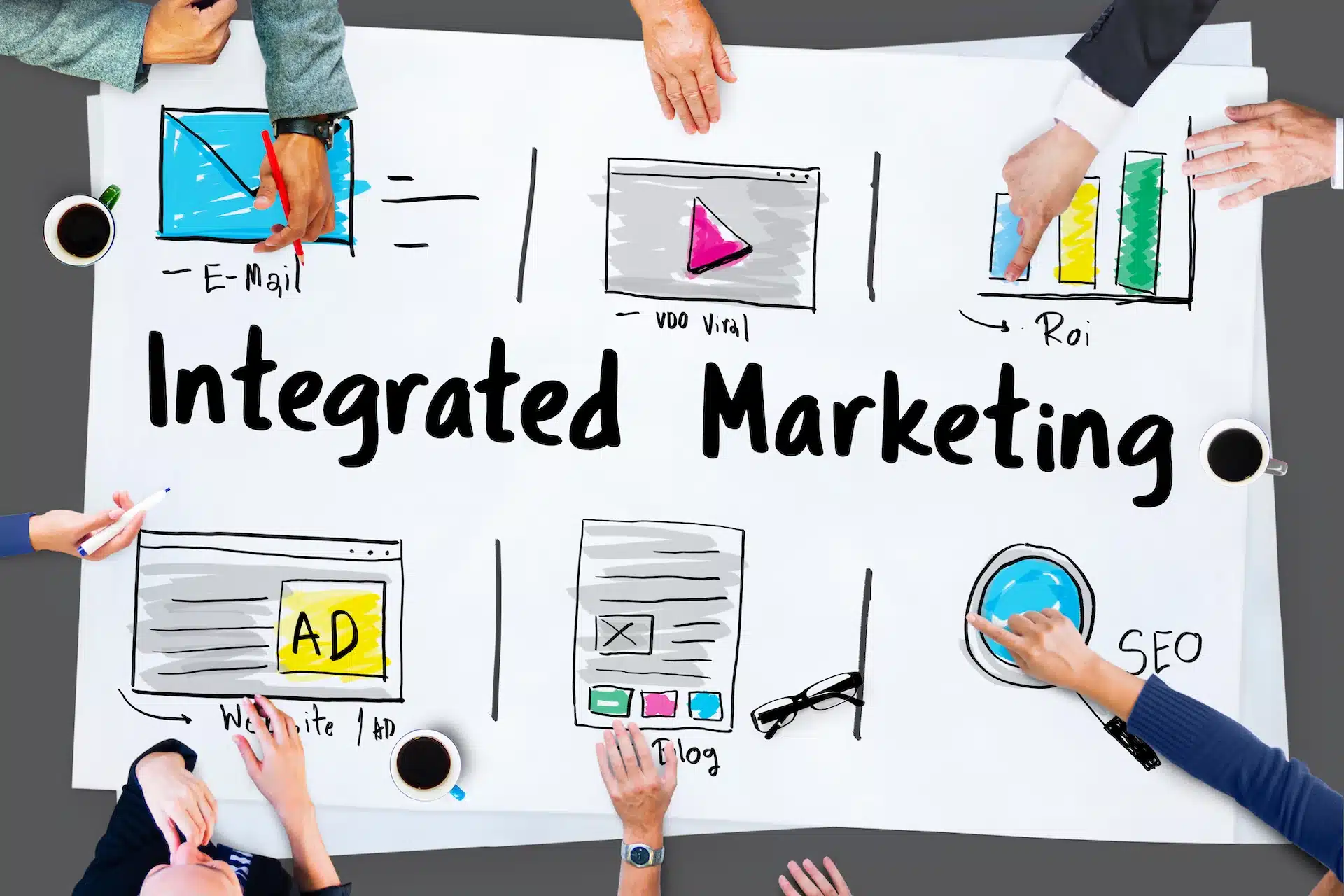
Homeowners typically go through three stages before hiring a spray foam contractor:
Awareness Stage
They realize there is a problem, such as high energy bills.
- SEO blogs
- Social media ads
- Educational videos
Consideration Stage
They compare contractors and solutions.
- Retargeting ads
- Case studies
- Reviews and testimonials
Decision Stage
They choose a contractor.
- PPC ads with strong offers
- Email follow-ups
- Direct calls
Integrated marketing ensures your business is present at every stage, not just one.
Silo vs Integrated Marketing Comparison
Businesses using integrated systems typically see stronger ROI because each channel reinforces the others instead of competing for attention.
Actionable Strategies for Spray Foam Insulation Businesses
1. Build a Unified Message
Your messaging should be consistent across all platforms.
Example:
- “Lower energy bills with professional spray foam insulation in your area”
2. Combine SEO and Paid Ads
Use SEO for long-term traffic and PPC for immediate leads.
- Target high-intent keywords
- Use landing pages optimized for conversions
3. Retarget Website Visitors
Most homeowners do not convert on the first visit.
- Use Facebook Pixel and Google remarketing
- Show testimonials and offers
4. Leverage Local SEO
Local search drives most insulation leads.
- Get listed in local directories
- Encourage customer reviews
5. Use Video Marketing
Video builds trust faster than text.
- Show the insulation installation process
- Share customer testimonials
6. Automate Follow-Ups
Lead response time matters.
According to Forbes, responding within 5 minutes increases conversion likelihood significantly.
Industry Data That Supports Integrated Marketing
- Multi-channel marketing increases purchase rates by 287% compared to single-channel campaigns (Think with Google).
- 70% of consumers use multiple channels before making a purchase decision (Wikipedia – Integrated Marketing Communications.
- Businesses with strong CRM usage see up to 29% increase in sales productivity (SBA).
- Consistent brand presentation across channels increases revenue by up to 23% (Forbes).
These statistics show why integration is not optional but essential.
Implementation Roadmap for Contractors
Step 1: Audit Existing Marketing
- Identify gaps in SEO, ads, and branding
- Evaluate lead sources
Step 2: Build Core Digital Assets
- High-converting website
- Google Business Profile
- Landing pages
Step 3: Launch Multi-Channel Campaigns
- Combine PPC and SEO
- Run social media ads
Step 4: Implement CRM and Automation
- Track all leads
- Set automated follow-ups
Step 5: Optimize Continuously
- Analyze conversion data
- Adjust campaigns monthly
Transform Your Spray Foam Business with Integrated Marketing
A disconnected marketing approach leads to inconsistent leads and wasted ad spend. Integrated marketing ensures every channel works together to generate high-quality insulation leads consistently. By aligning SEO, paid ads, social media, and automation, your business becomes more visible, more trusted, and more profitable.
If you are ready to grow your spray foam insulation business with a proven integrated marketing system, expert support from Spray Foam Genius Marketing is available to help you build, optimize, and scale your lead generation engine.
USA: 877-840-FOAMCanada: 844-741-FOAMEmail: info@sprayfoamgeniusmarketing.com
A structured, integrated marketing system is the difference between inconsistent jobs and predictable business growth.
Frequently Asked Questions
1. Why is integrated marketing important for spray foam contractors?
It ensures consistent messaging across all platforms, which builds trust and improves lead conversion rates. Homeowners often interact with multiple channels before hiring a contractor.
2. How quickly can results be seen from integrated marketing?
PPC and social ads can generate leads within days, while SEO typically takes 3–6 months. Combined, they create both immediate and long-term growth.
3. Do small insulation companies need CRM systems?
Yes. Even small contractors benefit from CRMs because they help track leads, automate follow-ups, and reduce missed opportunities.
4. What is the biggest mistake insulation companies make in marketing?
The biggest mistake is running disconnected campaigns, such as using ads without follow-up systems or SEO without conversion tracking.
5. How does local SEO help spray foam businesses?
Local SEO helps your business appear in “near me” searches, which are high-intent leads actively looking for insulation services in your area.
Sources
- https://hbr.org/2016/01/the-new-path-to-purchase
- https://www.mckinsey.com/capabilities/growth-marketing-and-sales/our-insights/the-consumer-decision-journey
- https://www.thinkwithgoogle.com
- https://en.wikipedia.org/wiki/Integrated_marketing_communications
- https://www.forbes.com
- https://www.sba.gov
- https://neilpatel.com/what-is-inbound-marketing/