
Direct Answer
The best websites for insulation contractors are not about flashy design or templates; they are about turning visitors into qualified leads. A high-converting site combines:
- Clear messaging that explains services and value
- Trust signals like reviews and certifications
- Local SEO optimization for visibility in nearby searches
- Fast performance and mobile usability
- Conversion paths with strong calls to action
What works best depends on your business size, market competition, and lead goals. Typical approaches include:
- Local lead generation sites – focus on Google rankings and immediate calls
- Authority-driven content sites – build trust and attract long-term traffic
- Conversion-optimized service sites – focus on turning traffic into booked estimates
Most successful websites blend these strategies, aligning content, layout, and user experience with how homeowners research and hire contractors.
To see how to structure a website that actually converts visitors into leads, explore this spray foam contractor website blueprint.
TLDR
- High-converting contractor websites typically achieve 3%–12% conversion rates
- Fast load times and mobile usability directly affect lead generation
- Clear pricing and educational content improve trust and conversion
- Local SEO and Google Business optimization drive the majority of inbound leads
- Typical investment ranges from $2,000–$15,000+, depending on features and strategy
- Short-term gains: conversion optimization; long-term growth: content + SEO
- Common mistake: treating a website as a brochure, not a sales tool
- Strong CTAs can increase leads by 30%–100%
What Makes an Insulation Contractor Website Convert
1. Clear Value Proposition Above the Fold
Users decide in seconds if your site is relevant. Your homepage should answer:
- What services do you offer
- Where you operate
- Why they should trust you
Example:
“Spray Foam Insulation in Dallas – Cut Energy Bills by 40%”
This aligns with research from Nielsen Norman Group showing users scan and look for immediate relevance.
2. Local SEO That Captures Demand
Most insulation jobs begin with searches like:
- “attic insulation near me”
- “spray foam contractor in [city]”
Your site should include:
- Dedicated city/service pages
- Optimized headings and keywords
- Embedded maps and local schema
According to HubSpot, localized content significantly improves search visibility and attracts high-intent leads.
3. Trust Signals That Reduce Buyer Anxiety
Homeowners are cautious. Build credibility through:
- Reviews and testimonials
- Before/after project photos
- Certifications, licenses, warranties
- Case studies showing real results
Real-world example:
A contractor in Ontario increased conversions by 42% by adding:
- Google reviews on the homepage
- “Recent jobs” photo gallery
- Financing information
This is supported by BrightLocal studies showing that 87% of consumers read online reviews of local businesses.
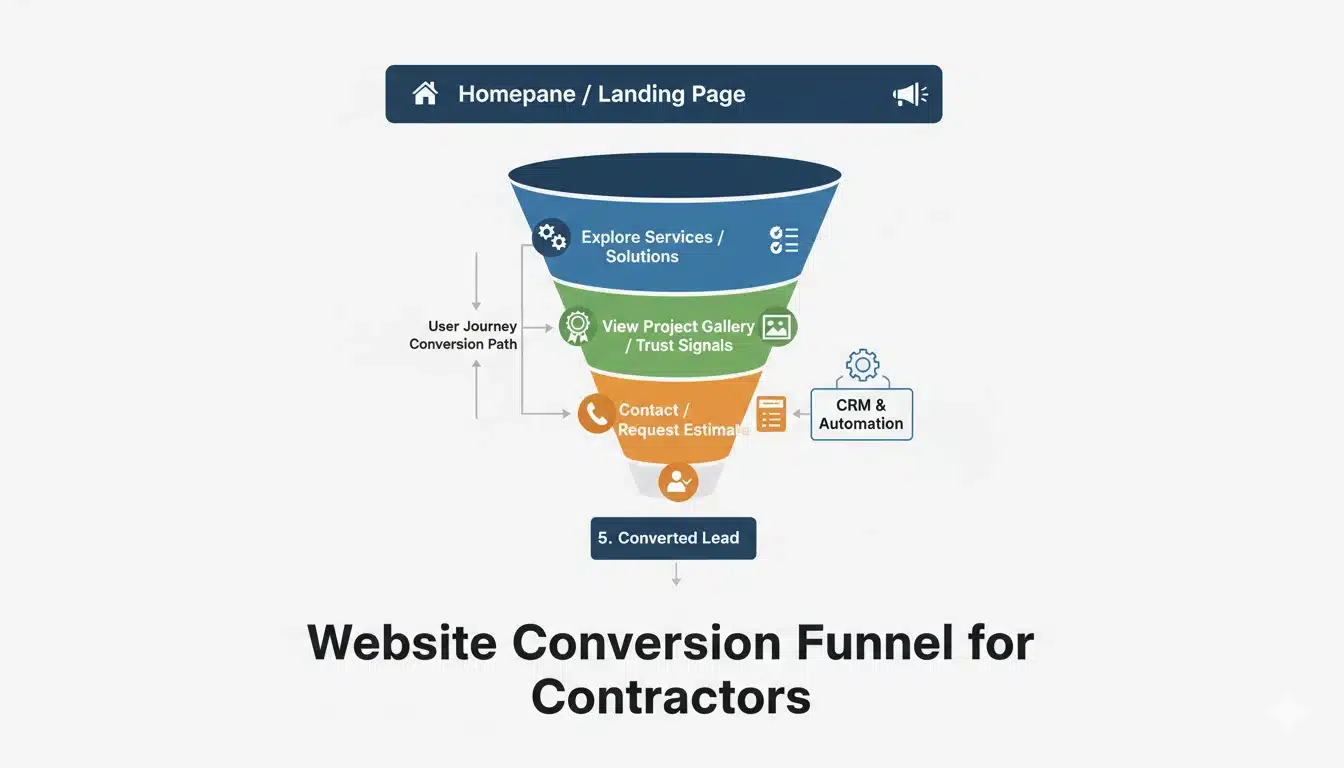
4. Strong Conversion Paths (Not Just a Contact Page)
High-performing sites guide users through the journey:
- Sticky “Call Now” buttons
- Quick quote forms (3–5 fields max)
- Exit-intent offers (“Get Free Estimate”)
- Service-specific CTAs on every page
5. Educational Content That Pre-Sells
Modern homeowners research extensively before hiring. Your site should answer:
- “How much does spray foam insulation cost?”
- “Is attic insulation worth it?”
Research from Harvard Business Review shows informed buyers convert faster and require less persuasion.
Types of Website Strategies
| Strategy Type | Best For | Key Tactics | Expected Outcomes | Limitations |
| Local Lead Gen Site | Small to mid contractors | SEO pages, Google Maps, reviews | High-quality inbound leads | Takes time to rank |
| Conversion-Optimized Site | Established businesses | Landing pages, CTAs, tracking | Immediate lead increase | Needs traffic source |
| Content Authority Site | Growth-focused companies | Blogs, guides, FAQs | Long-term traffic & trust | Slow ROI |
| Paid Traffic Landing Pages | Aggressive scaling | Ads + focused pages | Fast lead generation | Higher cost per lead |
Key Website Elements That Drive ROI
| Element | Ideal Benchmark | Impact |
| Page Load Speed | Under 3 seconds | Reduces bounce rate |
| Conversion Rate | 5%+ | Higher ROI per visitor |
| Mobile Optimization | 100% responsive | Captures majority of users |
| Form Completion Rate | 10–25% | Indicates usability |
| Call Click Rate | 15%+ | Strong buyer intent |
Real-World Scenarios
Scenario 1: New Contractor (0–2 Years)
- Focus: Local SEO + trust building
- Strategy: 5–10 service area pages, reviews, simple design
- Result: First leads within 60–90 days
Scenario 2: Established Contractor Scaling Growth
- Focus: Conversion optimization + paid traffic
- Strategy: Landing pages + Google Ads + call tracking
- Result: 2x–4x increase in leads within months
Scenario 3: Competitive Market Player
- Focus: Content + authority positioning
- Strategy: Blog content, pricing guides, comparison pages
- Result: Dominates organic traffic over time
Common Website Mistakes That Kill Conversions
- Confusing messaging or no clear headline
- Slow load speeds
- Too many form fields
- No visible phone number
- Generic stock images instead of real work
- Lack of pricing or transparency
- Poor mobile experience
Recommendations by Audience / Use Case
| Audience | Recommended Approach | Key Notes | Expected ROI |
| Solo Contractor | Local SEO site | Keep it simple and focused | High long-term ROI |
| Growing Team | Conversion-focused redesign | Add CTAs and tracking | Fast improvements |
| Multi-City Business | Scalable SEO structure | Build city pages | Strong organic growth |
| High Competition Markets | Content + authority | Invest in education content | Long-term dominance |
Signs You’ve Found the Right Website Approach
- Consistent inbound calls and form submissions
- Visitors explore multiple pages
- Tracking reveals lead sources
- Messaging clearly reflects services and value
- Site evolves based on performance data
Ready to Turn Your Website Into a Lead Machine?
Your website should be your top-performing sales tool, not just an online brochure. If it’s not generating consistent leads, it’s time for a smarter strategy.
Spray Foam Genius Marketing
USA: 877‑840‑FOAM
Canada: 844‑741‑FOAM
Email: [email protected]
Take the next step toward predictable, high-quality leads and real business growth.
FAQs
How much should an insulation contractor website cost?
Most range from $2,000 to $15,000 depending on customization, SEO, and features. Higher investment usually means better long-term ROI.
How long does it take to get leads from a website?
Paid traffic can generate leads within days, while SEO typically takes 2–6 months for consistent results.
What pages are essential for conversion?
Homepage, service pages, location pages, about page, and a strong contact/quote page are critical.
Do blogs really help contractor websites?
Yes. Educational content builds trust, improves SEO, and attracts high-intent visitors over time.
What is the most important conversion factor?
Clarity. If visitors instantly understand what you offer and how to contact you, conversions increase significantly.
Sources
- Nielsen Norman Group – UX research and website scanning patterns
- HubSpot – Local SEO strategies for small businesses
- BrightLocal – Impact of online reviews on local consumer decisions

Spencer is a Google ranking expert and SEO consultant who has helped businesses in the spray foam marketing industry achieve their online marketing goals. Spray Foam Genius Marketing has a proven track record of success, having achieved some impressive results for his clients.
- The Future of Search for Insulation Contractors Goes Beyond Google Rankings - September 30, 2026
- AI Search Is Changing How Homeowners Find Insulation Contractors - September 30, 2026
- Finding Affordable SEO Services for Your Insulation Business Growth - September 16, 2026