
Direct Answer
Writing effective ad copy for spray foam insulation services means clearly communicating value (energy savings, comfort, durability), targeting the right audience, and using persuasive, benefit-driven messaging paired with strong calls-to-action. The most successful ads focus less on technical jargon and more on solving real homeowner problems like high energy bills, drafts, and moisture issues, while backing claims with data and credibility.
A Google Ads strategy for spray foam contractors can help insulation businesses create ad campaigns that align messaging with customer intent, improve click-through rates, and generate more qualified leads from paid search traffic.
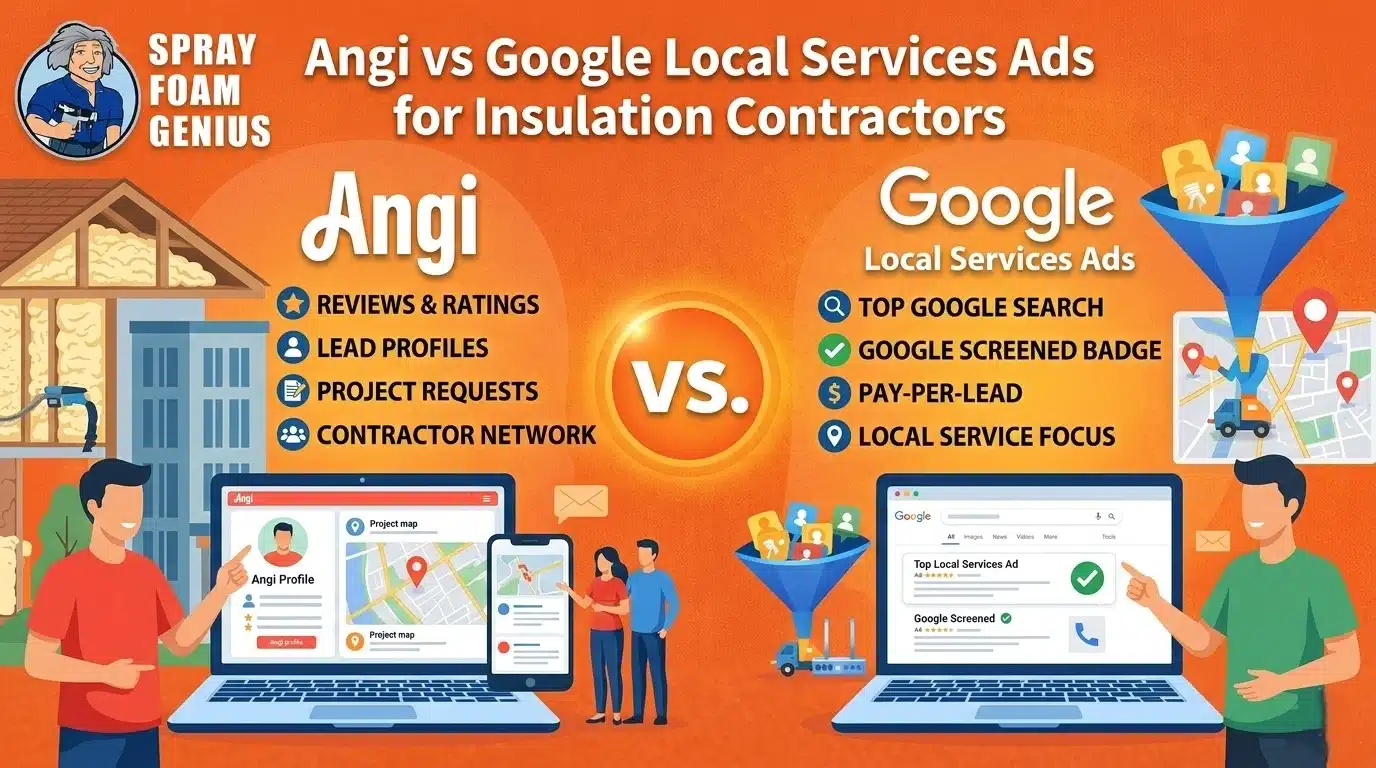
Related reading: Angi, HomeAdvisor and Google Local Services Ads for Insulation Contractors: What Is Worth It?
TLDR
- Focus on benefits over features (lower bills, comfort, air quality).
- Use localized and audience-specific messaging for higher relevance.
- Include data-driven proof (energy savings).
- Craft compelling headlines that address pain points instantly.
- Add clear CTAs that reduce friction and encourage immediate action.
- Use social proof and trust signals like reviews and certifications.
- Continuously A/B test headlines, offers, and formats for better performance.
Understanding Your Audience First
Before writing a single line of ad copy, you need to understand who you’re talking to. Spray foam insulation buyers typically fall into these categories:
Heating and cooling are a large part of home energy use, which makes insulation one of the most impactful upgrades. That point should be central in your messaging.
Crafting High-Converting Headlines
Your headline determines whether someone reads your ad or scrolls past it. Strong headlines are:
- Specific
- Problem-focused
- Benefit-driven
Examples of Effective Headlines:
- “Cut Your Energy Bills by Up to 50% with Spray Foam Insulation”
- “Tired of Drafty Rooms? Seal Your Home for Good”
- “Stop Wasting Money on Energy Leaks, Upgrade Your Insulation Today”
Research from Nielsen Norman Group shows users often read only 20–28% of text on a page, making headlines critical for engagement.
Focus on Benefits, Not Just Features
Many contractors make the mistake of highlighting technical features like R-values without explaining what they mean for the customer.
Feature vs Benefit Comparison:
Harvard research emphasizes that consumers respond more to emotional and practical benefits than technical specifications.
Use Data to Build Credibility
Adding statistics strengthens your claims and builds trust.
- Spray foam insulation can significantly reduce energy costs
- Proper insulation reduces air leakage
- Improved insulation can increase home resale value
Example of Data-Driven Copy:
“Homeowners who switch to spray foam insulation can cut heating and cooling costs by up to 50%, while enjoying year-round comfort.”
Writing Persuasive Ad Body Copy
Once your headline grabs attention, your body copy should:
- Identify the problem
- Present the solution
- Highlight benefits
- Provide proof
- Include a call-to-action
Example Ad Copy Structure:
Problem:“Are your energy bills climbing every month?”
Solution:“Our advanced spray foam insulation seals every gap in your home.”
Benefits:“Enjoy consistent temperatures, reduced noise, and lower energy costs.”
Proof:“Backed by industry data and trusted by hundreds of homeowners.”
CTA:“Book your free inspection today.”
Leveraging Emotional Triggers
Effective ads appeal to emotions as well as logic.
Key Emotional Drivers:
- Comfort: “Stay warm in winter and cool in summer”
- Security: “Protect your home from moisture damage”
- Savings: “Stop wasting money on energy leaks”
- Pride: “Upgrade your home’s efficiency and value”
According to behavioral psychology research, emotional responses drive purchasing decisions more than rational analysis.
Using Social Proof and Trust Signals

Trust is essential in service-based industries.
Include:
- Customer testimonials
- Star ratings
- Before-and-after photos
- Certifications and licenses
Example:
“Rated 5 stars by over 200 homeowners for quality insulation services.”
Social proof influences decision-making, especially in uncertain situations.
Optimizing Calls-to-Action
Your CTA should be clear, urgent, and easy to act on.
Effective CTAs:
- “Get a Free Estimate Today”
- “Schedule Your Home Inspection”
- “Claim Your Energy Savings Audit”
CTA Optimization Tips:
- Use action verbs
- Add urgency (“Limited slots available”)
- Reduce friction (“No obligation”)
A/B Testing Your Ad Copy
Continuous improvement is key to high-performing ads.
What to Test:
- Headlines
- Offers (discount vs free inspection)
- CTA wording
- Ad formats (text vs image vs video)
Sample Testing Table:
Optimized ads can improve conversion rates.
Localizing Your Ad Copy
Local relevance increases engagement significantly.
- City or region names
- Climate-specific messaging
- Local regulations or rebates
“Protect your home from harsh winters in [Your City] with premium spray foam insulation.”
Localized ads often see higher click-through rates due to increased relevance.
Transform Your Insulation Business with High-Converting Ad Copy
If your ads aren’t bringing consistent leads, it’s time to fix your messaging. At Spray Foam Genius Marketing, we create high-converting ad copy built specifically for spray foam insulation contractors to help you get more calls, more jobs, and better ROI.
Call us today at USA: 877-840-FOAM or Canada: 844-741-FOAM, or email info@sprayfoamgeniusmarketing.com to get started and speak with our team.
FAQs
1. What makes spray foam insulation ads effective?
Effective ads focus on benefits like energy savings and comfort, use clear messaging, and include strong CTAs that encourage immediate action.
2. How long should my ad copy be?
It depends on the platform, but clarity is key. Short ads work well for social media, while longer formats can be used for landing pages.
3. Should I include pricing in my ads?
Including pricing can qualify leads, but offering a free estimate often generates more inquiries.
4. How can I improve my ad conversion rate?
Use A/B testing, refine your audience targeting, and ensure your CTA is clear and compelling.
5. Is local targeting important for insulation ads?
Yes, localized messaging increases relevance and improves engagement and conversion rates.
Sources
- U.S. Department of Energy – https://www.energy.gov
- Environmental Protection Agency – https://www.epa.gov
- Harvard Business Review – https://hbr.org
- Nielsen Norman Group – https://www.nngroup.com
- American Psychological Association – https://www.apa.org
- National Association of Realtors – https://www.nar.realtor
- Google Ads Help – https://support.google.com