
Direct Answer
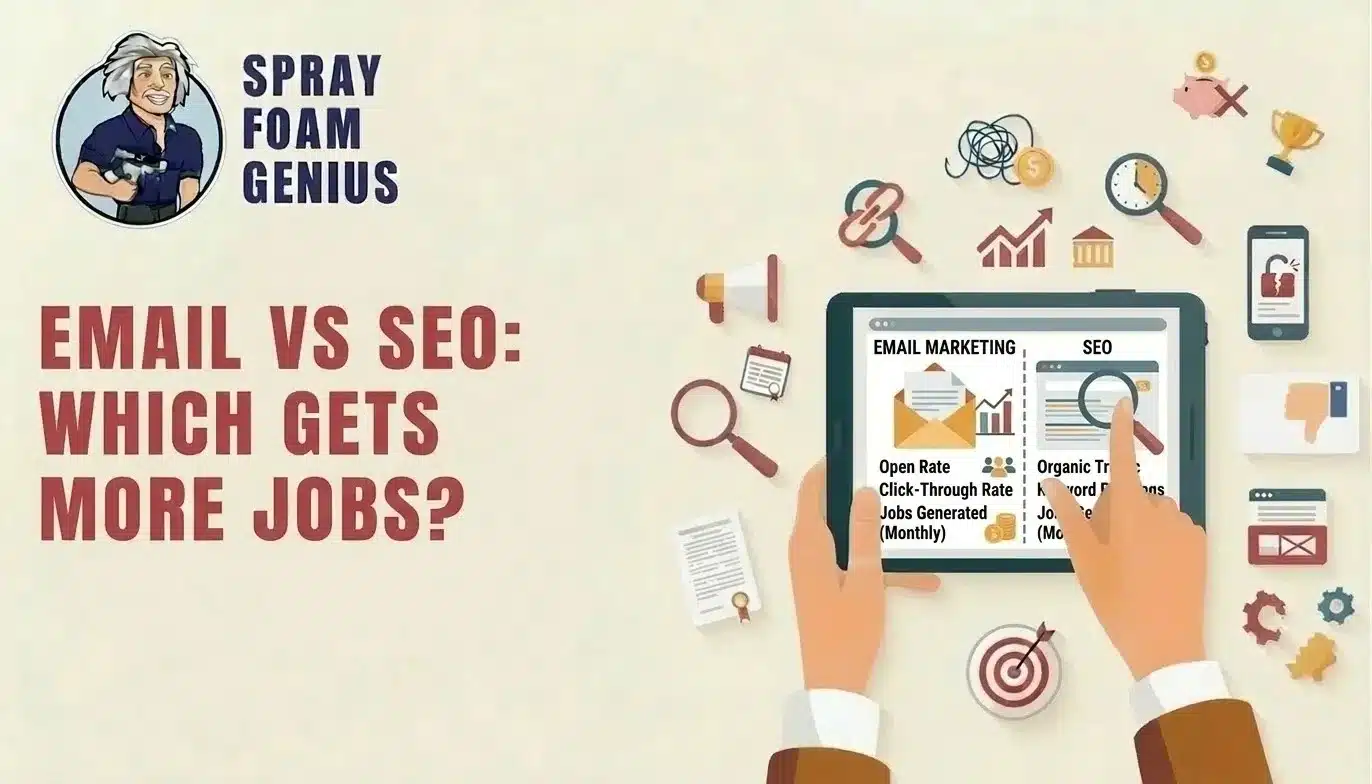
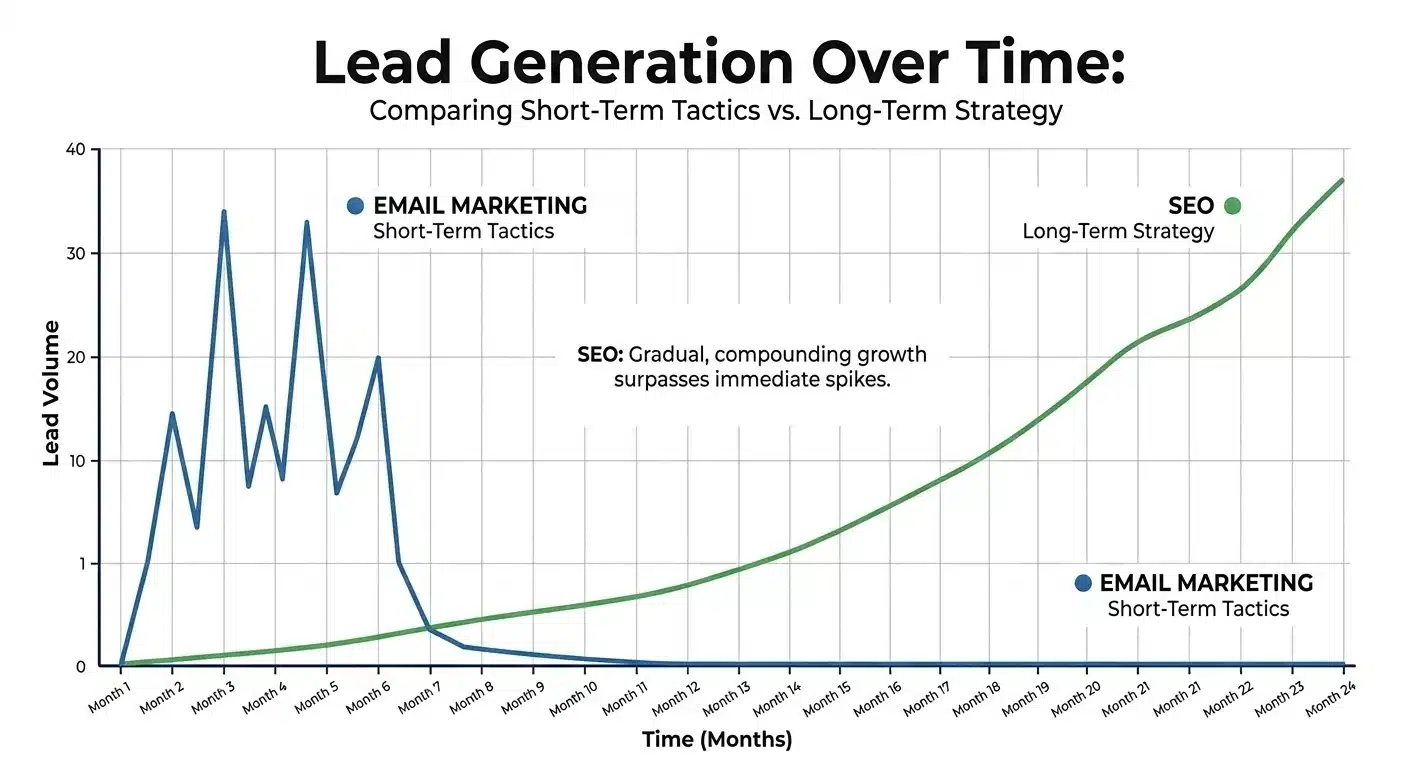
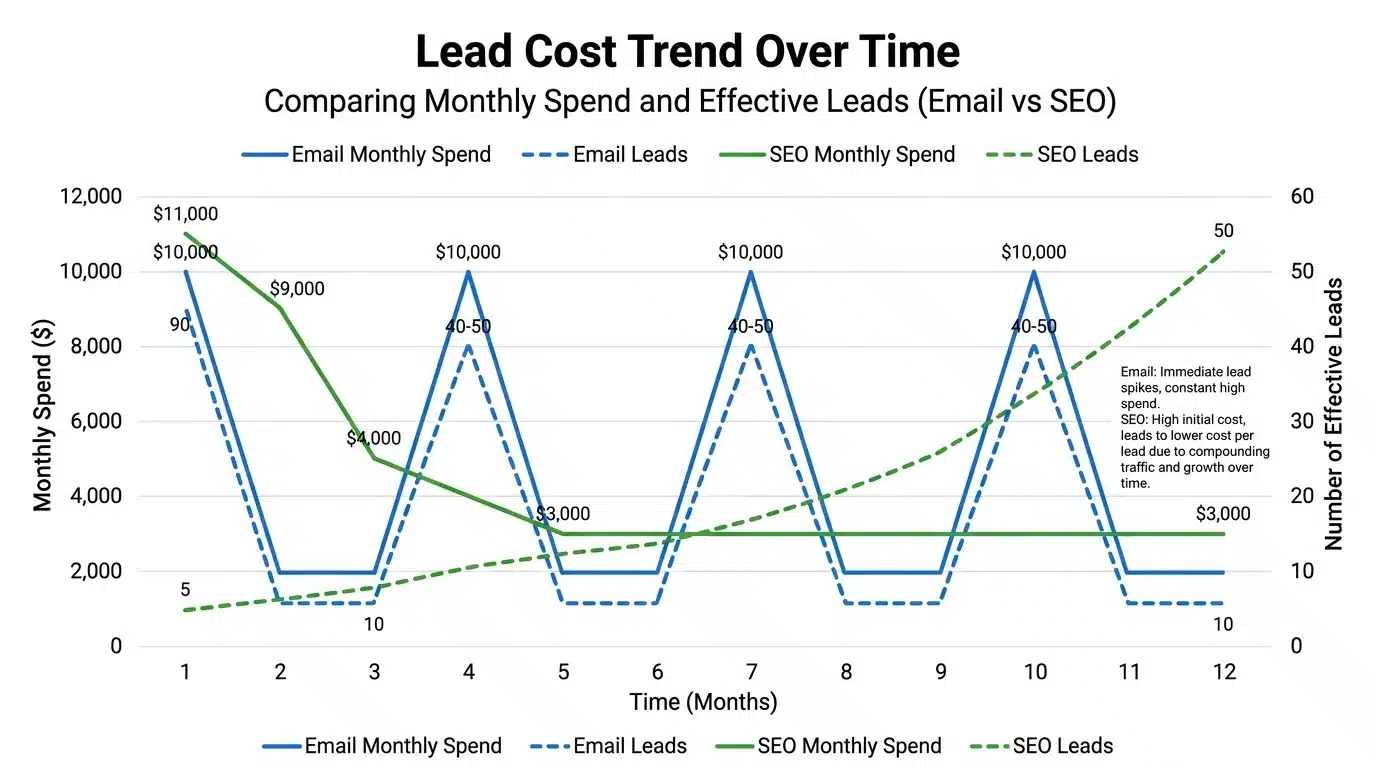
Email marketing delivers quick leads for insulation contractors but relies on immediate outreach and offers (HubSpot). SEO builds a compounding presence in search engines, attracting clients over months and years with increasing reliability.
Email campaigns generate prospects by sending targeted messages to lists or purchased leads, producing fast, transactional responses. SEO improves website visibility through content, technical optimization, and backlinks, generating organic traffic and long-term authority (Search Engine Journal, Moz).
For immediate jobs and short-term campaigns, email is effective but ephemeral. SEO acts as a long-term asset, reducing dependency on paid platforms and establishing ongoing inbound demand.
For insulation contractors looking to strengthen their organic visibility and long-term lead generation, see this spray foam SEO strategy guide.
TLDR
- Email cost ranges: $300–$1,500/month, SEO cost: $1,000–$5,000/month (WordStream)
- Speed: Email delivers immediate leads, SEO builds over 3–12 months (BigCommerce)
- Ownership: SEO traffic is owned, email lists may be rented or purchased (HubSpot)
- Long-term efficiency: SEO compounds over time, email requires continuous spend (Search Engine Journal)
- Best use: Email for short-term demand, SEO for brand authority and scaling
- Strategic insight: Combine both to balance immediate jobs with sustainable growth (Forbes)
- Competition: Email leads often shared, SEO positions contractor as local authority
How Each Lead Source Works
The Core Difference
SEO Builds:
- Owned traffic
- Authority in local search
- Lower competition once rankings achieved (Search Engine Journal)
- Long-term cost efficiency
Email Marketing Sells:
- Shared leads
- High price competition
- Volume tied to spend
- Dependency on list quality (HubSpot)
Average Cost Comparison Table
Cost Per Lead Reality Table
What Contractors Actually Experience
- Shared leads from email platforms
- Price-sensitive shoppers
- Variable lead quality
- Intense competition (Forbes)
- Inconsistent close rates
- Seasonal fluctuations affecting results
When Each Option Makes Sense
When Paid Platforms Make Sense:
- Entering new markets
- Generating immediate jobs
- Testing demand for services
- Quick promotions (BigCommerce)
When SEO Makes Sense:
- Scaling business sustainably
- Reducing dependency on ads
- Improving cost per lead over time
- Building brand authority and trust (Moz)
Biggest Mistake
Relying solely on paid leads is a major mistake. Consequences include dependency on external platforms, constant price competition, lack of brand authority, and revenue instability (Harvard Business Review).
ROI Comparison Table
Real Scenarios
- New contractor: Email leads for immediate work
- Established company scaling: SEO to attract consistent inbound demand
- Contractor tired of price shoppers: SEO builds qualified inquiries
- Company wanting predictable inbound leads: Hybrid model with SEO + Maps + selective ads (Search Engine Journal)
Where the Best Leads Actually Come From
- Google Maps listings
- Organic search results
- Branded searches (company name or services)
- Direct inbound calls from website (Think with Google)Direct search leads demonstrate higher trust compared to directory or purchased lists.
The Real Question
It’s not about which channel is best. The strategic question is how to build a predictable, scalable system that balances immediate jobs with long-term growth (Harvard Business Review).
Who Should Focus on Each Channel
Prioritize Long-Term Strategy (SEO) First:
- Contractors aiming for sustainable growth
- Businesses reducing dependency on ads
- Companies focused on brand authority (Moz)
Benefit from Paid Lead Platforms:
- New contractors needing immediate cash flow
- Businesses testing new markets or services
- Companies with short-term demand spikes (HubSpot)
Winning Strategy
Combine SEO, Google Maps, and selective paid ads. Use ads strategically for immediate work, while SEO and maps build owned, compounding leads. This hybrid model provides control, stability, and predictable revenue (Search Engine Journal).
Maximize Your Insulation Leads with a Personalized Strategy
Spray Foam Genius Marketing helps contractors navigate local competition and service area differences. Get a strategy tailored to your budget, goals, and market conditions.
USA: 877-840-FOAM
Canada: 844-741-FOAM
Act now to secure consistent high-quality leads and build lasting brand authority.
FAQs
How quickly can I see results from email marketing?
Results are typically immediate, often within days of sending campaigns, but require ongoing effort to maintain flow of leads (HubSpot).
How long before SEO generates consistent leads?
SEO can take 3–12 months to build authority and consistent traffic, depending on competition and website health (Moz).
Should I focus on one channel at a time?
A hybrid approach is usually best: use email for immediate work and SEO for long-term sustainable growth (Search Engine Journal).
Which channel is more cost-effective?
Email marketing often has a lower upfront cost per lead, while SEO can be more expensive initially but compounds over time for long-term ROI.
How do I balance lead quality and quantity?
Email marketing provides quick, variable-quality leads, while SEO attracts fewer but higher-quality leads that convert better over time.
Sources
HubSpot – https://www.hubspot.comSearch Engine Journal – https://www.searchenginejournal.comMoz – https://moz.comWordStream – https://www.wordstream.comBigCommerce – https://www.bigcommerce.comForbes – https://www.forbes.comHarvard Business Review – https://hbr.orgThink with Google – https://www.thinkwithgoogle.com