
If you are a spray foam contractor and your phone is not ringing consistently, the problem is often not your workmanship. It is visibility. Many homeowners searching for spray foam insulation start on Google, and if your business does not show up for the searches that matter, those leads can go to a competitor.
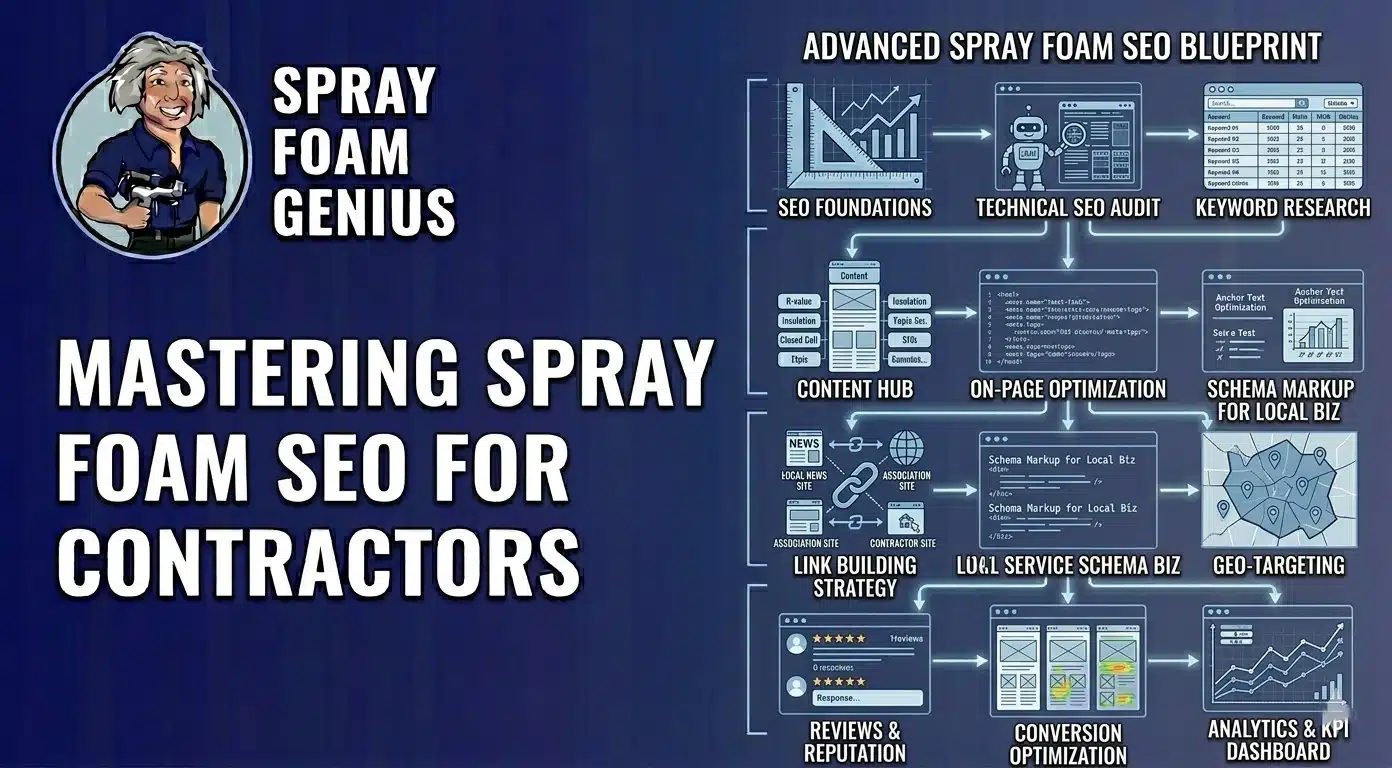
Spray foam SEO is the work of making your website and your online listings easy for Google to understand and easy for homeowners to trust, so you appear when people in your service area look for the work you do. This guide walks through every layer of a spray foam SEO strategy: how people search, keyword research, on-page work, service and city pages, local SEO, content, technical health, links, AI search features and tracking.
No one can guarantee a ranking, a number of leads or a timeline, and neither can we. What you can control is doing the fundamentals well and keeping at them.
Why SEO Matters for Spray Foam Contractors
Without SEO, many spray foam businesses depend on referrals and paid ads alone. Referrals are valuable but hard to scale, and ads stop the moment you stop paying. SEO is the third leg: work you do once and keep improving can keep earning visibility without a per-click bill.
- Searchers with a need: people who type "spray foam insulation contractor near me" are usually close to hiring.
- Trust: many homeowners trust organic results and Google Maps listings, especially when reviews back them up.
- Compounding effort: each good page, review and link adds to what you already built.
Contractors who struggle usually either ignore SEO or treat it as a one-time task. It is an ongoing habit, not a project with an end date. If you want to see how it compares with paid options, read our guide to SEO vs Google Ads for insulation contractors.
Google's own SEO Starter Guide says changes can take hours to months to show up and suggests waiting a few weeks before judging whether a change helped. That is the right mindset for this work.
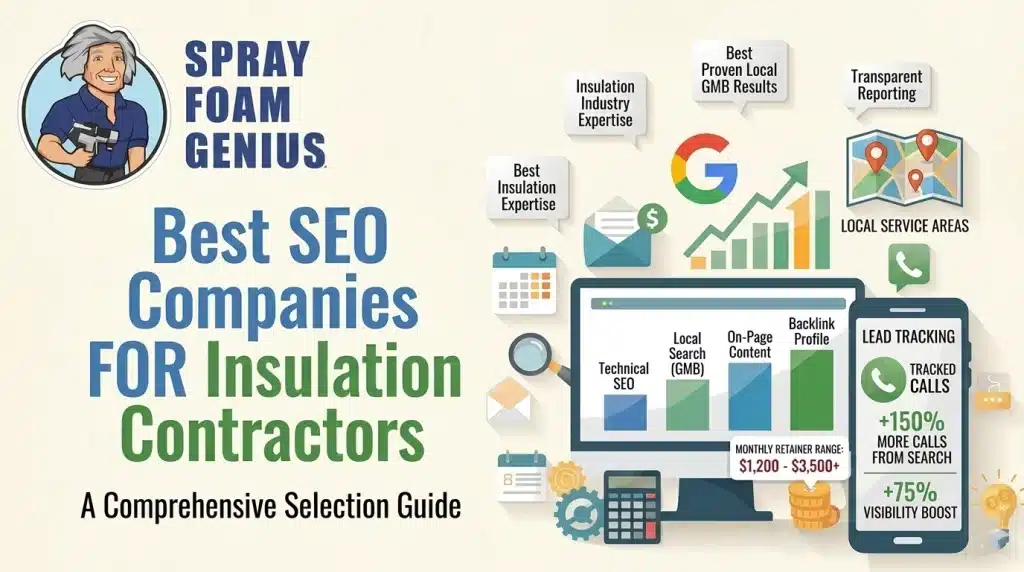
Related reading: Best SEO Companies for Insulation Contractors: How to Find One That Actually Works
How Homeowners Search for Spray Foam Services
Before you optimize a page, understand how your customer searches. Homeowners rarely use technical terms. They search by problem, location or outcome.
Four Kinds of Search Intent
- Informational: "How does spray foam insulation work?" or "Is spray foam insulation worth it?"
- Commercial: "Best spray foam insulation companies near me" or "Spray foam vs fiberglass"
- Transactional: "Spray foam contractor in [city]" or "Get a spray foam insulation quote"
- Navigational: searches for a specific company name or website
The searches closest to a hiring decision are the commercial and transactional ones, especially with a city attached. Those need dedicated pages. Informational searches are where you earn trust early.
Most homeowners notice a problem first (high energy bills, drafty rooms, moisture), research solutions, compare local providers, and then ask for quotes. Map your content to each step.
Keyword Research for Spray Foam SEO
Keyword research is how you stop guessing. The goal is a prioritized list of the phrases your customers use, matched to the pages that should rank for them.

Build the Seed List
Start with your core services and the questions customers ask. A simple three-column spreadsheet works:
- Primary: spray foam insulation contractor, open-cell spray foam insulation, closed-cell spray foam insulation, spray foam attic insulation, crawl space insulation, commercial spray foam
- Secondary: energy-efficient insulation, R-value, insulation removal, air sealing, metal building insulation
- Questions: How much does spray foam insulation cost? Is spray foam worth it? Open-cell vs closed-cell, which is right for a home like this?
Expand the list with Google Keyword Planner, Ahrefs or Semrush, then sort by what matters to you: relevance to a service you actually sell, closeness to a buying decision, how crowded the results look, and whether the searcher is in your area.
Add Location
Pair every core service with the cities, counties and neighborhoods you serve: "closed cell spray foam [city]," "spray foam attic insulation [county]," "insulation contractor near [neighborhood]." Longer, more specific phrases often attract people further along in the buying journey. Aim for one main keyword per page with a few related phrases worked in naturally, not a fixed number of keywords for the whole site.
On-Page SEO for Contractor Websites
On-page SEO means making each page clear to both visitors and search engines. Google's guidance is simple: write for people first and describe each page accurately.
- Title tags: unique to the page, clear and concise, with the service and city. For example: "Spray Foam Insulation Contractor in Austin, TX | Company Name."
- Meta descriptions: short, unique, and honest about what the page offers. Google may rewrite them, but a good one can still help people choose your result.
- Headings: one H1 that states what the page is about, with H2 and H3 sections that follow real questions.
- URLs: short and readable, such as /spray-foam-insulation-austin-tx.
- Image alt text: describe the photo plainly, for example "closed-cell spray foam applied in a crawl space."
- Internal links: connect related pages, such as your FAQ page to the service pages, so visitors and Google can find what matters.
Do not stuff keywords or chase a target "density." If a sentence reads awkwardly out loud, rewrite it.
What Each Service Page Needs
- A headline that says the service and area clearly, and a plain explanation of who it is for
- Specific applications (attics, crawl spaces, walls, commercial buildings, metal buildings, agricultural buildings)
- Local trust signals: areas served, years in business, certifications you hold
- Real before-and-after photos and customer reviews
- A clear call to action: a phone number that is easy to tap on mobile and a short quote form
Service Pages and City Pages
Give each core service its own page, and give each city or area you really serve a page of its own too. Cramming every town into one page makes it harder for both visitors and Google to see what you do where.
- Write each page from scratch. Copying the same text and swapping the city name creates thin, duplicate pages and is a common mistake.
- Use local detail you can stand behind: neighborhoods, climate and building types you actually work with, local code or rebate information you have checked, and photos from real jobs in that area.
- Only build pages for places you actually serve.
Local SEO and Google Maps

For service-area businesses, the map results at the top of local searches often matter as much as the regular results. Google says local results are mainly based on relevance, distance and prominence, and that more reviews and positive ratings can help local ranking. See Google's tips to improve your local ranking. For a deeper walk-through, see our local SEO guide for spray foam contractors.
Google Business Profile
Your Google Business Profile (GBP) is one of the most important local assets you control. At a minimum:
- Claim and verify the listing, and follow Google's rules for how a business may be represented on Maps.
- Choose the most accurate primary category (for example, insulation contractor) and add relevant secondary categories.
- List your services and service areas accurately.
- Upload real photos of jobs, crew and equipment, and keep adding new ones.
- Keep hours, phone number and website correct, and post updates now and then.
More detail is in our guide to using Google Business Profile for insulation marketing.
Citations and Consistent Business Information
Citations are mentions of your business name, address and phone number (NAP) on other sites. Keep them identical everywhere: your website, GBP, Yelp, Angi, Houzz, the Better Business Bureau, your chamber of commerce and industry directories. Small differences, like "Street" in one place and "St." in another, create confusion.
Reviews
Reviews help people choose you and, per Google, can help your local ranking. A simple process works best:
- Ask every happy customer, ideally right after the job is done.
- Send a text or email with a direct link; Google notes you can also share a link or a QR code.
- Reply to every review, kindly and briefly, including the negative ones.
- Never offer a discount, gift or anything else in exchange for a review. Google prohibits incentivized reviews.
Read more in how important Google reviews are for a spray foam business.
Content That Brings in Leads
Many contractors build a website and stop. Websites that keep answering customers' questions give Google more to show and give homeowners a reason to trust you before they call.
What to Publish
- Comparison and problem pages: "Open-Cell vs Closed-Cell Spray Foam," "Spray Foam vs Fiberglass," "Signs Your Attic Needs More Insulation," "Why Is My House So Cold?"
- Cost pages: "How Much Does Spray Foam Insulation Cost?" Explain the factors that move a price even if you do not publish exact numbers.
- Project-type guides: insulating metal buildings, pole barns, crawl spaces, garages and commercial buildings.
- Local pages and project showcases: real jobs with real photos, the building type and the problem you solved.
Write as if the reader has never heard of spray foam. Google's guidance on helpful, reliable, people-first content favors pages that show first-hand experience, so include your own photos, your process and what you have seen on real jobs. Only state results you can document, such as a measured energy figure from a specific project.
How Often to Publish
Consistency beats volume. Pick a schedule you can keep, target one main keyword per piece, link new posts to the matching service page, and update older posts when details change. For a fuller plan, see the value of SEO-driven content for insulation companies.
Technical SEO

Technical SEO makes sure Google can find, read and load your pages without obstacles.
- Speed and Core Web Vitals: Google highly recommends good Core Web Vitals and says they align with what its ranking systems seek to reward. Compress images, use decent hosting and trim unneeded scripts. See Google's Core Web Vitals guidance.
- Mobile: many local searchers are on phones, so buttons, phone numbers and forms must be easy to tap.
- HTTPS: use a secure connection so visitors and browsers trust your site.
- Site structure: homepage, service pages, location pages and blog organized in a clear hierarchy with sensible navigation.
- Sitemap and Search Console: submit an XML sitemap and set up Google Search Console so you can see indexing problems and the queries that bring visitors.
- Structured data (optional): LocalBusiness markup can help describe your name, address, phone and hours, but it is not required and does not guarantee special results. Do not add review markup for your own reviews.
What About AI Overviews and AI Search?
Contractors keep asking whether they need a separate strategy for AI answers. Google says there are no additional requirements to appear in AI Overviews or AI Mode, no special optimizations, no special structured data and no special files such as AI text files. See Google's guide to AI features. In practice that means the same fundamentals in this guide: pages that are crawlable and indexed, helpful and accurate content, a good page experience and clear business information. Be wary of anyone selling a separate "AI optimization" package.
Links and Local Authority
Links from reputable sites help show that your business is real and respected. For contractors, the best sources are local and trade-specific, not national media.
- Manufacturer and supplier pages: if you are an authorized or certified applicator, ask whether the manufacturer lists contractors on its site.
- Industry associations: membership in the Spray Polyurethane Foam Alliance (SPFA) or local builder associations may include a directory listing.
- Local partners: HVAC companies, roofers, builders and real estate professionals you genuinely work with.
- Guest content and expert comments for home-improvement blogs, local news sites or real estate publications.
- Community involvement: sponsorships, events and local press about milestones.
A few relevant links beat a pile of random ones, and paying for low-quality links can backfire.
Track What Matters
You cannot improve what you do not measure. Review these monthly:
- Organic traffic from Google Search Console and Google Analytics
- Rankings, tracked separately for the map results and the regular results
- Google Business Profile performance: views, calls, direction requests and website clicks
- Leads: calls, form fills and quote requests, ideally with call tracking
- Booked jobs and revenue by source, since leads only matter if they turn into work
Low conversions usually point to a page, form or follow-up problem, not a traffic problem. Our guide on tracking and analyzing marketing ROI shows how to connect the numbers to jobs.
Why SEO Fails for Contractors
- A generalist agency that treats you like any other local business and targets vague terms instead of what buyers search.
- Quitting too early, before the foundation work has had time to show up.
- Copying content, building thin city pages or buying low-quality links.
- Expecting SEO to fix slow follow-up, weak reviews or inconsistent estimating. SEO brings the calls; it cannot fix what happens after them.
Scaling From One Market to Several
Once one market is working, add pages for neighboring cities and counties and build local citations and relationships in each. If you need leads sooner in a new area, Google Ads can cover the gap while organic work builds. Do not expand faster than you can maintain quality.
Get a Free Marketing Audit
Spray Foam Genius Marketing works with spray foam and insulation contractors. If you would like a plain-language look at where your website, Google Business Profile and reviews stand, ask for a free marketing audit. Call 877-840-3626 or email info@sprayfoamgeniusmarketing.com.
Frequently Asked Questions
How long does spray foam SEO take to work?
It depends on your starting point, your competition and how consistently the work is done. Google says changes can take anywhere from hours to months to appear, so no honest provider can promise a date. Expect the first months to be mostly foundation work, and judge progress by calls, form fills and booked jobs rather than rankings alone.
Do you need a separate page for every city you serve?
Usually yes, if you truly serve that city and have something real to say about it. Each page should be unique, with local context and photos from real jobs, rather than a copy of another page with a different city name.
How important are Google reviews for spray foam SEO?
Google says more reviews and positive ratings can help your local ranking, and reviews also influence whether someone chooses you. Ask consistently, reply to every review, and never offer incentives for reviews.
What is the difference between local SEO and regular SEO?
Local SEO focuses on map results and searches with a location, and relies heavily on your Google Business Profile, reviews and consistent business information. Regular (organic) SEO focuses on the standard results through content, site quality and links. For a service-area business like yours, you need both, and they support each other.
Is anything special needed to show up in AI Overviews?
No. Google says there are no special requirements or optimizations for its AI features. Strong, helpful, accurate pages that are indexed in regular Search are the foundation.
Should you rely on SEO or run Google Ads?
Most contractors benefit from both. Ads can bring in calls while organic work builds, and SEO helps reduce how much you depend on paying for every click. See our comparison of SEO and Google Ads.
Can you do SEO yourself or should you hire a specialist?
You can handle basics in-house: claiming your Google Business Profile, asking for reviews and writing helpful pages. Technical fixes, competitive keyword strategy, link building and ongoing tracking take more time and experience, so many contractors bring in a specialist who understands the trade.