
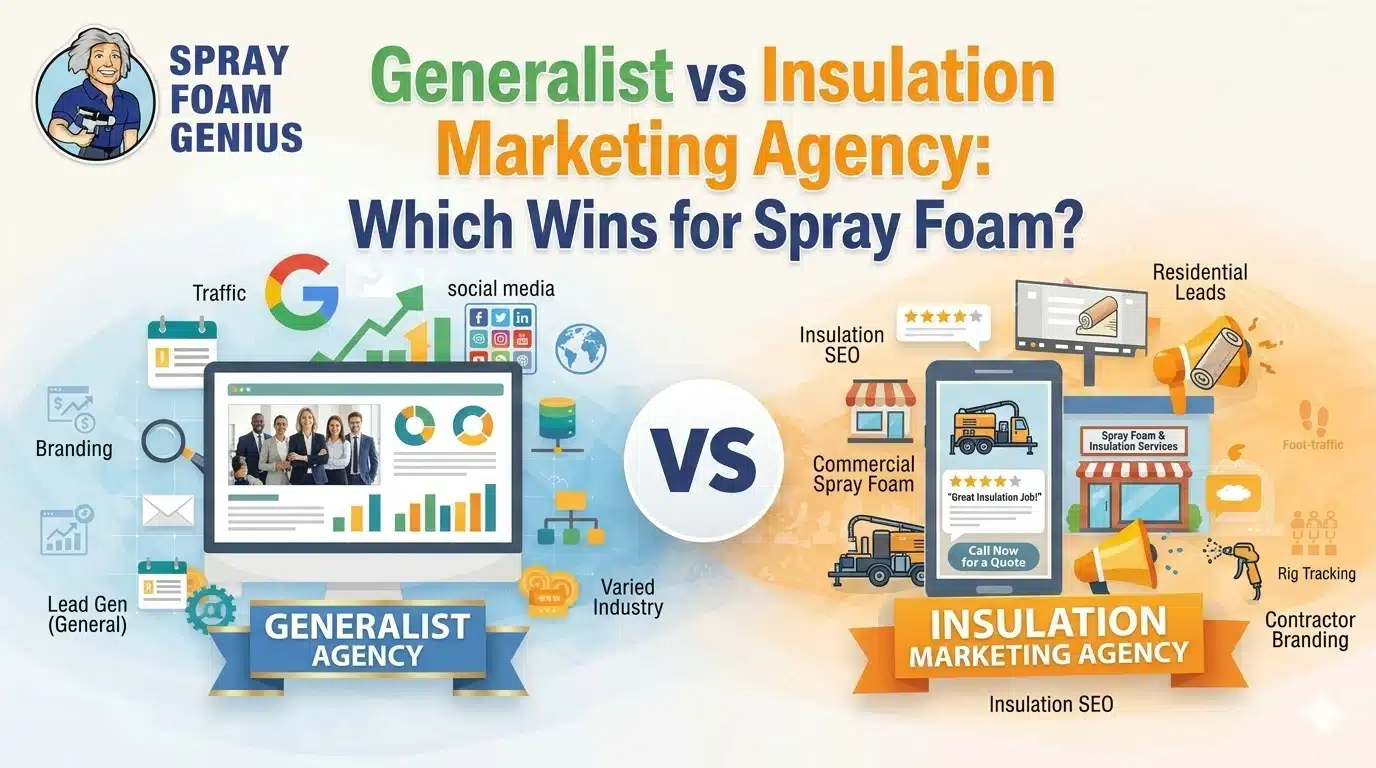
Contractors need lead generation strategies that deliver results, not just activity. When comparing a generalist marketing agency to an insulation-specific agency, the insulation-specific agency wins for most insulation contractors focused on sustainable, predictable growth. Generalist agencies work across multiple industries, often leveraging paid platforms like Google Ads, social media campaigns, and broad branding efforts. This can generate fast leads, but those leads stop the moment the spending stops, and the team often lacks niche insulation expertise. An insulation-specific agency, on the other hand, builds long-term assets like industry-focused search rankings, localized authority, and specialized landing pages that speak directly to your target customer’s needs.
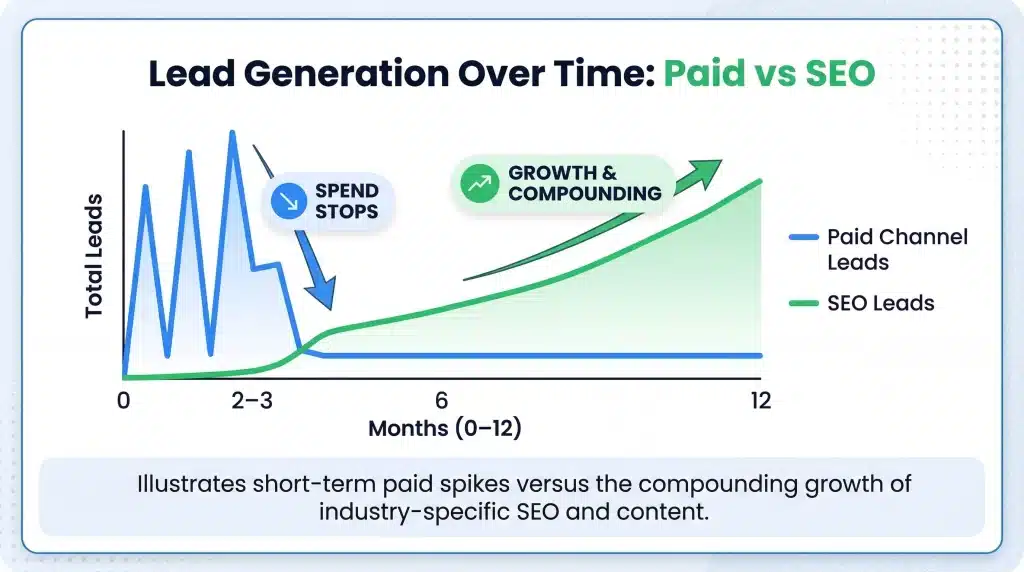
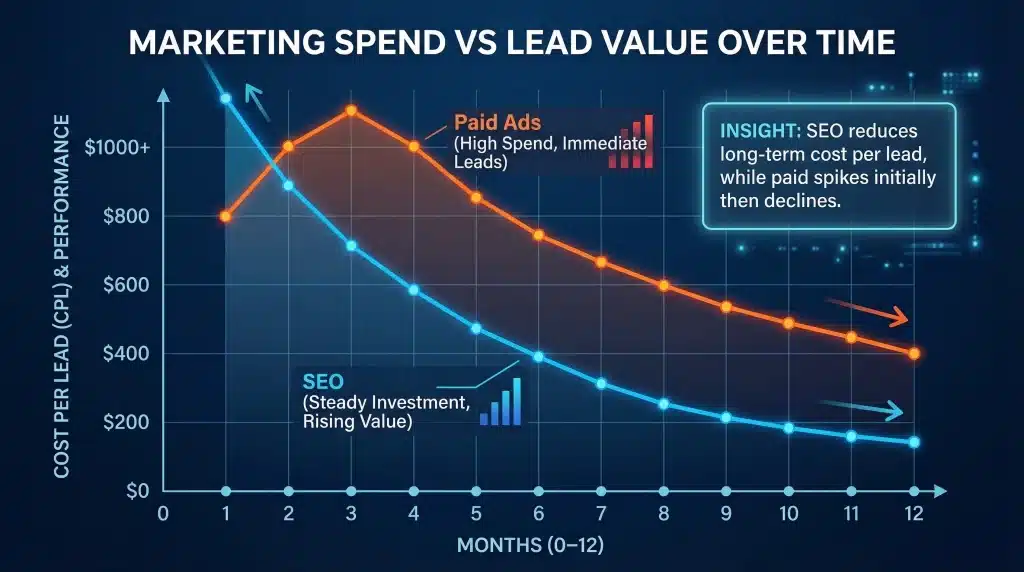
In the short term, generalist lead channels (ads, directories, third-party platforms) drive transactional results: you pay, you get leads. That’s useful when cash flow needs immediacy or when testing a new service or territory. Long-term channels like SEO and niche content build compounding value, generating new inbound leads with lower incremental spend over time. For insulation contractors seeking predictability, lower per-lead costs, and stronger brand presence, insulation-specific strategies consistently outperform.
Contractor-focused marketing doesn’t mean abandoning paid channels completely, it means positioning them strategically. Paid ads are short-lived and cost-driven, while industry-specific SEO and specialist content are long-term, owned assets. Contractors need both short-term demand fulfillment and long-term market dominance, and insulation-specific agencies are structured to deliver that layered approach.
For insulation businesses trying to improve long-term lead quality and market positioning, this spray foam contractor marketing strategy guide offers additional insight into scalable marketing systems.
TL;DR
- Cost Ranges: Paid ads commonly range from $1,500–$7,000/mo, while insulation-specific SEO and retainers typically fall between $2,000–$6,000/mo.
- Speed Differences: Paid platforms deliver leads immediately; SEO often takes months to build meaningful traction.
- Ownership Differences: Paid leads are rented and transient; SEO and organic search positioning are owned and compounding.
- Long-Term vs Short-Term Efficiency: Paid lead channels are efficient for immediate volume, but SEO delivers better ROI over time with higher quality leads.
- When Each Works Best: Paid works for testing markets and initial demand capture; insulation-specific works when scaling and reducing lead cost are priorities.
- Strategic Positioning: Industry focus leads to better conversion rates, relevant keywords, and higher domain authority.
- Conversion Data Point: Contractors report that industry-focused organic leads convert at higher rates than generalist paid leads.
How Each Lead Source Works
The Core Difference in Simple Terms
Insulation-Specific Agency Builds:
- Owned traffic and leads (SEO content + local maps)
- Industry authority in the insulation space
- Lower keyword competition in niche terms
- Compounding long-term ROI
Generalist / Paid Lead Channels Sell:
- Shared or rented leads with competitors
- Price competition among buyers
- Lead volume tied entirely to spend
- No long-term brand authority
Average Cost Comparison Table
Costs vary by competition, location, and campaign intensity.
Cost Per Lead Reality Table
What Contractors Actually Experience
- Leads that compete on price rather than value
- Customers from directories who shop multiple quotes
- Inconsistent quality from rented lead sources
- High competition per lead during peak seasons
- Unpredictable closing rates tied to lead source
When Each Option Makes Sense
When Paid Platforms Make Sense
- New business launch needing immediate traction
- Testing services or offers in new territories
- Short-term promotions or seasonal surges
When SEO & Long-Term Strategy Makes Sense
- Scaling beyond referral or partner leads
- Reducing reliance on expensive rented leads
- Improving cost per lead over the long run
- Building brand authority and trust (Search Engine Journal)
Biggest Strategic Mistake Contractors Make
Relying solely on paid or rented leads without building owned traffic channels. Consequences:
- Dependency on fluctuating spend
- Price-focused buyers dominating your pipeline
- No brand authority in search results
- Revenue instability when rented sources dry up
ROI Comparison Table
Real Contractor Scenarios
- New Contractor: Paid ads short-term + SEO investment → revenue quickly while building long-term traffic.
- Established Company Scaling: SEO & localized content + Maps → reduces cost per lead, improves quality.
- Contractor Tired of Price Shoppers: Targeted inbound SEO → higher-intent customers.
- Company Wanting Consistent Demand: Hybrid system → predictable inbound leads with ongoing growth.
Where the Best Leads Actually Come From
- Google Maps / Local Pack results, targeted near-me intent
- Organic search ranking for insulation terms, trust & relevance
- Brand searches (contractor name), highest purchase intent
- Direct inbound calls and website forms, warmest leads
Customers trust direct search results and brands more than generic directories.
The Real Question Contractors Should Ask
It’s not “Which channel is best?” It’s:“How do I build a predictable, efficient lead generation system that balances short-term volume with long-term cost efficiency and brand authority?”
Who Should Focus on Each Channel
Prioritize Long-Term Strategy First
- Companies planning rapid growth
- Contractors in competitive markets
- Businesses wanting to reduce cost per lead
Can Benefit from Paid Platforms
- New entrants needing quick traction
- Markets with seasonal demand
- Contractors testing new services
Winning Lead Generation Strategy
A hybrid system wins:
- SEO & Content: Primary long-term lead stream (Ahrefs SEO vs PPC)
- Google Maps Optimization: Capture local intent
- Paid Ads: Strategic for short bursts and market testing
- Lead Platforms: Supplemental only
This creates control + stability + predictability.
Build a Predictable Lead System That Fits Your Market
Every contractor’s service area, competition, and budget is unique, and your marketing plan should be too. A tailored mix of long‑term SEO and strategic paid campaigns creates consistent inbound demand and improves cost‑per‑lead over time.
Spray Foam Genius MarketingUSA: 877‑840‑FOAMCanada: 844‑741‑FOAM
Take control of your leads, reduce dependency on shared platforms, and grow your business with predictable demand and fewer price shoppers.
FAQs
How long does it take for SEO to generate insulation leads?
SEO for insulation contractors typically starts showing measurable results in 3–6 months. Full local authority, including Google Maps dominance, can take 6–12 months depending on competition and content quality.
Are leads from generalist marketing agencies high quality?
Leads from generalist agencies often convert, but many are shared with competitors or price-sensitive shoppers. Niche insulation-focused campaigns usually deliver warmer, more qualified leads.
Can I rely solely on paid leads for my business?
You can generate immediate volume with paid leads, but relying solely on them is risky. Leads stop coming if your budget stops, and cost per lead can rise due to competition.
Is it worth investing in Google Maps and local SEO?
Absolutely. Local SEO and Google Maps rankings drive high-intent calls from homeowners actively searching for insulation services. Over time, this becomes a predictable, cost-efficient source of leads.
Can I combine paid ads with SEO effectively?
Yes. Paid ads provide immediate leads while SEO builds long-term organic traffic. Combining both creates a hybrid system with short-term wins and sustainable inbound demand.
Sources:
- https://support.google.com/google-ads/answer/6167122
- https://moz.com/learn/seo/what-is-seo
- https://backlinko.com/seo-stats
- https://searchengineland.com/2023-survey-local-search-ranking-factors-394839
- https://ahrefs.com/blog/seo-vs-ppc/
- https://www.wordstream.com/google-ads
- https://www.searchenginejournal.com/17-seo-best-practices-for-better-ranking/459592/