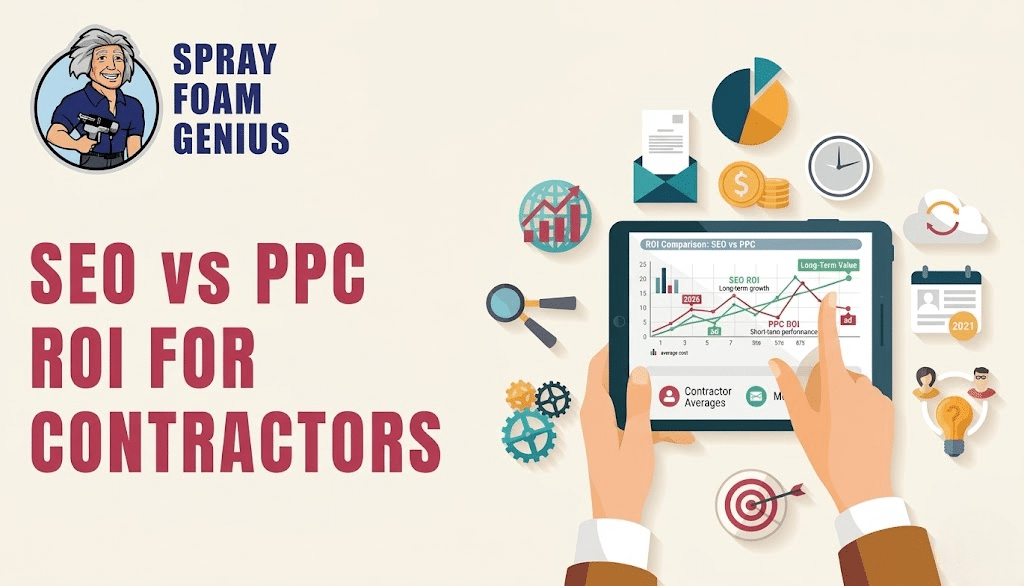

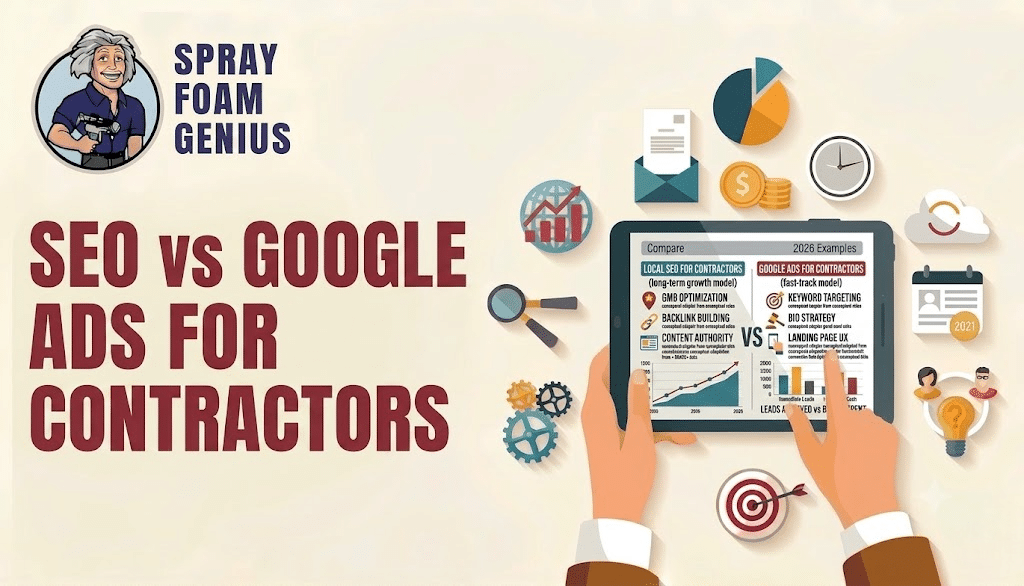
If I run a contracting business, I already know the phone needs to ring every week or the crew sits idle. That’s why the SEO versus Google Ads question keeps coming up. I want to know where my marketing dollars actually turn into booked jobs, not just clicks or impressions. In this guide, I break down how each channel works, what it costs, and which one wins depending on my goals.
What SEO Actually Does for a Contracting Business
Search engine optimization is the process of improving my website so it ranks higher in organic (unpaid) Google results when homeowners search for services like “roof repair near me” or “spray foam insulation contractor.” According to Google’s own guidance on how Search works, rankings are determined by relevance, content quality, and trust signals like backlinks and reviews.
SEO covers a few core pieces:
- On-page optimization: titles, headings, service pages, and location pages built around what customers actually type into Google.
- Local SEO: my Google Business Profile, citations, and reviews, which matter enormously for “near me” searches.
- Content marketing: blog posts, FAQs, and guides that answer real customer questions and build topical authority.
- Technical SEO: site speed, mobile-friendliness, and clean site structure.
The upside is that once I rank, I keep getting calls without paying per click. The downside is that SEO takes time. I usually tell contractors to expect meaningful movement in 3 to 6 months, not overnight.
If I want a deeper look at how this works specifically for insulation businesses, I check out this spray foam SEO strategy, which walks through keyword research, local SEO, and content strategy built around this exact industry.
What Google Ads Actually Does for a Contracting Business
Google Ads (formerly Google AdWords) puts my business at the top of search results immediately, but I pay every time someone clicks. Per Google Ads’ official documentation, I bid on keywords, set a budget, and my ad shows based on bid amount and Quality Score.
For contractors, Local Services Ads and Search campaigns are the most common formats. I like that I control exactly when my ads run, which keywords trigger them, and which zip codes I target. If I need leads this week for a slow month, Google Ads delivers speed that SEO simply cannot match.
The tradeoff is cost. Home service keywords are some of the most expensive in Google Ads because competition is fierce and a single job can be worth thousands of dollars. Cost-per-click for terms like “spray foam insulation contractor” or “roof replacement” can run anywhere from $15 to over $80 depending on my market, according to industry benchmarking data from WordStream’s Google Ads benchmarks. The moment I stop paying, the calls stop too.
If I want campaigns built specifically for my niche, I look into this Google Ads framework for spray foam contractors, which focuses on turning targeted ad spend into booked jobs instead of just clicks.
Which One Actually Gets More Calls?
Here’s the honest answer I give every contractor who asks me this: it depends on my timeline and my budget, not on which channel is “better.”
If I need calls this month, Google Ads wins. I can launch a campaign, set my budget, and start getting phone calls within days. This matters if I just bought new equipment, hired new crew members, or I’m heading into a slow season and need to fill the pipeline fast.
If I want the lowest cost per lead long-term, SEO wins. Once my site ranks for the terms my customers search, I’m not paying Google for every single call. A well-optimized service page can keep generating leads for years off the same piece of content. Research from BrightLocal’s Local Consumer Review Survey consistently shows that most consumers check a business’s online presence and reviews before calling, which means my organic visibility and reputation compound over time in a way paid ads never will.
If I want both speed and sustainability, I run them together. This is actually what I recommend most often. Google Ads fills the gap while my SEO builds momentum in the background. Once my organic rankings mature, I can scale back ad spend and let organic traffic carry more of the load, which lowers my overall cost per lead.
Cost Per Lead: The Real Comparison
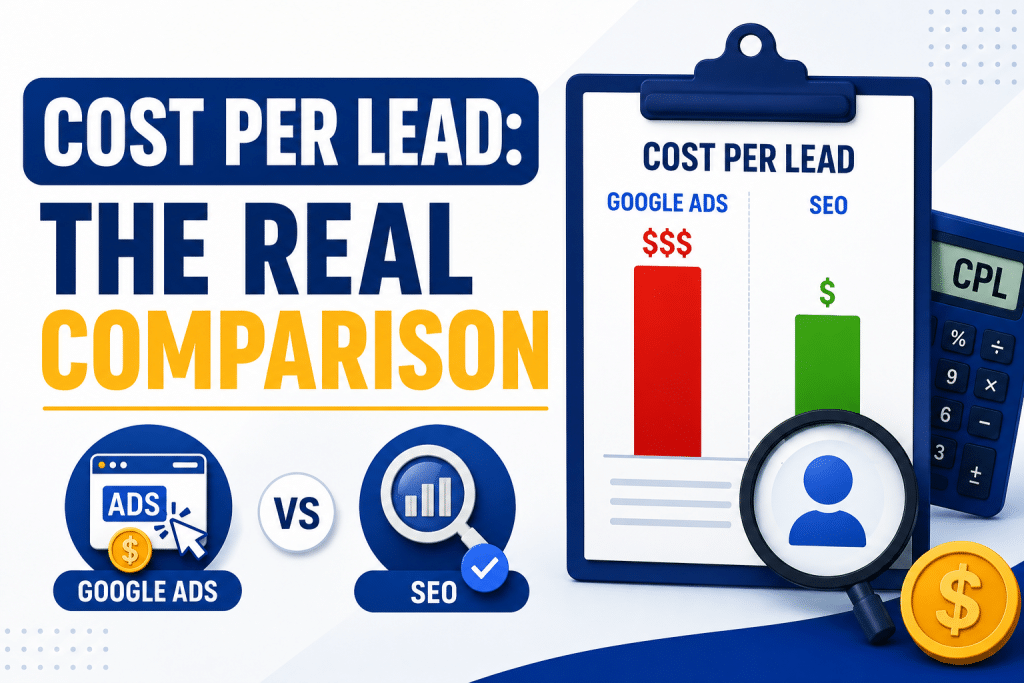
I’ve seen contractors quote me numbers on both sides, so let me lay it out plainly:
- Google Ads: I pay for every click whether it converts or not. My cost per lead can range widely, often $50 to $300+ for competitive home service categories.
- SEO: I pay for the work upfront (content, optimization, technical fixes), but once I rank, each additional lead costs me nothing extra in ad spend. Over a 12-month period, my cost per lead from organic search typically drops well below what I’d pay through ads.
Neither channel is free. SEO isn’t “free traffic,” it’s traffic I’ve already paid for through the work of building authority. Google Ads isn’t wasteful, it’s a rented spot at the top of the page. I need to treat them as different tools for different jobs.
Semantic Factors That Matter for Both Channels
Whether I lean on SEO, Google Ads, or both, a few things affect performance across the board:
- Local intent: Most contractor searches include a location or “near me,” so my Google Business Profile and location pages need to be dialed in.
- Trust signals: Reviews, licensing info, before-and-after photos, and clear pricing build the confidence homeowners need before they call.
- Mobile experience: Most searches happen on a phone, so my site needs to load fast and make the call button obvious.
- Conversion tracking: I need to know which keywords, pages, and ads actually produce phone calls, not just clicks or form fills.
My Recommendation
If I’m a new contracting business with almost no online presence, I start with Google Ads to generate calls while my SEO foundation gets built. If I’ve been in business for years with a decent reputation but weak online visibility, I invest in SEO first because I’m sitting on an asset I haven’t tapped yet. Most established contractors I work with end up running both channels together because it gives them predictable short-term leads and long-term brand equity at the same time.
The channel that “wins” is the one that fits where my business is right now. What doesn’t change is that I need a marketing partner who understands the contracting industry specifically, not generic strategies borrowed from retail or ecommerce.
Ready to Find Out Which Strategy Fits My Business?
I don’t have to guess which channel makes sense for me. The team at sprayfoamgeniusmarketing.com specializes in marketing exclusively for spray foam and insulation contractors, and they offer a free marketing audit that shows exactly where my SEO and Google Ads performance stand right now.
Call USA: 877-840-FOAM, Canada: 844-741-FOAM or email info@sprayfoamgeniusmarketing.com to claim my free marketing audit and start turning more searches into booked jobs.
Frequently Asked Questions
Is SEO or Google Ads better for a small contracting business?
I usually recommend Google Ads first if I have little to no online presence and need calls fast. Once I build up reviews and a stronger website, I shift more budget toward SEO because it lowers my long-term cost per lead.
How long does it take to see results from SEO?
I typically see meaningful ranking movement within 3 to 6 months, and stronger results after 9 to 12 months. SEO is a compounding strategy, so the leads I get in year two usually cost me far less than the leads I got in month one.
How much should I budget for Google Ads as a contractor?
My budget depends on my market and how competitive my keywords are. Home service clicks often cost $15 to $80 or more, so I try to start with enough budget to gather at least a few weeks of click and conversion data before I judge performance.
Can I run SEO and Google Ads at the same time?
Yes, and I recommend it. I use Google Ads to generate calls immediately while my SEO work builds authority in the background. Once my organic rankings mature, I can reduce ad spend and let organic traffic cover more of my lead volume.
Does my Google Business Profile affect both SEO and Google Ads?
It affects both. A complete, review-rich Google Business Profile helps my organic local rankings and also builds the trust signals that make homeowners more likely to click and call from my ads.