
Direct Answer
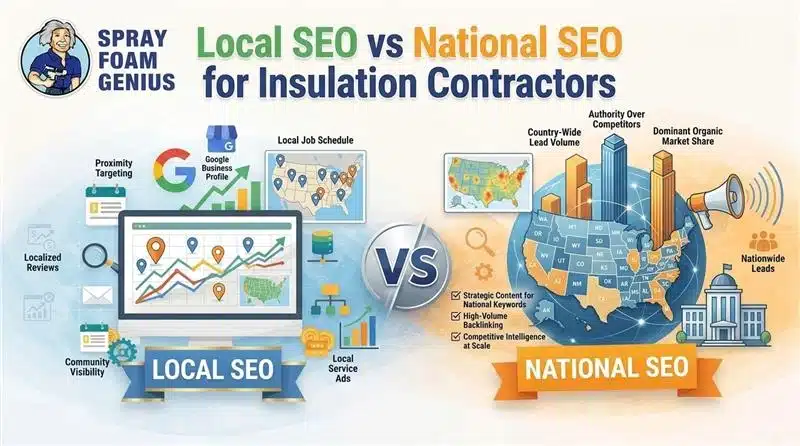
If your insulation business serves a defined service area, local SEO should be your primary focus because it drives leads right to your service territory and builds long-term visibility (Moz Local SEO Guide). National SEO can bring broader traffic but is costly, competitive, and slower to convert into actionable local leads (Search Engine Journa).
Local SEO works by optimizing your website, Google Business Profile, and citations for service-area keywords, creating a steady stream of leads that compounds over time (BrightLocal Local SEO). National SEO aims to rank for broad industry terms across the country, which can generate awareness but rarely converts quickly without significant budget and authority.
In the short term, paid lead platforms or national campaigns provide instant leads but at a transactional cost and limited control. Local SEO is a compounding asset that grows your owned traffic, reduces dependency on paid platforms, and strengthens brand authority over months and years (WordStream Local SEO).
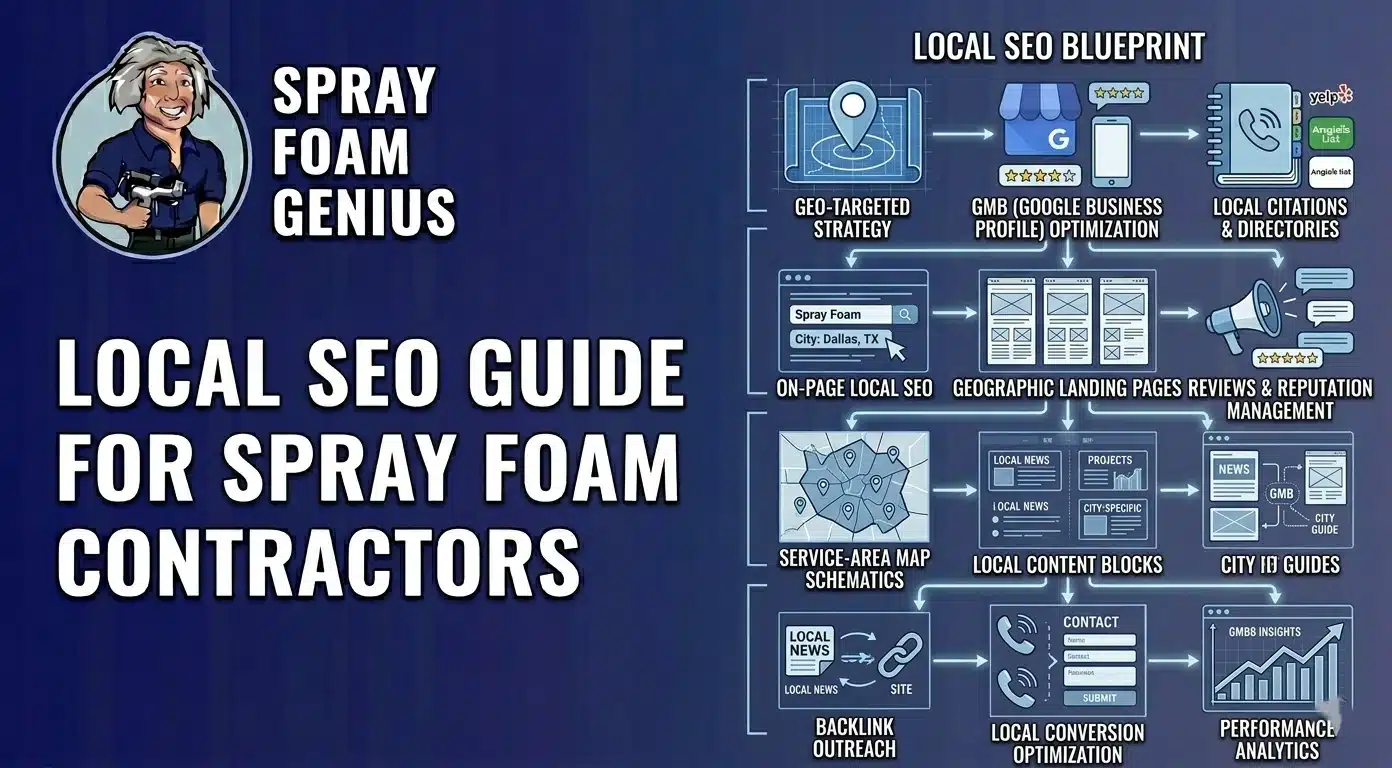
Building strong local search visibility helps insulation companies reduce reliance on third-party lead platforms while increasing brand authority. Learn more in this local SEO guide for spray foam contractors.
TLDR
- Local SEO costs typically range from $500–$2,500/month; national SEO can be $2,000–$10,000/month, depending on competition
- Paid leads deliver instant results; SEO requires 3–12 months for compounding visibility (Search Engine Land)
- Local SEO builds ownership of traffic; national campaigns often rely on shared leads (BrightLocal Local SEO)
- Long-term efficiency favors SEO; short-term demand favors paid channels (Backlinko Local SEO Guide)
- Local SEO works best for defined service areas; national SEO for brand awareness or multi-state expansion.
- Strategic positioning: Local SEO strengthens credibility; paid leads can supplement but not replace it (WordStream Local SEO)
- Cost-per-lead decreases over time with local SEO; paid platforms maintain fixed costs per lead
How Local SEO, National SEO, and Paid Leads Generate Customers
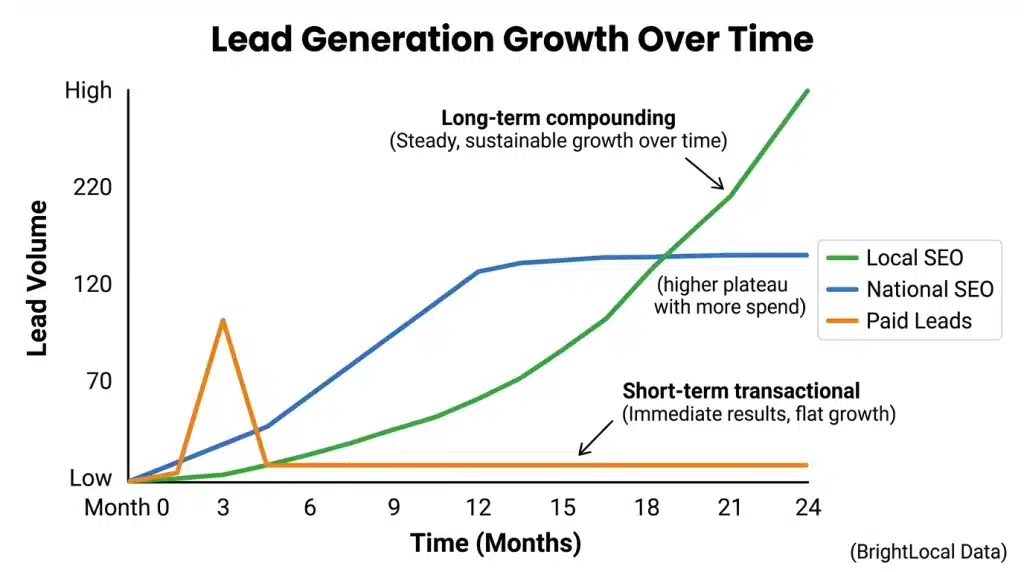
The Core Difference Between Local SEO and Paid Lead Platforms
Local SEO builds:
- Owned traffic
- Authority in service area (Moz Local SEO)
- Lower competition per keyword
- Compounding leads
Paid Leads sell:
- Shared leads
- Price-driven competition
- Dependency on platform spend
- Volume tied to budget (HubSpot Marketing Statistics)
Average Monthly Cost Comparison
Costs vary by location and competitive market conditions
Cost Per Lead Comparison
What Insulation Contractors Actually Experience With Paid Leads
- Leads shared with multiple competitors (BrightLocal Local SEO)
- High volume of price shoppers
- Inconsistent lead quality
- High competition for top positions
- Unpredictable closing rates
- Need for follow-up and lead nurturing
When Each Strategy Makes Sense
When Paid Platforms Make Sense
- Entering a new business or market
- Immediate short-term demand
- Testing local interest before committing
- Filling gaps during seasonal slowdowns (HubSpot Marketing Statistics)
When SEO (Long-Term Strategy) Makes Sense
- Scaling business steadily
- Reducing dependency on paid leads
- Improving cost per lead over time (Backlinko Local SEO Guide)
- Building brand authority and trust
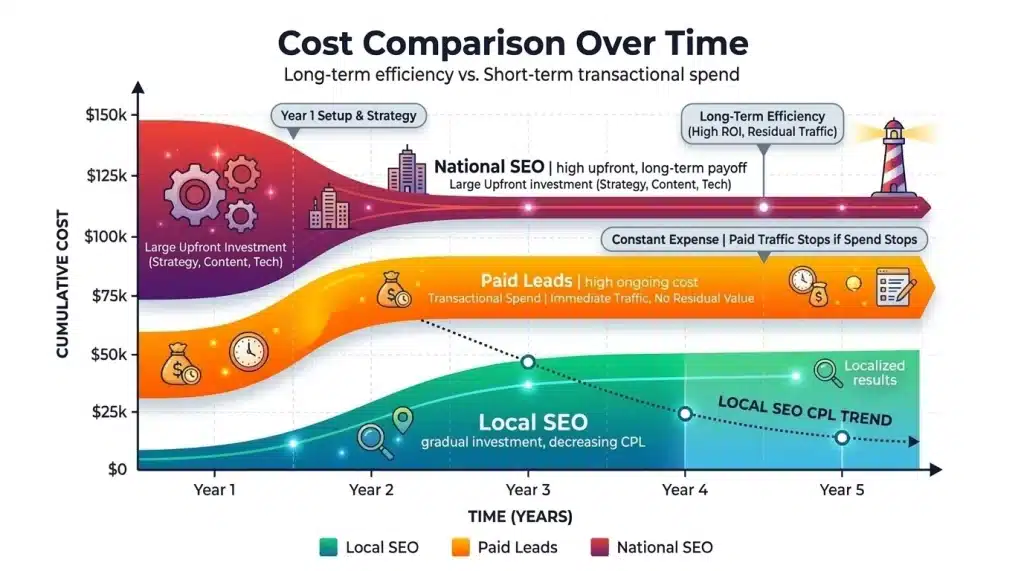
The Biggest Marketing Mistake Contractors Make
Relying exclusively on paid lead platforms is the biggest mistake. It creates dependency, drives price competition, erodes brand authority, and leaves revenue unstable (Search Engine Journal). Without a long-term owned asset like local SEO, contractors can spend more while gaining less control over lead quality.
Local SEO vs Paid Lead Platforms
Contractor Scenarios
- New contractor: Paid leads for immediate cash flow, start building local SEO slowly
- Established company scaling: Local SEO first, supplement with strategic ads (Backlinko)
- Contractor tired of price shoppers: Invest in local SEO to attract higher-quality leads
- Company wanting consistent inbound demand: Blend local SEO + Google Maps + selective paid campaigns
Where the Best Leads Actually Come From
- Google Maps listings (Bright Local)
- Organic search results
- Branded searches
- Direct inbound callsDirect search traffic builds trust faster than generic directory leads
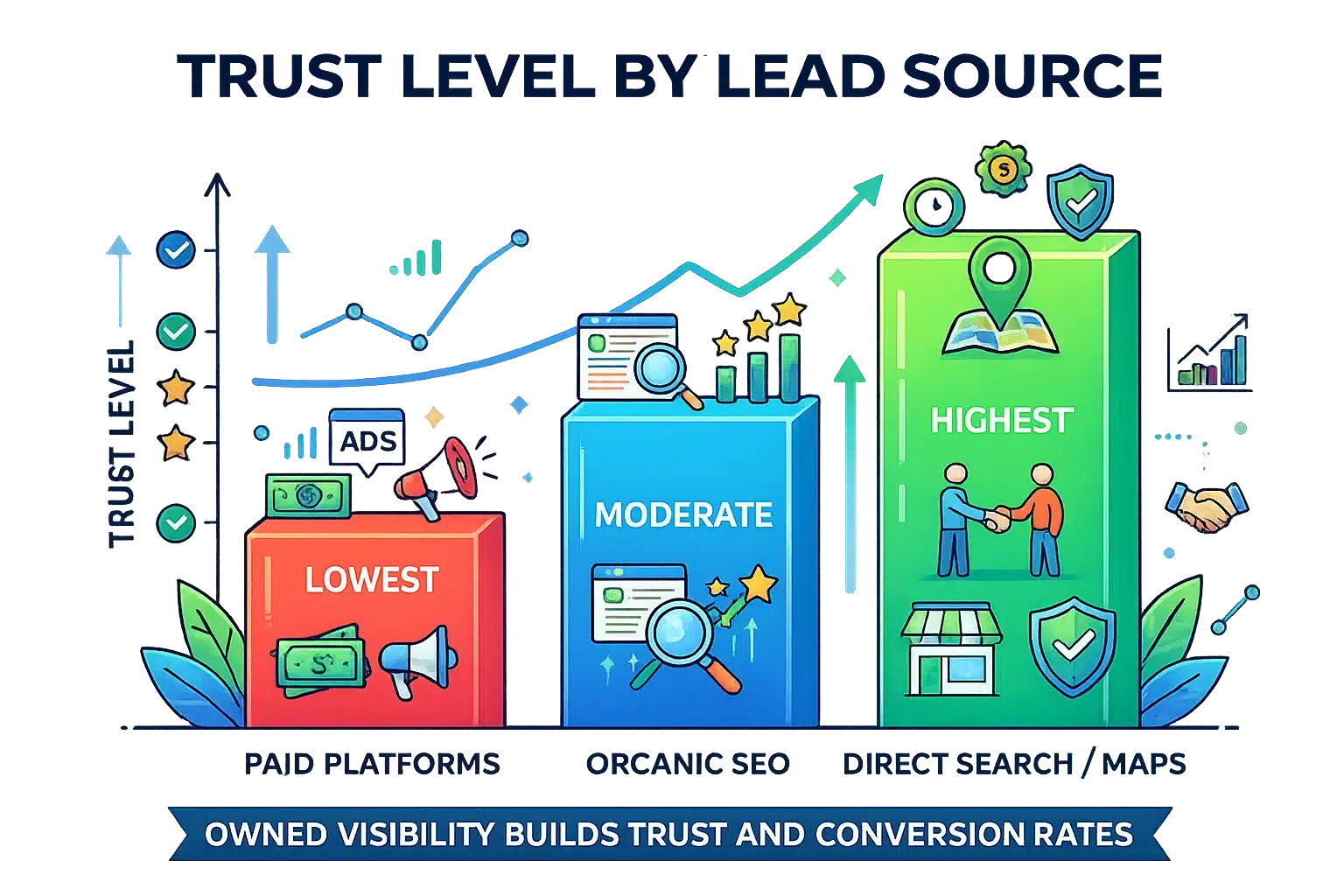
The Real Question Contractors Should Be Asking
The question isn’t which channel is “best” but how contractors can build a predictable, controlled lead generation system. Focus shifts to owned assets, compounding traffic, and reducing reliance on shared or transactional channels (Backlinko).
Who Should Focus on Each Lead Generation Strategy
Long-Term Strategy First
- Established contractors in stable markets
- Businesses seeking predictable leads
- Companies aiming to improve brand authority
Paid Lead Platforms
- New contractors needing fast cash flow
- Businesses entering a new service area
- Short-term demand spikes (HubSpot Marketing Statistics)
The Winning Strategy: Combining Local SEO and Paid Campaigns
Hybrid strategy is strongest: optimize local SEO, claim Google Maps, run selective paid campaigns to fill immediate gaps (BrightLocal Local SEO). Controlled combination = long-term stability + short-term responsiveness. Focus on compounding assets while supplementing demand peaks.
Build Your Predictable Lead System Today
Every insulation market is different. Your service area, competition, and goals demand a personalized approach. Spray Foam Genius Marketing can craft a strategy that maximizes authority, reduces cost per lead, and stabilizes revenue.
usa: 877-840-FOAMcanada: 844-741-FOAMinfo@sprayfoamgeniusmarketing.com
Take control of your leads and watch your business grow sustainably
FAQs
How long does it take for local SEO to show results?
Typically 3–6 months, depending on competition and content quality. Results compound over time, improving lead quality and consistency.
Can national SEO generate local leads effectively?
National SEO boosts visibility but rarely converts local leads efficiently without geographic targeting and additional local strategies.
Are paid lead platforms worth the cost?
They provide immediate leads but often at higher cost per lead and lower control. Best used to supplement SEO or test new markets.
How long does it take for Google Maps rankings to improve?
Typically 2–4 months with consistent updates, accurate listings, and local engagement, though competitive areas may take longer.
Is it necessary to have reviews for local SEO success?
Yes, reviews build trust with potential customers and influence their buying decisions. They signal credibility and reliability to search engines. Positive reviews can significantly improve your local search rankings.
Sources:
- Moz – https://moz.com/learn/seo/local-seo
- Search Engine Land – https://searchengineland.com/library/local-search
- WordStream – https://www.wordstream.com/blog/ws/local-seo
- Backlinko – https://backlinko.com/local-seo-guide
- HubSpot – https://www.hubspot.com/marketing-statistics
- Search Engine Journal – https://www.searchenginejournal.com/local-seo-guide/
- BrightLocal – https://www.brightlocal.com/learn/local-seo/