
This is one of the most common questions insulation and spray foam contractors ask when they start taking marketing seriously. Google Ads puts you in front of homeowners today. SEO builds visibility that can compound over months and years. Both can bring in leads, both cost money, and most contractors do not have an unlimited budget, so the choice matters.
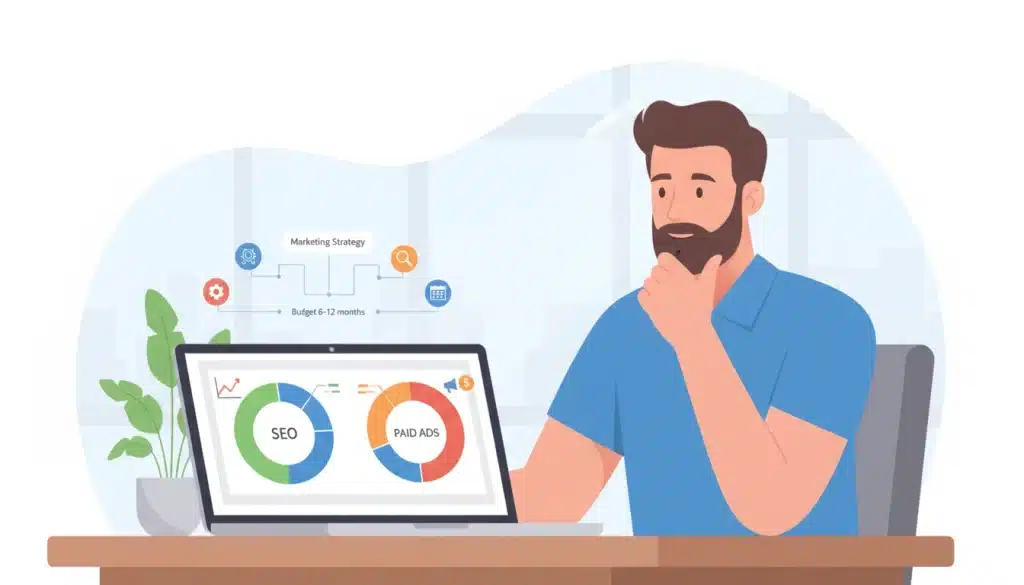
The honest answer is that it is rarely either-or. Most contractors who want steady, predictable lead flow end up using ads to fill the schedule now and SEO to build an asset that can lower their cost per lead over time. The right balance depends on where your business is today. This guide covers how each channel works, what drives cost, how lead quality differs, how to track results, and how to split your effort. For the full organic playbook, see our spray foam SEO strategy guide.
The Short Version
- Speed: Google Ads can start sending calls within days. SEO usually takes months to build momentum, and nobody can promise a ranking or a date.
- Cost structure: with ads you pay for each click (or each valid lead, with Local Services Ads, which insulation installers can currently use only in California and Florida), and the calls stop when the budget stops. With SEO you pay for the work up front, and a page that ranks can keep producing calls without a per-click charge.
- Control: ads let you choose keywords, hours and zip codes. SEO gives you less control but more staying power.
- Best use: ads for new businesses, slow seasons and testing new areas. SEO for established contractors who want to rely less on paid traffic.
What You Are Actually Comparing
SEO is the work of making your website and Google Business Profile easier to find and more convincing in the unpaid results and the map pack. That covers service and city pages, helpful content, reviews, citations and a fast, mobile-friendly site. Google describes how Search works in its guidance on how Search works.
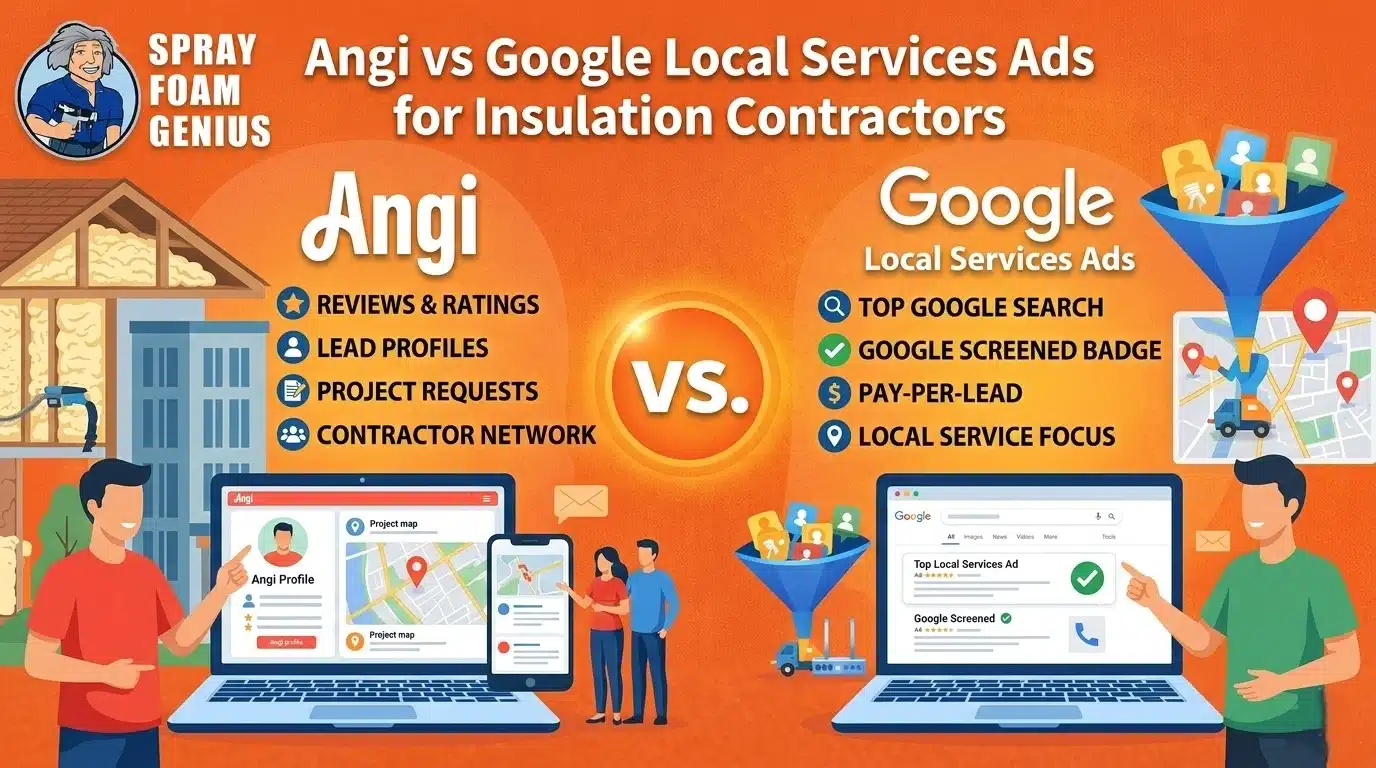
Google Ads puts your business above the organic results for the searches you choose. Per Google’s documentation on the ad auction, where your ad appears depends on your bid, the quality of your ad and landing page, and other auction factors. For contractors, the main formats are Search campaigns and Local Services Ads. Google says that with Local Services Ads you are charged for each valid lead, and prices vary by location, job type and lead type. Right now, Local Services Ads are available to insulation installation contractors only in California and Florida, so contractors in other states cannot run them. Google can change this, so check its Local Services Ads page for your area.
What Each Channel Costs
Google Ads
Ad costs depend on your market, your keywords, your landing pages and how many competitors are bidding. As one broad reference point, LocaliQ’s 2026 search advertising benchmarks list the Home & Home Improvement category at an average $8.33 cost per click and $90.92 per lead (data page updated June 2026). That is a cross-industry average for the category, not an insulation or spray foam figure, and your own numbers could be well above or below it.
As a simple example of the math, using that average: a $2,000 monthly ad budget divided by a $90.92 cost per lead works out to roughly 22 leads. Those are leads, not booked jobs, so your close rate decides what each job really costs. Also remember that ad management fees, if you pay an agency, are separate from the money you spend on clicks.
SEO
SEO does not produce a clean cost per lead in month one. The first stretch is investment: fixing technical issues, building the right pages, cleaning up listings and earning reviews. If the work pays off, the same monthly effort produces more leads as your pages and profile gain visibility, which is why cost per lead can fall over time. It is not automatic, and it depends on your market, your competitors and the quality of the work.
Neither channel is free. SEO is not free traffic, it is traffic you have paid for through the work of earning visibility. Google Ads is not wasteful by nature, it is a rented spot at the top of the page that you can turn on and off.
How Fast Each One Works
Ads can start within days of launching a campaign. SEO is slower. Google’s own SEO Starter Guide says some changes can take effect in a few hours while others could take several months, and that you should wait a few weeks before judging whether a change helped. For a contractor, that means planning for months, not weeks, before organic search becomes a reliable source of calls.
The shape of the two is different. Ads give you leads quickly but the cost per lead stays tied to the auction, and it can rise as more competitors bid. SEO starts slowly, then can build as pages, reviews and your Google Business Profile strengthen. Contractors who run ads with no organic presence often find that costs creep up while nothing builds underneath them.
Lead Quality and Job Value
Cost per lead is only half the picture. The other half is how many leads turn into paid jobs. Homeowners who find you by searching something like “spray foam insulation cost in [city]”, read your service pages, check your reviews and then call have often done a lot of their research. They tend to be comparing contractors rather than wondering whether to insulate at all. Leads that come from shared platforms or from broad ads can be earlier in the process, and may be getting quotes from several contractors at once.
That is a pattern we see described across home services, not a guarantee, so measure it in your own business. Record the source of every job and compare the close rate and average job size by channel. Commercial buyers, such as building managers and general contractors, usually research credentials and past work before they call, so strong service pages, project photos and reviews matter for both organic and paid traffic.
The Right Mix at Each Stage of Your Business
- New contractor with almost no online presence: start with ads so calls come in while you build your website, Google Business Profile and first reviews.
- Established contractor with a good reputation but weak visibility: put more effort into SEO first, because you already have trust to turn into rankings and reviews.
- Slow season or new equipment and crew to keep busy: ads can fill the gap quickly.
- Expanding into a new city: use ads to test demand, and build local pages for that area at the same time.
- Mature business that wants less dependence on paid traffic: shift effort toward organic and local search, and keep ads on the keywords that clearly produce booked jobs.
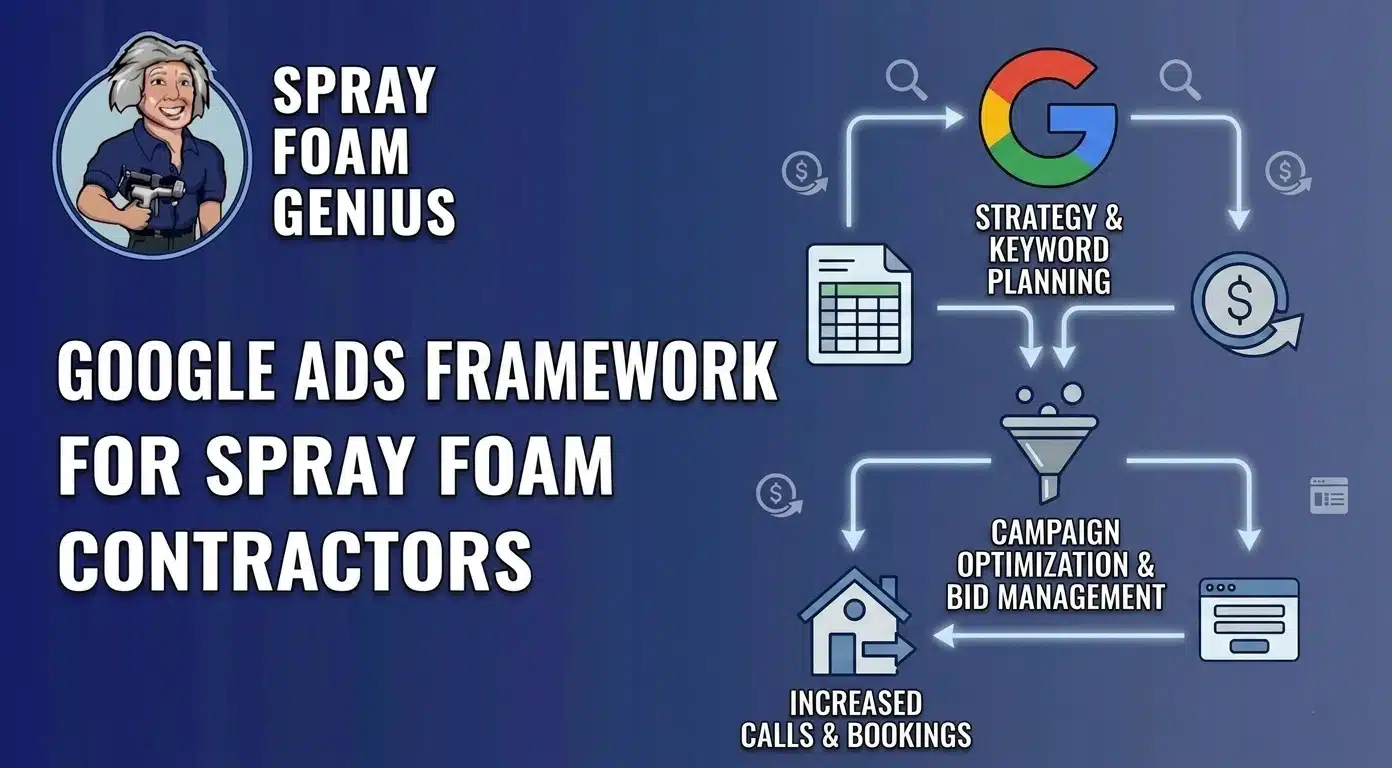
For help building and managing the paid side, see our Google Ads framework for spray foam contractors and our Google Ads for spray foam contractors page.
What Google Ads Cannot Do That SEO Can
- Keep producing calls when you stop paying. Ads stop the moment the budget does.
- Build a library of pages, reviews and local signals that you own and that keep working month after month.
- Earn the trust that comes from showing up in the map pack and organic results, where many homeowners look first.
- Reduce your exposure to auction pricing and platform changes.
What SEO Cannot Do That Google Ads Can
Any agency or article that dismisses paid ads entirely is not being straight with you. Ads can do several things SEO cannot:
- Start producing calls within days, which matters in a slow month.
- Switch on and off by season, service, zip code or time of day.
- Test a new service, offer or city quickly, and show which keywords and messages lead to calls before you commit to long-term content.
- Put you in front of searchers for terms where you do not yet rank organically.
Using Both Together
The two channels help each other when you run them with a plan:
- Keyword data: ad campaigns show which search terms produce calls, which tells you which pages and topics to prioritize in SEO. You may find that “spray foam insulation cost” brings better calls than a generic term like “insulation services”.
- Landing pages: a fast, clear page with a visible phone number, reviews and project photos can serve both paid and organic visitors.
- Retargeting: ads can remind people who visited your site but did not call.
- Coverage: showing up in both the ads and the organic results can make your business look more established, though how much it helps varies by search.
- Budget shifts: as organic calls grow, you can trim ad spend on keywords where you already do well and put it toward new areas or services.
How to Track ROI for Each Channel
Clicks and even leads are not jobs. Set up tracking before you spend heavily on either channel:
- Call tracking and form tracking, so you know which keywords, pages and ads produce calls.
- Google Business Profile calls and direction requests, which are free in your profile dashboard.
- Google Search Console, to see the searches and pages that bring visitors from organic results.
- A simple record of every closed job: source, job size and revenue. Ask each new customer how they found you.
The basic formula is (revenue minus marketing cost) divided by marketing cost. As an example only, with made-up numbers: if you spend $2,000 in a month and book three jobs worth $5,000 each, revenue is $15,000 and ROI is ($15,000 minus $2,000) divided by $2,000, or 6.5, which is 650 percent. Run the same math for each channel with your real figures. Judge SEO over a longer window than ads, because its payoff is slower, and never judge either one on clicks alone.
Common Mistakes with These Channels
1. Running ads with no website foundation
Ads send traffic to your website. If it is slow, has no reviews, lacks clear service pages or does not make it easy to call, you pay for clicks that go nowhere. Fix the destination first.
2. Stopping SEO too early
The early months are the setup phase: pages get written, technical problems get fixed and listings get cleaned up. Canceling right after paying for the setup, before results have had time to appear, is one of the costliest mistakes.
3. Running ads without tracking jobs
Many advertisers struggle to profit because they only count form fills. Track which keywords lead to booked jobs and pause the ones that bring clicks but no revenue.
4. Leaving ad settings on default
Broad match keywords and loosely controlled campaigns can spend your budget on the wrong searches. Use focused keywords, exclude searches that do not fit, and send traffic to a dedicated page instead of a generic homepage.
5. Treating the two as rivals for the same budget
Ads are the bridge that keeps leads coming while SEO builds. SEO is the longer-term asset that can make ads optional rather than essential. Give each a clear job and a way to measure it.
Frequently Asked Questions
How much should you budget for Google Ads as an insulation contractor?
It depends on your market, your service area and how competitive your keywords are. Plan for enough budget to gather several weeks of click and call data before you judge a campaign, because tiny budgets rarely give you enough information to improve results. Use the LocaliQ benchmark above only as a rough starting point, and set your budget from your target number of booked jobs and your real close rate.
Can you run Google Ads yourself without an agency?
You can, but default settings tend to spend broadly rather than efficiently. If you manage ads yourself, use focused keywords, add negative keywords, send traffic to dedicated landing pages and set up call tracking before you spend a dollar.
Will SEO work in your market?
Someone already shows up at the top of Google for insulation searches in your area, and that position belongs to whoever has invested in it. Market size and competition affect how long it takes and how much work is needed, but the same dynamic applies everywhere. No one can guarantee a ranking, so ask any provider how they will measure progress.
How long does SEO take to show results?
Plan on months. Google says some changes can take effect in hours while others take several months, so expect a gradual build rather than a switch that flips. Competition, your starting point and the quality of the work all change the pace.
Is SEO or Google Ads better for a new insulation business?
Most new contractors need calls quickly, so ads are a common starting point, with the website, Google Business Profile and reviews built at the same time. Once those assets are working, shift effort toward SEO so you rely less on paid clicks.
Should you stop Google Ads once SEO starts working?
Not necessarily. Reduce spend on keywords where you already get organic calls, and keep ads for high-converting searches, new service areas and seasonal peaks.
How do you know if your marketing is working?
Track three things: calls from your Google Business Profile, rankings and clicks for your main service-plus-city searches in Search Console, and the source of every closed job. After 90 days you should have a clear picture of which channel produces which jobs and what each costs per closed sale.
The Verdict: Use Both, and Allocate on Purpose
The question is not SEO versus Google Ads. It is how to split your effort between them given where your business is now. Google Ads gives you leads now and lets you scale up or down month to month. SEO builds an asset that can lower your cost per lead over time and keep working when you pull back spending.
Contractors stuck in feast-and-famine cycles are often running only one channel: leaning on ads they cannot sustain, or waiting on SEO that is not getting enough sustained attention. A better path is to start both, stay with SEO long enough for it to build, and track cost per closed job by source until the data shows where each dollar does the most.
If you want help seeing where your website, Google Business Profile and ads stand today, ask for a free marketing audit. Call 877-840-3626 or email info@sprayfoamgeniusmarketing.com.
Sources Referenced
Source: LocaliQ, 2026 Search Advertising Benchmarks
Source: Google Ads Help, how the ad auction works
Source: Google Local Services Ads Help, how you are charged
Source: Google Search Central, how Search works
Source: Google Search Central, SEO Starter Guide
Spray Foam Genius Marketing | Serving Insulation Contractors Nationwide | sprayfoamgeniusmarketing.com