

The Real Reason Growth Stalls for Most Spray Foam Contractors
Many spray foam insulation companies assume that scaling their business is simply a matter of hiring more technicians or buying another rig. In reality, the biggest barrier isn’t equipment or labour, it’s predictable lead generation and operational systems.
Most contractors successfully launch with one crew through referrals and local networking. But when it’s time to add a second or third crew, those same methods stop producing enough consistent work to keep everyone busy.
The result is a common ceiling: one truck, one crew, and inconsistent revenue.
This article explores why spray foam companies struggle to grow beyond that point, where their jobs actually come from, the operational mistakes that prevent scaling, and the strategies that successful contractors use to build multi-crew operations.
For a deeper breakdown of how insulation companies can move from inconsistent jobs to predictable multi-crew operations, see this spray foam contractor growth system.
TL;DR
- Search-driven leads (Google, directories, maps) account for 60%+ of contractor research behavior, according to data from BrightLocal and their research on BrightLocal.
- Companies trying to run multiple crews typically need 25–40 qualified leads per month per crew to maintain consistent scheduling.
- Businesses that scale successfully invest in SEO, reputation management, and local search visibility long before adding another crew.
- Operational bottlenecks, like quoting delays, scheduling gaps, and poor follow-up, often cause lost deals even when leads exist.
The Real Problem Most Spray Foam Contractors Don’t See
Many insulation contractors believe their growth problem is not enough advertising or not enough workers.
In reality, the bigger issue is how modern customers actually search for contractors.
Today’s homeowner or builder rarely hires the first contractor they hear about. Instead, they research multiple companies online.
Typical search behavior includes queries like:
- “spray foam insulation contractor near me”
- “attic spray foam insulation cost”
- “closed cell vs open cell insulation”
- “spray foam installers in [city]”
According to research from Think with Google, over 70% of consumers research local services online before contacting a provider.
This means visibility across multiple digital touchpoints matters:
- Google search results
- Google Maps listings
- Reviews and reputation
- Educational content
- Contractor comparison sites
Companies relying only on referrals are invisible to most potential customers searching online.
That’s why growth stalls.
Where Spray Foam Jobs Actually Come From
Most insulation companies get work from a mix of sources.
Typical distribution for small contractors looks like this:
Local search visibility plays a major role because nearly half of all Google searches have local intent, according to research discussed on Search Engine Journal and their article on Search Engine Journal.
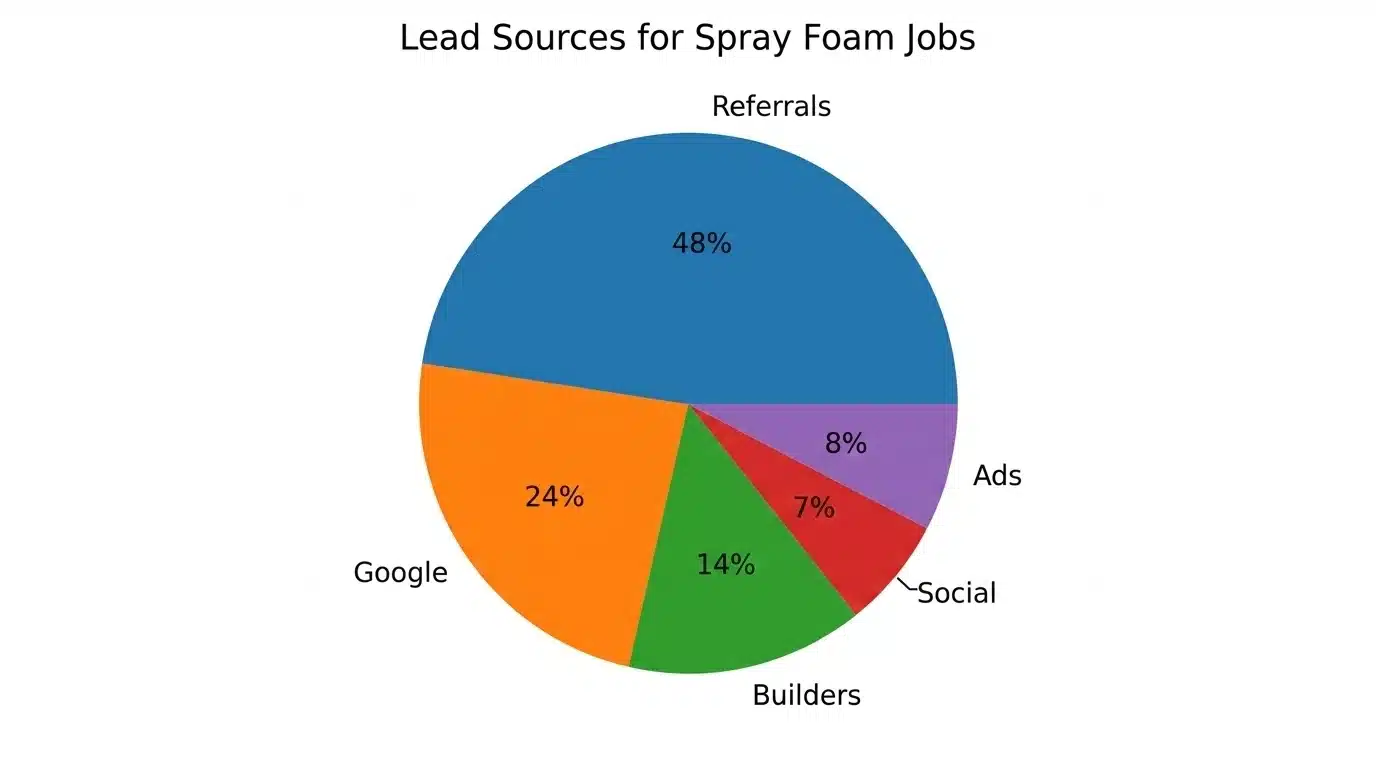
Referrals are valuable, but they are not scalable on demand.
Top Reasons Spray Foam Companies Struggle to Scale
1. Overreliance on Word-of-Mouth
Many contractors depend on referrals for most of their business.
Problems with this approach include:
- Inconsistent job flow
- Lack of predictability
- No control over lead volume
Even strong referral networks cannot guarantee enough work to support multiple crews.
2. Weak Local Search Visibility
Homeowners and builders frequently find contractors through online searches.
Businesses without strong local visibility struggle to compete.
Common issues:
- Incomplete Google Business Profiles
- Poor website optimization
- Few customer reviews
- Lack of educational content
Studies published by HubSpot on HubSpot show that companies with strong search visibility generate significantly more inbound leads than those relying on outbound tactics.
3. Inconsistent Lead Follow-Up
Even when leads come in, many insulation companies lose them due to slow responses.
Common problems include:
- Missed calls
- Delayed estimates
- No structured follow-up system
Research published by Harvard Business Review on Harvard Business Review shows that companies responding quickly to inquiries are far more likely to convert leads into customers.
4. Lack of Systems for Multiple Crews
Running one crew requires basic coordination.
Running multiple crews requires systems for:
- Scheduling
- project management
- inventory logistics
- job quoting
- technician coordination
Without these systems, operational inefficiencies quickly appear.
5. Seasonal Demand Fluctuations
Spray foam work can vary significantly by season.
Many contractors experience:
- Busy winters
- Slow summers
- inconsistent project pipelines
Without diversified lead sources, revenue swings become extreme.
6. Limited Market Positioning
Many spray foam companies market themselves as general insulation providers.
However, successful contractors often specialize in areas such as:
- energy-efficient homes
- pole barns
- commercial buildings
- retrofits
Clear positioning improves visibility and conversion.
What Successful Spray Foam Companies Do Differently
The biggest difference between stalled companies and growing ones is consistent visibility and systems.
Research from McKinsey & Company available on McKinsey & Company highlights that companies with structured customer acquisition systems grow significantly faster than those relying on informal networks.
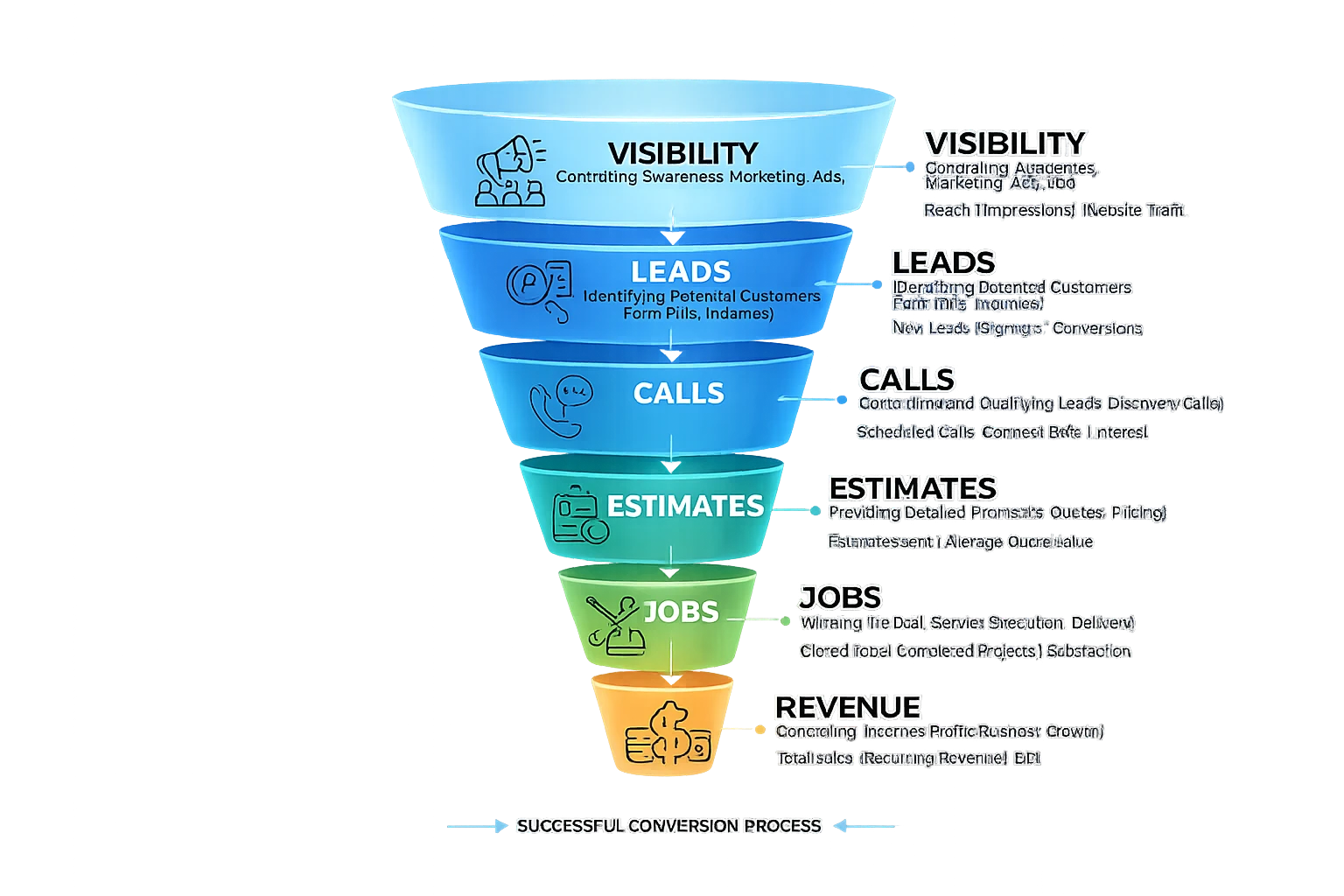
The Spray Foam Growth Framework
Scaling typically follows a predictable progression.
Step 1: Visibility
People must be able to find the company.
Channels include:
- Google search
- Google Maps
- educational content
- review platforms
Step 2: Lead Generation
Visibility produces inquiries:
- website form submissions
- phone calls
- estimate requests
Step 3: Sales Conversion
Leads must convert into jobs through:
- quick responses
- professional estimates
- clear pricing explanations
Step 4: Job Pipeline
A steady pipeline enables:
- predictable scheduling
- multiple crews
- stable revenue
Short-Term vs Long-Term Growth Strategies
Many contractors rely heavily on paid advertising.
While useful, it works differently from organic visibility.
The most successful companies combine all three approaches.
Who Struggles Most vs Who Wins
Companies That Struggle
- Depend heavily on referrals
- Have limited online visibility
- Delay responses to leads
- Lack operational systems
- Avoid investing in marketing infrastructure
Companies That Scale Successfully
- Build strong search visibility
- generate consistent leads
- maintain high review ratings
- Implement structured sales processes
- Plan growth before adding crews
The Biggest Misconception About Scaling
A common belief is that more equipment equals more growth.
In reality:
More crews require more predictable demand.
Without consistent leads, adding another crew simply increases overhead and financial risk.
Growth begins with market visibility and lead systems, not trucks or rigs.
The Real Question Contractors Should Be Asking
Instead of asking:
“How do I add another crew?”
The better question is:
“How can I create a predictable pipeline of spray foam jobs every month?”
Once demand becomes predictable, scaling operations becomes far easier.
Ready to Grow Beyond One Crew?
Scaling a spray foam insulation company requires more than equipment; it requires consistent visibility, predictable leads, and scalable marketing systems.
Spray Foam Genius Marketing specializes in helping insulation contractors build sustainable growth through search visibility, local SEO, and strategic lead generation.Phone:USA: 877-840-FOAMCA: 844-741-FOAM
Email: info@sprayfoamgeniusmarketing.com
Growth doesn’t happen by accident. The right strategy creates the momentum needed to move from one crew to a thriving multi-crew operation.
Frequently Asked Questions
Why do most spray foam companies stay stuck with one crew?
Most rely heavily on referrals and lack predictable lead generation systems. Without consistent demand, adding additional crews creates financial risk rather than sustainable growth.
How many leads does a spray foam crew typically need each month?
A single installation crew generally requires 25–40 qualified leads per month to maintain a consistent schedule, depending on job size and conversion rate.
Does SEO really matter for insulation contractors?
Yes. Local search visibility is one of the primary ways homeowners and builders find contractors online. Strong search rankings significantly increase inbound inquiries.
What is the most effective marketing channel for spray foam companies?
The most effective strategy typically combines local SEO, Google Maps visibility, customer reviews, and referrals, creating both short-term and long-term lead flow.
When should a contractor consider adding another crew?
Expansion becomes viable when lead volume, sales conversion, and scheduling pipelines consistently support additional workload without risking downtime.