
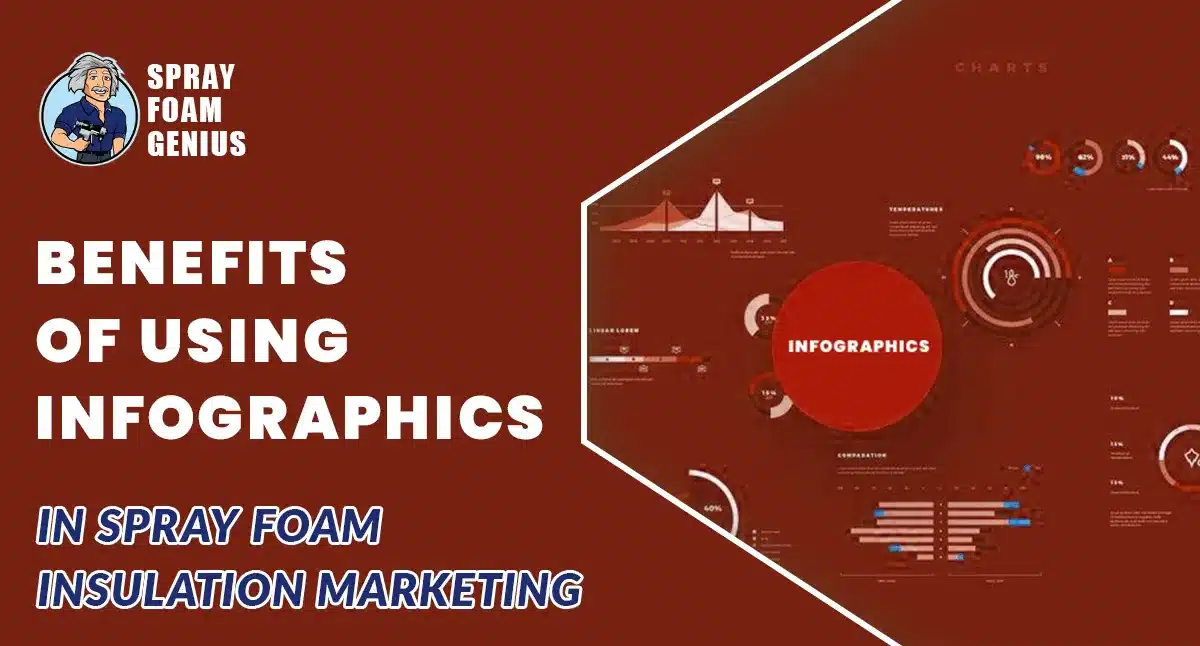
In today’s visually-driven digital landscape, spray foam contractors face an increasingly competitive market where standing out requires more than just quality work, it demands smart, strategic marketing. While traditional marketing methods still have their place, visual content has emerged as the undisputed champion of engagement, and infographics lead the charge as one of the most powerful tools in your marketing arsenal.
For spray foam contractors looking to educate prospects, simplify complex technical information, and generate more qualified leads, infographics offer a game-changing solution that bridges the gap between technical expertise and customer understanding.
To understand how content like infographics improves search visibility and lead generation for spray foam companies, explore this spray foam contractor SEO content guide.
Why Visual Content Matters in the Spray Foam Industry
The spray foam insulation industry deals with inherently technical products, R-values, thermal bridging, air sealing properties, and energy efficiency calculations can overwhelm homeowners who simply want a more comfortable, energy-efficient home. This is where infographics become invaluable.
Visual content is processed faster than text alone. When you’re explaining why closed-cell foam offers superior moisture resistance or how spray foam can reduce energy bills, an infographic can communicate these benefits in seconds rather than paragraphs.
For spray foam contractors, this translates directly to business growth. When potential clients can quickly grasp the value proposition of spray foam insulation through compelling visuals, they move faster through the sales funnel, reducing your customer acquisition costs and improving conversion rates.
Related reading: Data-Driven Marketing for Spray Foam and Insulation Contractors
7 Key Benefits of Infographics for Spray Foam Marketing
1. Simplifying Complex Technical Information
Spray foam insulation involves chemistry, building science, and energy dynamics that most homeowners don’t understand. Infographics allow you to break down concepts like polyurethane reactions, vapor barriers, and thermal performance into digestible visual segments. Instead of reading a 500-word explanation of how spray foam creates an airtight building envelope, prospects can view a simple diagram showing air leakage points and how foam seals them, immediately understanding the value.
2. Boosting Social Media Engagement and Shares
Social media platforms favor visual content, and infographics are inherently shareable. Eighty percent of marketers incorporate images in every social media post because visual content generates significantly higher engagement rates. An infographic comparing the R-value of spray foam versus fiberglass insulation, or showcasing energy savings over time, is far more likely to be shared than a text-based post.
For spray foam contractors, this means expanded reach without additional advertising spend. When a satisfied customer shares your infographic about energy savings, their network sees your brand and expertise, organic marketing at its finest.
3. Establishing Authority and Expertise
High-quality infographics demonstrate professionalism and industry knowledge. When you create visual content explaining spray foam benefits, installation processes, or energy efficiency data, you position yourself as an industry authority. This builds trust with prospects who are researching contractors and helps differentiate your business from competitors still relying solely on text-heavy content.
Infographics showcasing proprietary data, like average energy savings from your completed projects or before-and-after thermal imaging comparisons, further establish your expertise and provide unique value that competitors can’t replicate.
4. Improving SEO and Website Traffic
Search engines increasingly prioritize pages with diverse, high-quality content. Infographics contribute to longer page dwell times as visitors engage with visual content, signaling to search algorithms that your content provides value. Additionally, infographics attract backlinks from other websites and blogs, improving your domain authority and search rankings.
When properly optimized with descriptive alt text, file names, and surrounding context, infographics can rank in Google Image search, creating additional discovery pathways for potential clients searching for spray foam information.
5. Enhancing Lead Generation and Conversion
Infographics can serve as powerful lead magnets. Offering downloadable infographics on topics like “The Complete Guide to Spray Foam ROI” or “10 Signs Your Home Needs Better Insulation” in exchange for email addresses builds your prospect list with qualified leads actively interested in insulation solutions.
Once prospects enter your funnel, infographics in email campaigns improve click-through rates and keep your brand top-of-mind throughout their decision-making process.
6. Creating Versatile Marketing Assets
A single well-designed infographic provides multiple marketing opportunities. Use it on your website, share across social media platforms, include in email newsletters, print for trade shows, incorporate into sales presentations, and repurpose sections for individual social posts. This versatility maximizes your content marketing ROI, giving you multiple touchpoints from a single creative investment.
7. Addressing Common Objections Visually
Price concerns, installation time questions, and uncertainty about long-term value are common objections in the spray foam industry. Infographics can address these proactively by visualizing cost comparisons, installation timelines, and lifetime savings calculations. When prospects see a clear visual breakdown showing how spray foam pays for itself within 3-5 years through energy savings, price objections often dissolve before a sales conversation even begins.
Best Practices for Creating Effective Spray Foam Infographics

To maximize impact, focus on creating infographics that speak directly to homeowner pain points. Address concerns like high energy bills, uncomfortable rooms, moisture problems, and environmental impact. Use your actual project data whenever possible, real numbers from real customers carry more weight than industry averages.
Keep designs clean and professional. Avoid cluttering your infographic with too much information. The goal is quick comprehension, not overwhelming detail. Use your brand colors consistently to build recognition, and ensure all text is readable at various sizes since infographics are shared across different platforms.
Include clear calls-to-action on every infographic. Whether it’s “Schedule Your Free Energy Assessment,” “Download Our Complete Guide,” or “Call 877-840-FOAM for a Quote,” guide viewers toward the next step in engaging with your business.
Implementing Infographics in Your Marketing Strategy
Start by identifying your most frequently asked questions and common customer concerns. These become perfect infographic topics. Questions like “How much does spray foam insulation cost?” or “What’s the difference between open-cell and closed-cell foam?” provide ready-made content opportunities.
Develop a content calendar that includes regular infographic creation and distribution. Consistency matters in content marketing, one viral infographic is great, but a steady stream of valuable visual content builds lasting brand awareness and authority.
Don’t have design skills? Numerous online tools and templates make infographic creation accessible, or consider partnering with a marketing agency specializing in the spray foam industry who understands both design principles and insulation technical details.
Measuring Infographic Success
Track key performance indicators to understand what resonates with your audience. Monitor social media shares, website traffic to pages featuring infographics, time-on-page metrics, lead generation from downloadable infographics, and backlinks acquired. These metrics reveal which topics and design styles perform best, allowing you to refine your strategy over time.
Google Analytics can show traffic sources, while social media analytics reveal engagement rates. Email marketing platforms track download rates and click-throughs. This data-driven approach ensures your infographic investments deliver measurable business results.
Ready to Transform Your Spray Foam Marketing with Infographics?
The data is clear: infographics drive traffic, boost engagement, and help convert prospects into customers. In the competitive spray foam insulation market, contractors who leverage visual content gain significant advantages in visibility, credibility, and lead generation.
At Spray Foam Genius Marketing, we specialize in creating high-impact visual content strategies specifically for spray foam contractors. Our team understands both the technical aspects of spray foam insulation and the marketing principles that drive results. We don’t just create beautiful infographics, we create conversion-focused visual assets that grow your business.
Ready to stand out from your competition?
For USA: 877-840-FOAM For Canada: 844-741-FOAM Email: info@sprayfoamgeniusmarketing.com
Frequently Asked Questions
Q: How much does it cost to create professional infographics for my spray foam business?
A: Costs vary widely depending on complexity and whether you create them in-house or hire professionals. DIY tools like Canva offer templates starting at $0-30/month, while professional designers charge $200-1,000+ per infographic. Many spray foam contractors find the middle ground by using templates and customizing them with their specific data and branding, which typically costs $50-200 per infographic through freelance platforms.
Q: How often should I be creating and sharing infographics?
A: Aim for at least one high-quality infographic per month to maintain consistent visibility and authority. This frequency allows you to cover key topics comprehensively while remaining manageable for most contractors. During peak seasons (spring/fall), consider increasing to 2-3 per month. Quality always trumps quantity, one excellent infographic that addresses a real customer pain point outperforms five mediocre ones.
Q: What topics work best for spray foam insulation infographics?
A: The most effective topics address specific customer concerns and decision-making factors. Top performers include energy savings comparisons, spray foam vs. traditional insulation side-by-sides, ROI timelines, installation process breakdowns, R-value explanations, common misconceptions debunked, and environmental impact statistics. Use your sales conversations to identify questions prospects repeatedly ask, these make perfect infographic subjects.
Q: Can infographics really help me compete against larger spray foam companies?
A: Absolutely. Infographics level the playing field by allowing smaller contractors to demonstrate expertise and professionalism regardless of company size. High-quality visual content establishes authority and builds trust just as effectively for a three-person crew as a national franchise. Local contractors often have an advantage, you can create infographics featuring local climate data, regional energy costs, and customer testimonials from recognizable neighborhoods, making content more relevant and compelling than generic corporate materials.
Q: How do I make sure my infographics actually generate leads and sales?
A: Strategic calls-to-action are essential. Every infographic should guide viewers toward a specific next step, whether that’s calling your phone number, downloading a comprehensive guide, scheduling an assessment, or visiting a landing page. Track which CTAs perform best using unique phone numbers or custom URLs. Additionally, use infographics as part of a broader content strategy, not in isolation. Follow up infographic posts with related blog content, email campaigns, and retargeting ads that continue the conversation and move prospects through your sales funnel.
Sources:
“6 Benefits of Infographics”, Editage Insights editage.com
“10 Big Ways Infographics Benefit Your Content Strategy”, Search Engine Journal Search Engine Journal
Further reading
Official guidance from Google on the topics in this article: