
You do not need to guess what will make a homeowner call. An A/B test, also called a split test, compares two versions of the same thing, such as two ad headlines or two button labels, and lets real visitors show you which one works better. For spray foam and insulation contractors, where each lead is valuable, small improvements to ads, landing pages and emails can matter. This guide explains what to test, how to run a fair test and where small companies can go wrong.
What A/B Testing Is
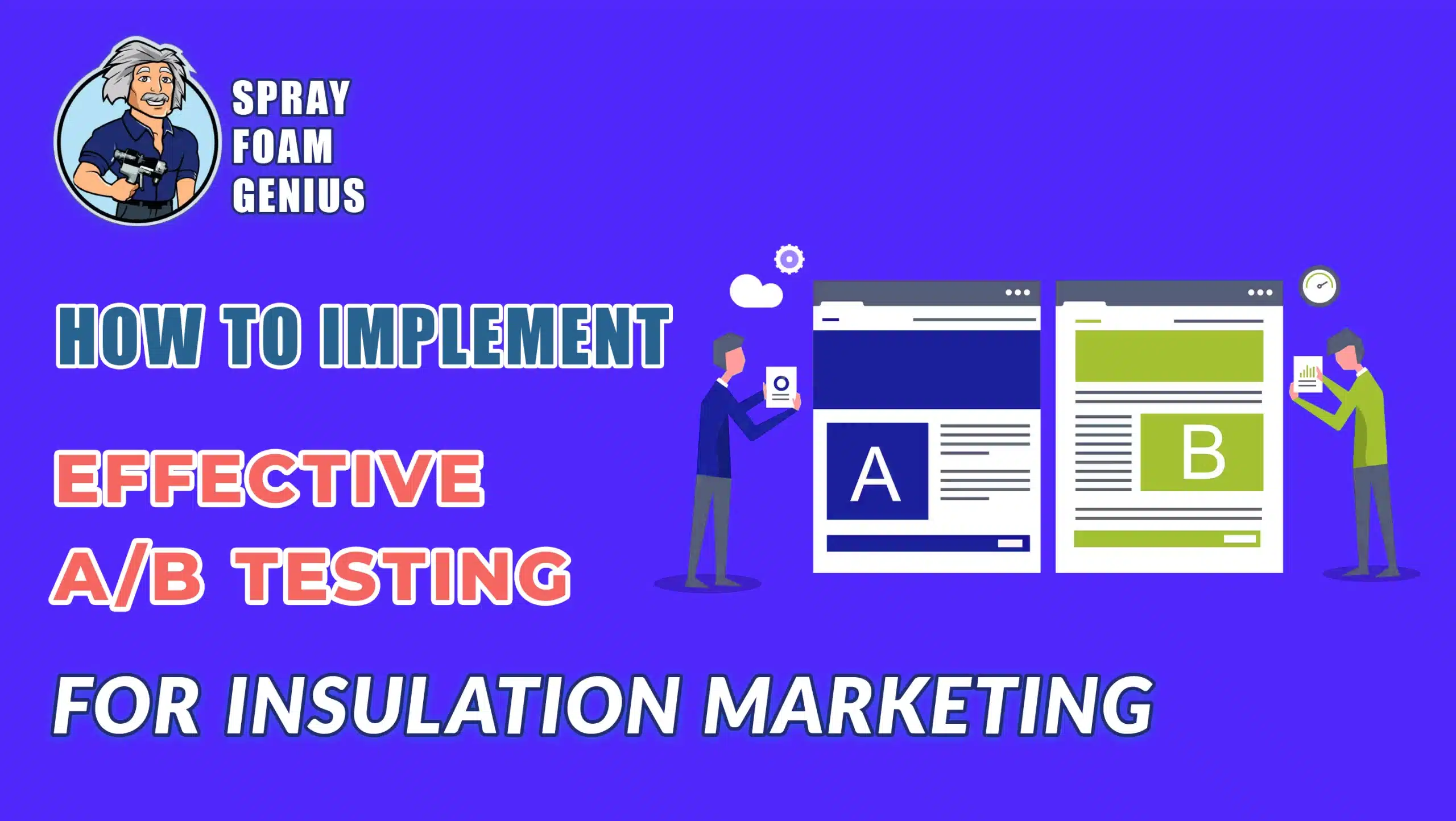
In an A/B test you change one thing, show version A to some people and version B to others at the same time, and compare a specific result, such as form submissions, phone calls or clicks. The key is that the groups are similar and the test runs over the same period, so seasons, weather and ad changes do not skew the result.
It is a controlled experiment, not a hunch. Instead of arguing about whether a green or orange button is better, you let customers decide.
Related reading: Angi, HomeAdvisor and Google Local Services Ads for Insulation Contractors: What Is Worth It?
Why It Matters for Insulation Marketing
- Your spend is limited. If an ad or page converts a little better, you get more estimates from the same traffic.
- Opinions often differ. A test replaces guesses with evidence.
- Customers behave differently by market. What works for a coastal homeowner may not work for a rural metal-building owner.
- Small gains can add up when you apply what you learn to every new campaign.
A/B testing does not guarantee a certain lift or a lower cost per lead. Many tests show no clear winner, and that is useful information too.
What to Test
Start with things that are closest to the decision to call or request a quote.
Headlines
Your page headline is often the first thing a visitor reads. Ideas to compare:
- A benefit ("A more comfortable, efficient home") versus a service ("Spray foam insulation in [City]").
- A headline that stresses expertise or local presence versus one that stresses a free estimate.
- Short versus longer wording.
Calls to Action
- Button text, such as "Get a free estimate" versus "Schedule a free inspection."
- Button placement, such as at the top of the page versus after the first section.
- Phone number prominence on mobile.
Landing Pages
If you run Google Ads or Meta Ads, the landing page matters as much as the ad.
- Short form versus longer form. Fewer fields can mean more submissions, but longer forms may give better leads.
- Form near the top of the page versus lower down.
- Different hero photos, such as a finished job versus your crew.
- Including reviews, certifications or project examples near the form.
- A page for a specific service versus a general page.
Ad Copy and Creative
- Different headlines and descriptions.
- Text versus image or video formats.
- Different offers, such as a free inspection versus an energy check. Only offer what you really provide.
Emails
- Subject lines (specific and honest versus more general).
- Personal-sounding versus formal copy.
- Including a testimonial or project example versus keeping it informational.
- Send time and day.
Whatever you test, keep the claims honest. Avoid fake urgency or promises about savings that you cannot support.
How to Run a Fair A/B Test
- Define your goal. Pick one outcome, such as form submissions, phone calls or booked estimates. Avoid judging a test only by clicks if what you want is jobs.
- Test one thing at a time. If you change the headline, image and button together, you will not know which change mattered.
- Make the versions meaningfully different. A tiny wording tweak rarely produces a clear result.
- Split traffic fairly and run both versions at the same time. Do not run version A in January and version B in July.
- Make sure your tracking works. Calls and form submissions need to be recorded for each version. Without call tracking, a phone-heavy business can miss most of the results.
- Let it run long enough. Stopping at the first sign of a winner often leads to the wrong conclusion. Wait until you have enough results to be confident, and watch for weekday or seasonal patterns.
- Analyze the result. Compare the numbers you chose in step 1, not just the ones that look best.
- Apply the winner, record what you learned and decide what to test next.
What If You Do Not Have Much Traffic?
Many local contractors do not have enough visitors for a statistically strong test on a single page. That does not mean you cannot learn.
- Test where volume is higher, such as paid ads or email, rather than a low-traffic page.
- Test bigger changes, because small differences are hard to detect with limited data.
- Be careful reading small samples. Ten leads versus seven is not a reliable result.
- Use before-and-after comparisons with care. Seasons, ad changes and weather can distort them, so note what else changed.
- Keep a simple test log so you do not repeat tests or forget the results.
Tools
- Google Ads experiments let you compare campaign changes against a baseline. Meta Ads has its own testing tools.
- Email platforms commonly include subject-line and content testing.
- Landing page and website tools often include built-in split testing. Third-party tools exist as well, such as Optimizely, VWO, Unbounce and others.
- Google Optimize is no longer available. Google ended it on September 30, 2023, according to its support page, so older articles that recommend it are out of date.
- Google Analytics and call tracking help you see which version produced calls and form submissions.
Check each tool's current features and pricing, since they change often. Many ad platforms include testing at no extra cost.
A/B Testing and SEO
If you test pages on your website, follow Google's guidance so you do not hurt your search visibility. In its documentation on website testing and Google Search, Google recommends:
- Do not cloak, meaning do not show Googlebot different content than users see.
- Use rel="canonical" on alternate test URLs, pointing to the original.
- Use temporary (302) redirects, not permanent (301) redirects, when sending users to a variation.
- Run the test only as long as necessary, then update your site and remove the test.
Test ads, emails and landing pages built for paid traffic as freely as you like. Be more careful with the pages that earn organic search traffic.
Common Mistakes
- Testing too many things at once.
- Ending a test early after a few good results.
- Testing something unimportant while ignoring a broken form or a slow mobile page. Fix the basics first.
- Measuring clicks instead of calls and booked jobs.
- Not recording results, so you repeat tests.
- Treating one test as a rule forever. What works can change with season, offer and audience.
Frequently Asked Questions
What is A/B testing in simple terms?
It is comparing two versions of one thing, such as an ad headline or a button, at the same time to see which gets more of the result you want.
What should a spray foam contractor test first?
Start with the elements closest to the decision: your landing page headline, the call to action and the form, and the headlines in your ads. Fix any obvious problems, such as a slow mobile page or a hard-to-find phone number, before testing.
How long should a test run?
Long enough to collect a reasonable amount of data and cover normal ups and downs, such as weekdays and weekends. There is no single right answer because it depends on your traffic. Do not stop the moment one version pulls ahead.
Do you need special software?
Not always. Ad platforms and email tools often include testing. For website pages, a testing tool can help. Note that Google Optimize no longer exists.
Can small contractors benefit from A/B testing?
Yes, especially with ads and emails, where you can get enough volume. If your website traffic is small, test bigger changes and be cautious about drawing conclusions from small numbers.
Can A/B testing hurt your SEO?
It can if it is done carelessly. Follow Google's guidance on cloaking, canonical tags and temporary redirects, and end the test when you have enough data.
What if the results are unclear?
That is common. Run the test longer, try a bolder change or test a different element. Unclear results usually mean the change did not matter much to customers.
Get a Free Marketing Audit
If you are not sure which ad, page or email is worth testing first, we can take a look. Ask us for a free marketing audit by calling 877-840-3626 (USA) or emailing info@sprayfoamgeniusmarketing.com.