
Direct Answer
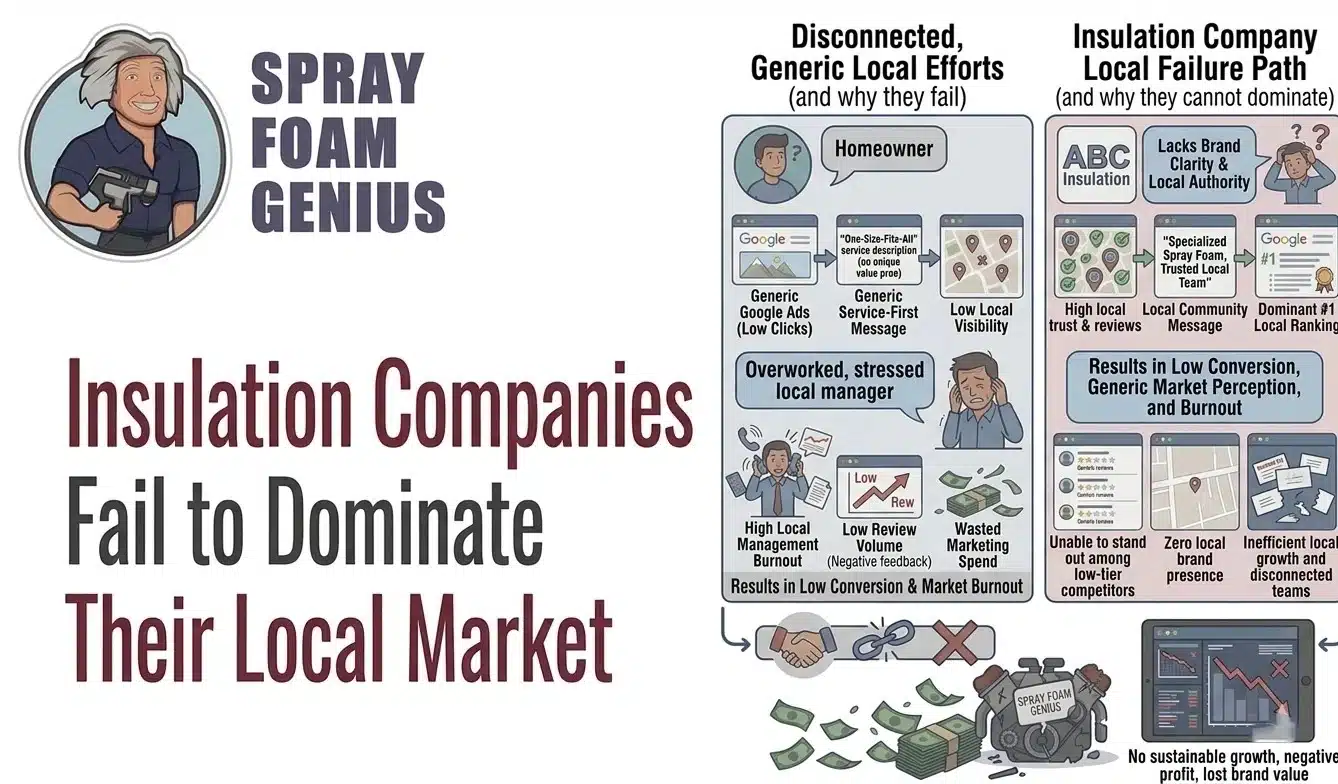
Most insulation companies fail to dominate their local market because they rely on outdated marketing tactics, compete on price instead of positioning, depend on shared leads, and lack a consistent, data-driven growth strategy. Instead of building a strong local brand and owning their digital presence, they scatter efforts across low-impact channels, resulting in inconsistent leads, low visibility, and limited authority in their service area.
For contractors looking to improve visibility and attract more high-intent local customers, this local SEO guide for spray foam contractors explains how to build stronger rankings, improve map pack performance, and generate more consistent local leads.
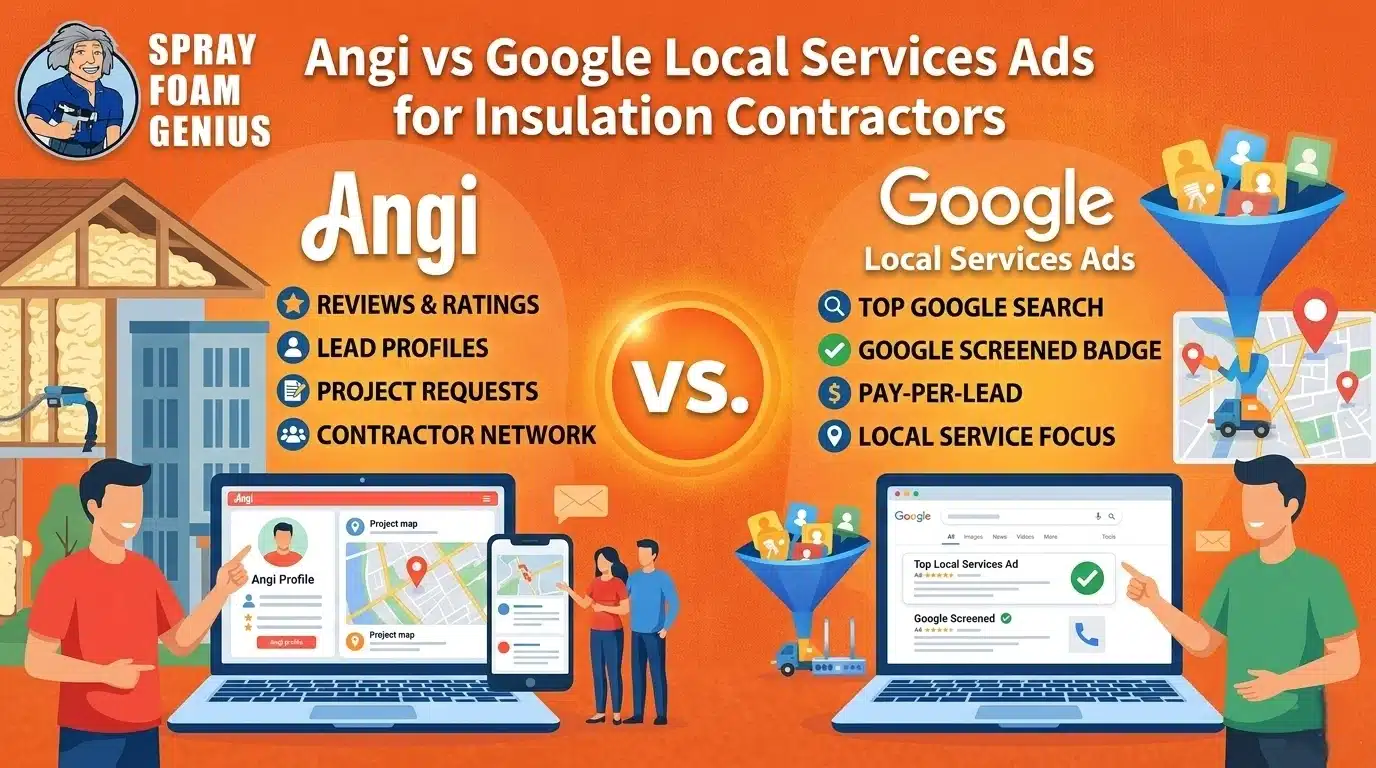
Related reading: Angi, HomeAdvisor and Google Local Services Ads for Insulation Contractors: What Is Worth It?
TLDR
- Most contractors fail due to inconsistent marketing and weak local SEO presence
- Relying on shared or low-quality leads reduces profitability and control
- Companies that dominate focus on brand authority, not price competition
- Google Business Profile and local SEO drive the majority of high-intent leads
- Paid ads fail without proper tracking, targeting, and landing pages
- Consistent content and reviews build long-term market trust
- Winning companies use data, automation, and conversion optimization
Why Insulation Companies Struggle to Dominate Locally
1. Over-Reliance on Shared Leads
Many insulation contractors depend on third-party platforms that sell the same leads to multiple companies. While this may generate short-term calls, it creates long-term problems:
- Increased competition for the same customer
- Lower close rates
- Reduced profit margins
Businesses that rely on inbound-owned channels tend to generate higher ROI than those dependent on purchased leads.
What to Do Instead
- Invest in your own website and SEO
- Build a direct lead pipeline through organic and paid channels
- Use landing pages tailored to insulation services
2. Weak Local SEO and Google Presence
Local search dominates service-based industries. A large share of Google searches have local intent.
Yet most insulation companies:
- Don’t optimize their Google Business Profile
- Lack consistent NAP (Name, Address, Phone) data
- Have few or no reviews
What Dominating Companies Do
- Optimize Google Business Profile weekly
- Collect 5–10 new reviews monthly
- Target location-based keywords
3. Competing on Price Instead of Value
Many insulation contractors believe lower pricing wins jobs. In reality, it erodes profitability and attracts low-quality clients.
Companies competing on value instead of price often achieve higher long-term margins and customer loyalty.
Shift Your Positioning
- Highlight energy savings and ROI of insulation
- Showcase certifications and expertise
- Use before-and-after case studies
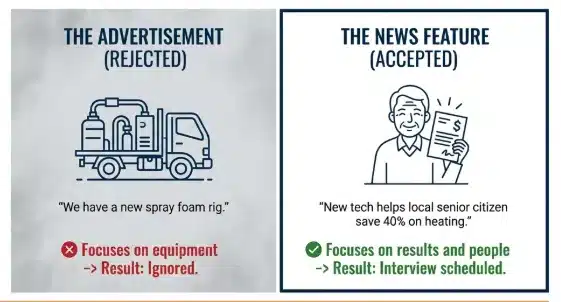
Example:Instead of saying “Cheapest spray foam,” say:“Reduce energy bills by up to 40% with professionally installed spray foam insulation.”
4. Lack of a Conversion-Focused Website
A common issue is having a website that looks decent but doesn’t convert visitors into leads.
Average website conversion rates are modest, but optimized service pages can convert at much higher rates.
Key Conversion Elements Missing
- Clear call-to-action buttons
- Service-specific landing pages
- Fast loading speed
- Mobile optimization
Actionable Fix
- Add “Get a Free Quote” buttons above the fold
- Create separate pages for each service (attic, crawl space, spray foam)
- Use trust signals like testimonials and certifications
5. Inconsistent Marketing Efforts
Most insulation companies market in bursts. They run ads for a month, stop, then restart later.
This inconsistency leads to:
- Lost momentum
- Poor brand recall
- Higher acquisition costs
Consistent branding and messaging can increase revenue.
What Works Instead
- Monthly SEO and content strategy
- Always-on Google Ads campaigns
- Consistent social proof and engagement
6. Ignoring Reviews and Reputation Management
Online reputation is critical in local service industries.
A study from the BrightLocal consumer review survey shows:
- Businesses with higher ratings get significantly more clicks
Action Plan
- Ask every satisfied customer for a review
- Respond to all reviews within 24 hours
- Highlight reviews on your website
7. Poor Tracking and Data Usage
Without tracking, marketing becomes guesswork.
Most contractors don’t track:
- Cost per lead
- Conversion rates
- Source of leads
What High-Performing Companies Track
Tools like call tracking and analytics platforms provide insights that drive smarter decisions.
What Actually Works: A Winning Strategy
To dominate a local insulation market, companies must shift from reactive marketing to a structured system:
1. Own Your Lead Generation
- SEO + Google Business Profile
- High-converting landing pages
- Targeted Google Ads
2. Build Authority
- Publish educational content
- Showcase projects and results
- Collect and display reviews
3. Optimize Conversions
- Use clear CTAs
- Improve page speed
- Test different offers
4. Stay Consistent
- Monthly campaigns
- Ongoing SEO
- Regular updates and engagement
Ready to Dominate Your Local Market?
If you’re tired of competing on price and chasing low-quality leads, it’s time to build a system that consistently attracts high-value customers. With a data-driven marketing strategy and the proven approach of Spray Foam Genius Marketing, you can position your insulation business as the go-to authority in your area, generating predictable growth and premium clients.
Contact us:USA: 877-840-FOAMCanada: 844-741-FOAMEmail: info@sprayfoamgeniusmarketing.com
Frequently Asked Questions
1. Why are shared leads bad for insulation companies?
Shared leads are sold to multiple contractors, increasing competition and lowering close rates. This drives up costs and reduces profitability.
2. How important is Google Business Profile for insulation contractors?
It is critical. A well-optimized profile can generate a majority of local leads and improve visibility in map results.
3. What is a good conversion rate for insulation websites?
A well-optimized site should convert between 5% and 10% or higher, depending on traffic quality and offer clarity.
4. How long does SEO take to work?
SEO typically takes 3 to 6 months to show significant results, but it delivers long-term, sustainable lead generation.
5. Should insulation companies invest in paid ads?
Yes, but only with proper targeting, landing pages, and tracking. Otherwise, ad spend can quickly become wasted budget.