Direct Answer
Many insulation contractors invest heavily in Google Ads, expecting a steady stream of new leads and paying jobs. Yet, weeks or months later, the calls are few and the ROI is disappointing. The common assumption is that simply running ads will generate customers, but the reality is far more nuanced.
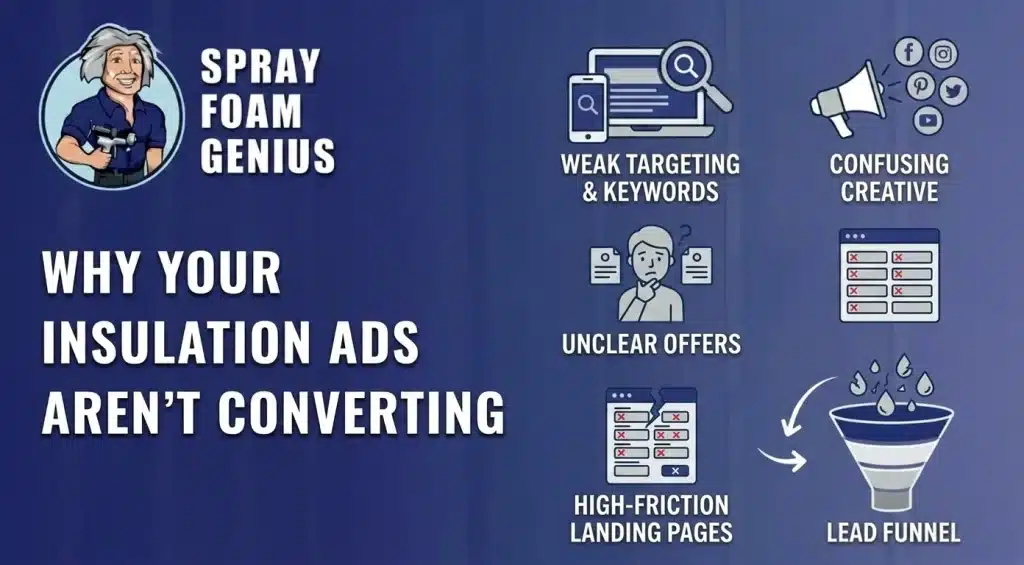
Most contractors misunderstand the true behavior of online searchers, fail to match ad messaging with customer intent, and overlook the technical details of conversion optimization. In this article, we’ll break down why Google Ads campaigns often fail to turn clicks into jobs, where successful campaigns actually generate results, and the steps insulation companies can take to transform their ad spend into tangible revenue.
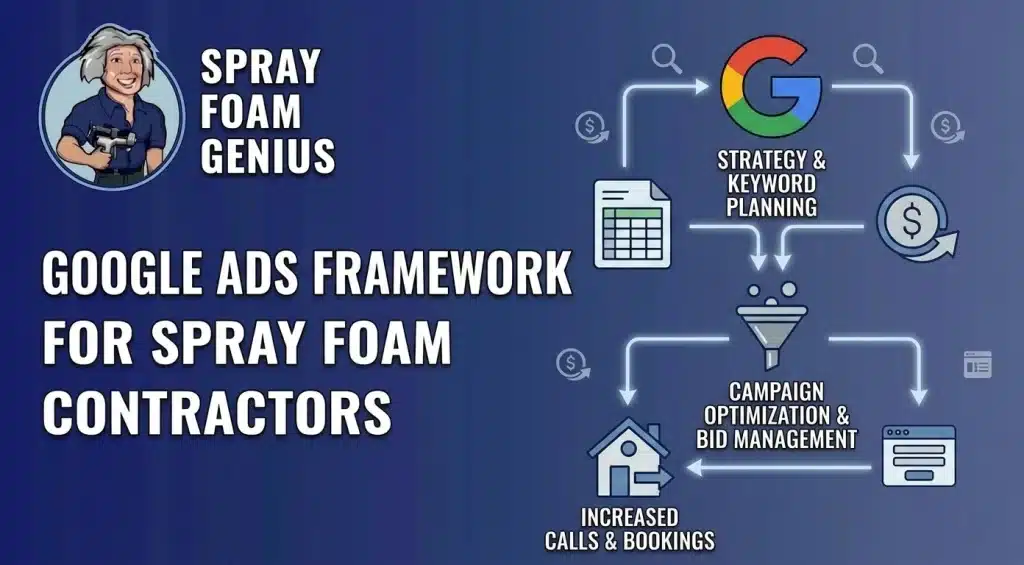
For a deeper breakdown of how high-performing campaigns are structured specifically for insulation contractors, see this google ads framework for spray foam contractors.
TLDR
- High clicks ≠ , high conversions – 60–70% of traffic may never request a quote due to poor landing page design or irrelevant messaging.
- Intent mismatch is costly – Targeting broad keywords like “insulation” attracts information seekers, not ready-to-hire homeowners or contractors.
- Local targeting is crucial – Insulation jobs are hyper-local; campaigns ignoring geo-targeting lose 40–50% of potential leads.
- Call tracking and analytics matter – Without tracking, many businesses misattribute calls to organic results rather than paid ads.
- Ad messaging drives quality leads – Highlighting certifications, free estimates, and immediate availability increases click-to-call conversion rates by 20–30%.
- Landing page speed and UX impact ROI – Pages taking longer than 3 seconds to load can reduce lead submissions by up to 25%.
- Competitive differentiation wins jobs – Campaigns that communicate unique value (e.g., eco-friendly spray foam, insulation warranty) outperform generic campaigns.
The Real Problem Most Insulation Contractors Don’t See
The primary misconception is that clicks directly translate into jobs. In reality, users behave differently:
- Search behavior: Homeowners searching “best attic insulation options” are often in research mode, not ready to hire. Queries like “spray foam insulation contractor near me” or “attic insulation cost estimate” indicate high buying intent.
- Decision-making process: Many homeowners compare 3–5 contractors before making a decision. Clicking an ad is just the first step; follow-up, trust signals, and rapid response are what actually convert.
- Offline behavior: Some users prefer calling directly from Google Maps or a local directory rather than clicking an ad, which skews campaign analytics.
Example: A Google Ads campaign targeting the keyword “insulation company” may get 500 clicks per month, but only 25–30 of those users will actually call or request a quote. The remaining 470 clicks are mostly curiosity-driven or price-comparison visitors (HubSpot).
Where Jobs Actually Come From
Successful insulation campaigns often rely on a combination of channels, not just Google Ads:
- High-intent search ads (~50–60%)
- Focused keywords such as “spray foam insulation near me” or “attic insulation quote” drive calls from ready-to-hire customers.
- Ads with clear call-to-action and benefits outperform generic ads (Google Ads Help).
- Local SEO & Google Business Profile (~25–30%)
- Homeowners often click on the top 3 Google Maps listings. Optimized business profiles with reviews, photos, and posts can capture leads that ads miss (Search Engine Journal).
- Referral & repeat business (~10–15%)
- Word-of-mouth and repeat clients remain a key source. Ads alone cannot replace reputation-driven leads.
- Social proof & review platforms (~5–10%)
- Sites like HomeAdvisor, Angi, or Yelp influence purchasing decisions. Ads can complement, but cannot substitute, trust signals (Wikipedia).
Top Reasons Insulation Companies Struggle to Get Jobs from Google Ads
1. Targeting the Wrong Keywords
- Mistake: Using broad or generic keywords such as “insulation” or “home improvement.”
- Consequence: Attracts tire-kickers, not buyers.
- Fix: Focus on high-intent, geo-targeted terms like “spray foam insulation contractor in [City]” or “attic insulation estimate [ZIP]” (HubSpot).
2. Ignoring Local Targeting
- Many campaigns are set to national or state-level targeting.
- Local jobs require hyper-local targeting down to city, county, or ZIP code.
- Google’s location extensions and radius targeting can boost relevant leads (Search Engine Journal).
3. Weak Ad Copy
- Ads that read like generic business descriptions fail to differentiate.
- Include:
- Certifications (e.g., “Certified Spray Foam Installer”)
- Offers (e.g., “Free Energy Audit with Insulation Installation”)
- Urgency (e.g., “Schedule Before Winter – Limited Slots”)
4. Poor Landing Page Experience
- Slow-loading pages, confusing navigation, or a lack of a clear CTA reduce conversion (Google Ads Help).
- Include:
- Click-to-call buttons
- Short forms (name, phone, address)
- Trust signals (reviews, badges, warranty info)
5. Not Tracking Conversions
- Calls, form submissions, and even WhatsApp messages must be tracked.
- Google Ads without proper conversion tracking gives false data, leading to misinformed budget decisions (HubSpot).
6. Underestimating the Follow-Up Process
- 70–80% of leads require follow-up within 24 hours to convert.
- CRM integration and prompt callbacks significantly increase job conversion rates.
7. Expecting Instant ROI
- Ads generate clicks, not guaranteed sales.
- Campaigns require optimization over weeks to maximize ROI (Wikipedia).
What Successful Insulation Companies Are Doing Differently
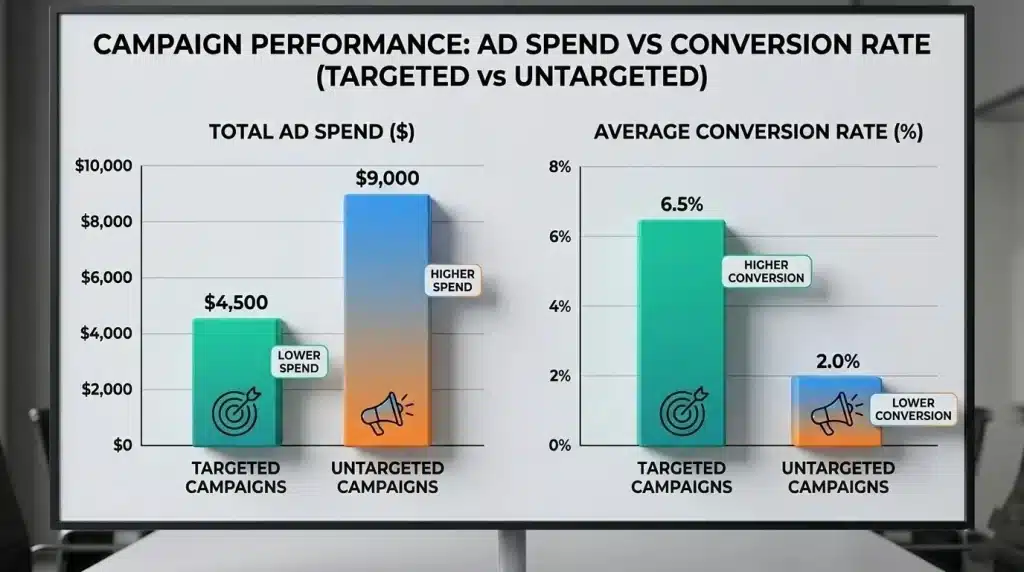
| Struggling Campaigns | High-Performing Campaigns |
| Broad keywords | Geo-targeted, high-intent keywords |
| Generic ad copy | Benefit-driven, unique value propositions |
| Landing page neglect | Optimized, fast-loading, mobile-friendly pages |
| No call tracking | Integrated call tracking & analytics |
| Wait-and-see approach | Immediate follow-up & nurture strategy |
| Sporadic ad spend | Consistent ad presence and seasonal adjustments |
Key Insight: Consistency, clarity, and alignment with customer intent are the differentiators.
Framework for Turning Ads into Jobs
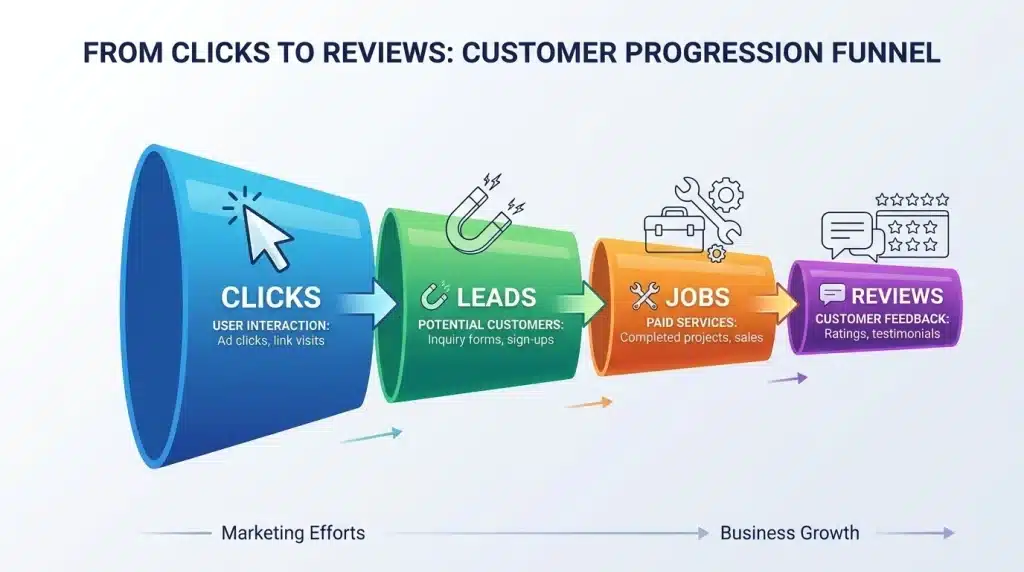
- Traffic
- Generate clicks from high-intent, local search terms (Google Ads Help).
- Leads
- Convert clicks to calls or form submissions with persuasive ads and optimized landing pages.
- Follow-Up
- Rapid response through phone, email, or SMS; ensure CRM tracks all interactions (HubSpot).
- Consultation / Estimate
- Provide on-site evaluations, transparent pricing, and expert recommendations.
- Closed Job
- Deliver quality service and request reviews to fuel future campaigns (Wikipedia).
Comparison: Short-Term Ads vs Long-Term Strategies
| Strategy | Pros | Cons | Compounding Effect |
| Google Ads | Immediate visibility, targetable | Can be costly, needs optimization | Traffic can scale quickly with budget |
| SEO & Local Listings | Builds trust, organic leads | Slow ramp-up (3–6 months) | Cumulative traffic, lower cost per lead (Search Engine Journal) |
| Referral & Reviews | High-quality leads | Limited control | Strengthens long-term brand authority |
Takeaway: Ads are a short-term catalyst, but must integrate with long-term trust-building channels.
Who Struggles Most vs Who Wins
Underperformers:
- Treat ads as a “set it and forget it” tool.
- Ignore local targeting and customer intent.
- Lack tracking, analytics, and follow-up processes (HubSpot).
High Performers:
- Optimize campaigns continuously based on performance data.
- Focus on geo-targeted, high-intent keywords.
- Align ad messaging, landing pages, and follow-up strategy.
- Leverage reviews, trust signals, and referral networks (Wikipedia).
Biggest Misconception
Misconception: “More clicks automatically mean more jobs.”
Reality: Conversion is a multi-step process. Without targeting, messaging, follow-up, and trust-building, clicks are just wasted impressions. The correct approach focuses on quality traffic, optimized landing experiences, and rapid follow-up.
The Real Question Contractors Should Ask
Instead of asking, “How can I get more clicks?” ask:
“How can I consistently convert online traffic into paying insulation jobs?”
This mindset shift prioritizes intent, targeting, and conversion optimization over vanity metrics like impressions or CTR.
Transform Clicks into Paying Insulation Jobs Today
Spray Foam Genius Marketing helps insulation companies turn Google Ads from clicks into booked jobs. Whether it’s auditing campaigns, optimizing ad copy, or creating a full lead conversion system, our experts provide actionable strategies that drive results.
Contact Us:
USA: 877-840-FOAM
CA: 844-741-FOAM
Email: [email protected]
Don’t let another click go to waste, transform your ad spend into real, paying jobs.
FAQ
What keywords generate the most high-intent insulation leads?
Focus on location-specific phrases with transactional intent, such as “spray foam insulation contractor near me,” “attic insulation estimate [City],” or “insulation installation quote [ZIP].” Broad terms like “insulation tips” tend to attract non-buying traffic.
How important is landing page speed for ad conversions?
Extremely. Pages loading slower than 3 seconds can reduce conversion rates by 25% or more. Mobile-optimized, fast-loading pages with clear call-to-action buttons are critical for turning clicks into calls.
Should insulation companies target all areas they serve or only high-performing regions?
Start with high-performing regions identified by past leads, ad metrics, and revenue potential. Expanding gradually ensures the budget focuses on profitable areas.
How can call tracking improve ROI from Google Ads?
Call tracking ensures every phone inquiry is attributed to the correct source. Without it, businesses may overestimate organic traffic performance and underinvest in successful campaigns.
Are Google Ads more effective than SEO for insulation companies?
Google Ads provide immediate visibility and high-intent leads, while SEO builds sustainable, long-term traffic. The best approach combines both: ads for immediate conversions and SEO for compounding, lower-cost leads.
Sources
- Wikipedia: Digital Marketing
- Search Engine Journal: Local SEO Guide
- HubSpot: Conversion Rate Optimization
- Google Ads Help

Spencer is a Google ranking expert and SEO consultant who has helped businesses in the spray foam marketing industry achieve their online marketing goals. Spray Foam Genius Marketing has a proven track record of success, having achieved some impressive results for his clients.
- You’re Ranking on Google, So Why Aren’t You Making More Sales? - September 7, 2026
- How Spray Foam Companies Get Recommended in ChatGPT, Claude, Gemini, and Perplexity - September 3, 2026
- Why Your Insulation Company Needs a Digital Marketing Strategy - August 31, 2026