
Direct Answer
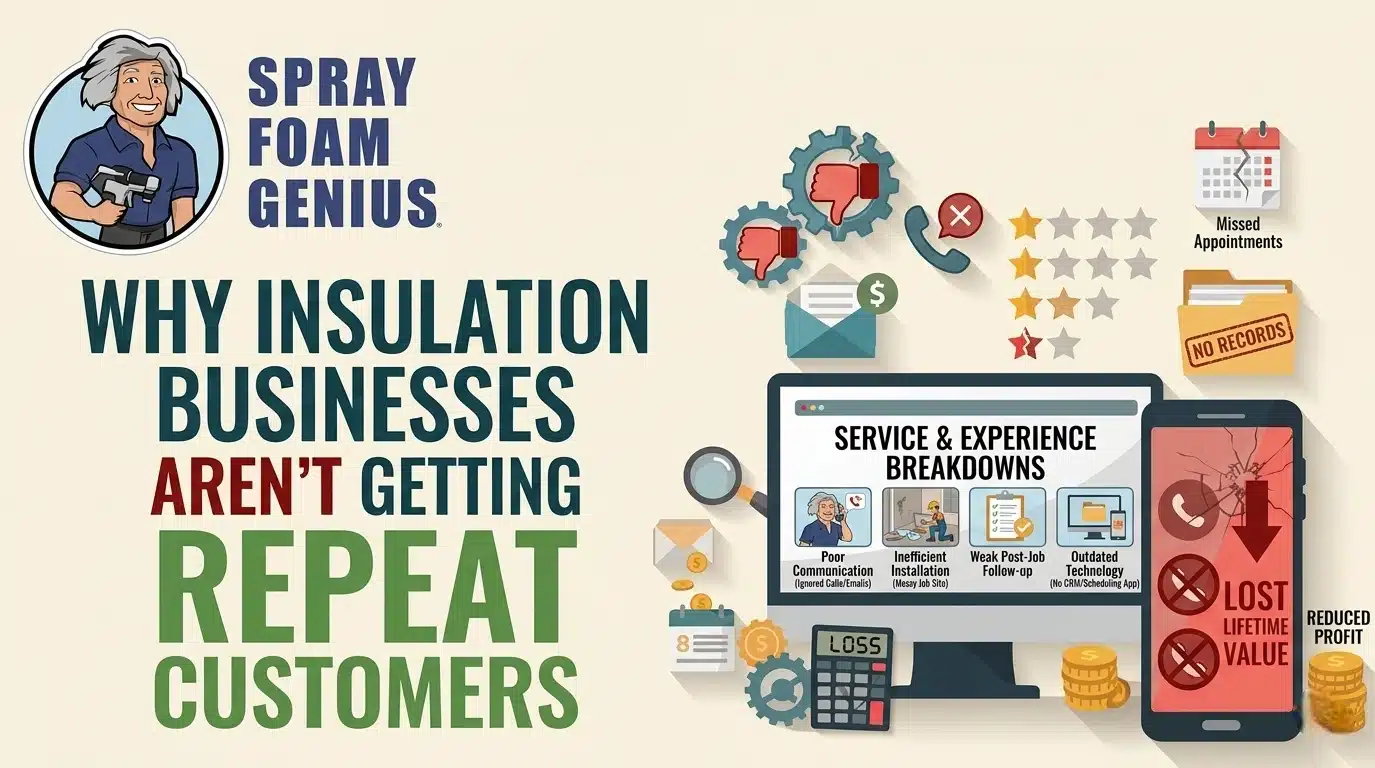
Your insulation business is not getting repeat customers because insulation is typically treated as a one-time service, and most contractors fail to build a structured customer lifecycle around it. Without follow-ups, maintenance offers, education, referral systems, and CRM-driven engagement, customers have no reason to return, even when additional revenue opportunities exist. This forces businesses into constant reliance on expensive new lead generation instead of maximizing lifetime customer value.
TLDR
- Insulation is seen as a one-time purchase unless ongoing value is created
- Retention is far more profitable than acquisition (Harvard Business Review)
- Most contractors lack follow-up systems and CRM automation
- Maintenance, inspections, and energy audits create natural repeat revenue
- Customer education builds trust and long-term engagement
- Referrals are one of the highest-converting marketing channels (Nielsen)
- A customer lifecycle system transforms one-time jobs into recurring revenue
Why Insulation Businesses Struggle With Repeat Customers
Insulation services are naturally low-frequency. Once installed, homeowners assume the job is complete permanently. According to the U.S. Department of Energy, insulation can last for decades depending on material type and installation quality.
However, the real problem is not the service; it’s the lack of a structured customer retention system. A proven spray foam digital marketing guide can help contractors implement follow-up, referral, and re-engagement strategies that maximize customer lifetime value.
The “One-and-Done” Business Model Problem
Transactional Thinking vs Lifecycle Thinking
Most insulation contractors operate with a short-term mindset:
- Install insulation
- Collect payment
- Move to the next job
There is no effort to extend the customer relationship.
What This Causes
- No follow-up communication
- No brand recall after 30–60 days
- No upsell or inspection opportunities
- Lost long-term revenue
Even satisfied customers forget who performed the work.
No Retention Strategy (The Biggest Profit Leak)
According to Bain & Company, increasing customer retention by just 5% can increase profits by 25% to 95%.
Yet most insulation companies focus almost entirely on new lead generation.
Resulting Business Issues
- High advertising costs
- Unstable monthly revenue
- Constant dependence on paid leads
- Low customer lifetime value
Retention is the most underused growth lever in the industry.
Weak or Missing Follow-Up Systems
The first 90 days after installation determine whether a customer remembers your business.
Common Failures
- No post-installation check-ins
- No satisfaction surveys
- No maintenance education
- No re-engagement messages
Without follow-up, the relationship ends with payment.
Lack of Energy Efficiency Education
Homeowners often don’t understand insulation’s long-term role.
They typically don’t know:
- How insulation affects HVAC efficiency
- When insulation performance declines
- How air leaks increase energy costs
According to the U.S.
Why This Matters
If customers don’t understand ongoing value, they won’t return for inspections or upgrades.
Core Mistakes That Kill Repeat Business
How to Fix It, Build a Customer Lifecycle Engine
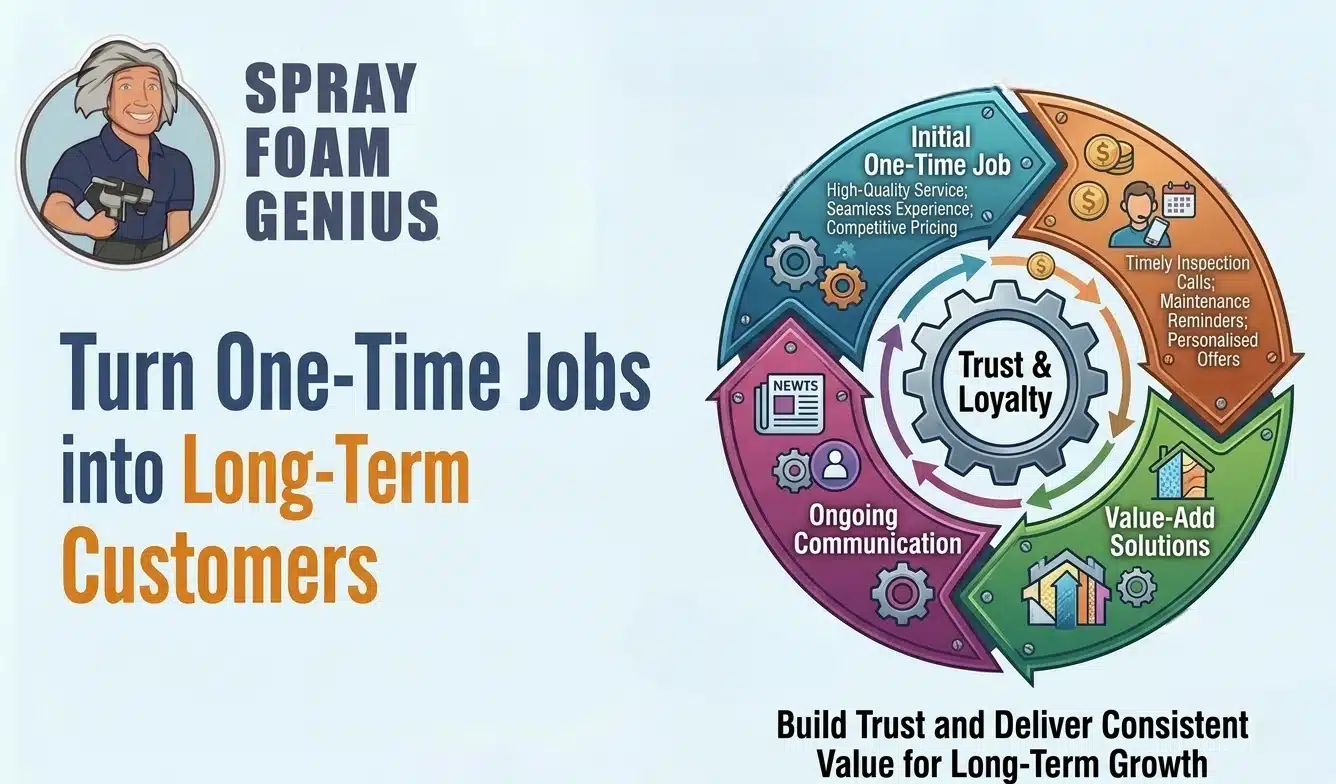
To increase repeat customers, insulation businesses must shift from project-based operations to lifecycle-based marketing.
Step 1, Build a Structured Follow-Up System
Recommended Timeline
- Day 2: Thank-you message + care instructions
- Day 14: Satisfaction check-in
- Month 3: Energy-saving tips
- Month 6: Inspection reminder
- Month 12: Annual efficiency review offer
This ensures your business stays top-of-mind long after installation.
Step 2, Add Maintenance and Inspection Services
Even though insulation lasts long, homes constantly change due to:
- Weather shifts
- HVAC upgrades
- Moisture and air leakage
- Structural settling
Service Offerings
- Annual attic inspections
- Air leakage testing
- Moisture and mold assessments
- Energy audits
The EPA confirms that air sealing and insulation upgrades improve efficiency and reduce energy costs.
This creates predictable recurring revenue.
Step 3, Build a Customer Education Engine
Why Education Works
Education transforms contractors into trusted advisors, not one-time installers.
What to Share
- Seasonal efficiency tips
- Cost-saving breakdowns
- HVAC + insulation performance guides
- Short educational videos
According to McKinsey & Company, companies that prioritize customer experience and lifecycle engagement outperform competitors in profitability.
Step 4, Build a Referral Engine
Why Referrals Matter
According to Nielsen, 92% of consumers trust recommendations from people they know.
How to Structure It
- $50–$150 referral rewards
- Discounted inspections for referrals
- Seasonal referral campaigns
- Post-job referral requests
Referrals outperform most paid ads in conversion rate and cost efficiency.
Step 5, Use CRM Automation
A CRM system ensures no customer is forgotten.
CRM Should Handle
- Customer history tracking
- Automated follow-ups
- Service reminders
- Segmentation by service type
HubSpot research shows repeat customers spend significantly more over time than new customers.
Customer Lifecycle Strategy Table
Why Retention Beats Acquisition

Harvard Business Review highlights that acquiring new customers costs significantly more than retaining existing ones.
Additional Benefits
- Higher trust leads to easier upsells
- Stable, predictable revenue flow
Every past customer becomes a long-term asset.
Example
A mid-sized insulation contractor implemented:
- Annual inspection reminders
- Maintenance packages
- Referral incentives
Results (12 Months)
This shows that retention systems directly improve profitability and reduce dependency on ads.
Strategic Shift, From Installer to Energy Partner
Old Positioning
“We install insulation”
New Positioning
“We help homeowners maintain long-term energy efficiency”
This shift increases:
- Trust
- Pricing power
- Customer lifetime value
- Referral frequency
Turn One-Time Jobs Into Repeat Customers
Most insulation businesses don’t have a repeat customer problem, they have a follow-up and retention problem. Without proper systems for communication, education, and maintenance offers, every job becomes a one-time transaction instead of a long-term revenue opportunity.
At Spray Foam Genius Marketing, we help insulation contractors build simple, proven systems that increase repeat business, referrals, and customer lifetime value. Instead of relying only on new leads, we help you turn past customers into steady, repeat revenue through better follow-up and retention strategies. Stop losing valuable customers and start turning them into long-term profit.
For support or to get started, call us at 877-840-FOAM | 844-741-FOAM or email us at info@sprayfoamgeniusmarketing.com.
FAQs
Why don’t insulation customers come back?
Because insulation is viewed as permanent, most homeowners assume no further service is needed unless they are educated about inspections or upgrades.
How can insulation companies increase repeat business?
By offering maintenance plans, inspections, and energy efficiency services that create ongoing value.
Is CRM necessary for insulation contractors?
Yes. CRM systems automate follow-ups and ensure no customer is forgotten, improving retention and referrals.
What is the biggest missed opportunity?
Failing to nurture past customers, resulting in lost referrals, upgrades, and inspection revenue.
How important are referrals?
Extremely important. Referrals convert at higher rates than ads and significantly reduce acquisition costs.
Sources
- https://www.energy.gov/energysaver/insulation
- https://www.epa.gov/energy/green-homes
- https://hbr.org/2014/10/the-value-of-keeping-the-right-customers
- https://www.bain.com/insights/loyalty-effect
- https://www.nielsen.com/insights/2015/global-trust-in-advertising/
- https://www.hubspot.com/marketing-statistics
- https://www.mckinsey.com/capabilities/growth-marketing-and-sales/our-insights/the-value-of-getting-customer-retention-right