
Direct Answer
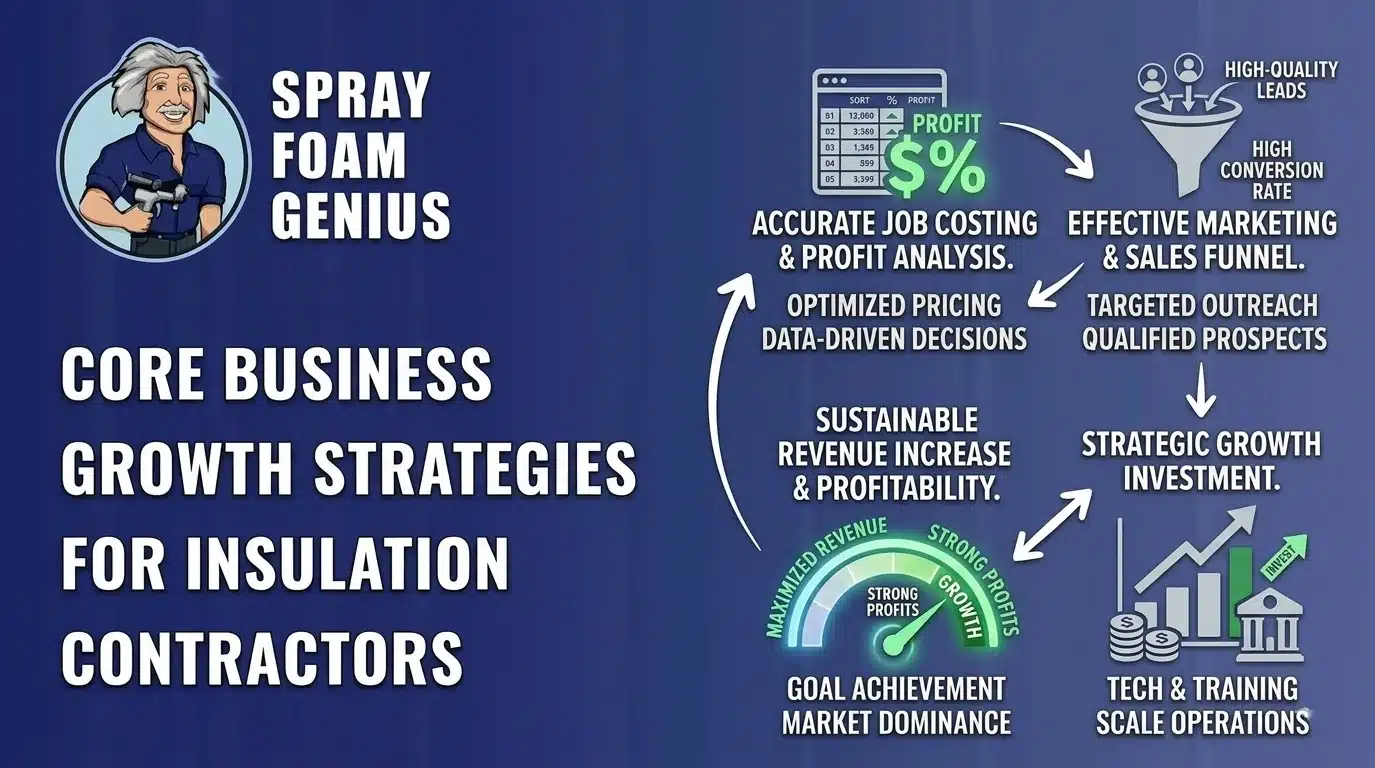
For insulation contractors, the strongest growth usually comes from combining a few things in a sensible order: being easy to find in local search, answering and following up on leads fast, building referral partnerships, tightening operations, and adding services you can sell to the same customer. What works best depends on your size, your market and your capacity. Smaller contractors often get the most from local search, reviews and referrals, while larger firms add automation, lead management tools and bigger partnerships. In every case, measure results so you do not waste spend.
The main categories are:
- Marketing and lead generation: local SEO, Google Business Profile, reviews, paid search and helpful content.
- Lead handling: fast response, follow-up and estimate reactivation.
- Partnerships and networking: builder, contractor and real estate referrals.
- Operational efficiency: scheduling, quoting, job management and less waste.
- Service expansion: complementary services like air sealing, energy audits or commercial work.
For the full marketing picture, see our digital marketing guide for spray foam contractors.
Related reading: How to Use A/B Testing to Improve Your Insulation Marketing
How Insulation Business Owners Can Grow
If you own an insulation or spray foam company, growth usually comes down to three things: getting more of the right jobs, closing more of the estimates you run, and keeping your crews booked through the slow season.
- Own your local search results. Most homeowners look for a contractor on Google Maps or in local search. A complete Google Business Profile, steady reviews and a page for each service and city you cover are among the highest-value changes you can make.
- Follow up on every estimate. Many contractors lose more revenue to unanswered quotes than to competitors. A simple follow-up routine by text and phone recovers jobs you already paid to generate.
- Answer leads fast. The first company to respond often has the advantage. If you cannot answer during the day, set up a system that does.
- Track cost per booked job, not cost per lead. Cheap leads that never book cost more than good leads that do.
- Add services you can sell to the same customer. Attic insulation, air sealing, crawl spaces and removal can raise the value of each visit.
How Marketing Managers Can Grow Lead Flow
If you run marketing for an insulation company, your job is to make lead flow predictable and to prove what is working.
- Connect marketing to booked jobs. Use call tracking and your CRM so every job can be traced back to the channel that produced it.
- Build a page for every service and service area. These pages are what rank in local search and what buyers read when they compare contractors.
- Plan for seasonality. Shift budget toward paid search when demand rises and toward SEO and content in the shoulder months.
- Report on the numbers owners care about: cost per booked job, close rate and revenue by channel.
- Revive old quotes. Past estimates are among the cheapest sources of new revenue. A reactivation campaign every quarter can fill gaps in the schedule.
What Makes a Growth Strategy Effective
An effective strategy for an insulation contractor is measurable, scalable and aligned with your strengths and local demand. Common mistakes to avoid:
- Relying only on referrals and word of mouth without a digital presence
- Spending on general advertising that is not tied to local search demand
- Expanding services without adequate training or certification
- Chasing several tactics at once without tracking any of them
Grow Your Visibility and Lead Flow
Local SEO and Google Business Profile
Optimize your website and profile around the searches buyers actually use, such as “insulation contractor near me” and “spray foam insulation services.” Google’s local ranking guidance says local results are based on relevance, distance and prominence, and that businesses with complete and accurate information are more likely to show up. Useful tactics include accurate categories and photos, consistent business listings, location pages with real local detail, and a regular review routine.
Paid search
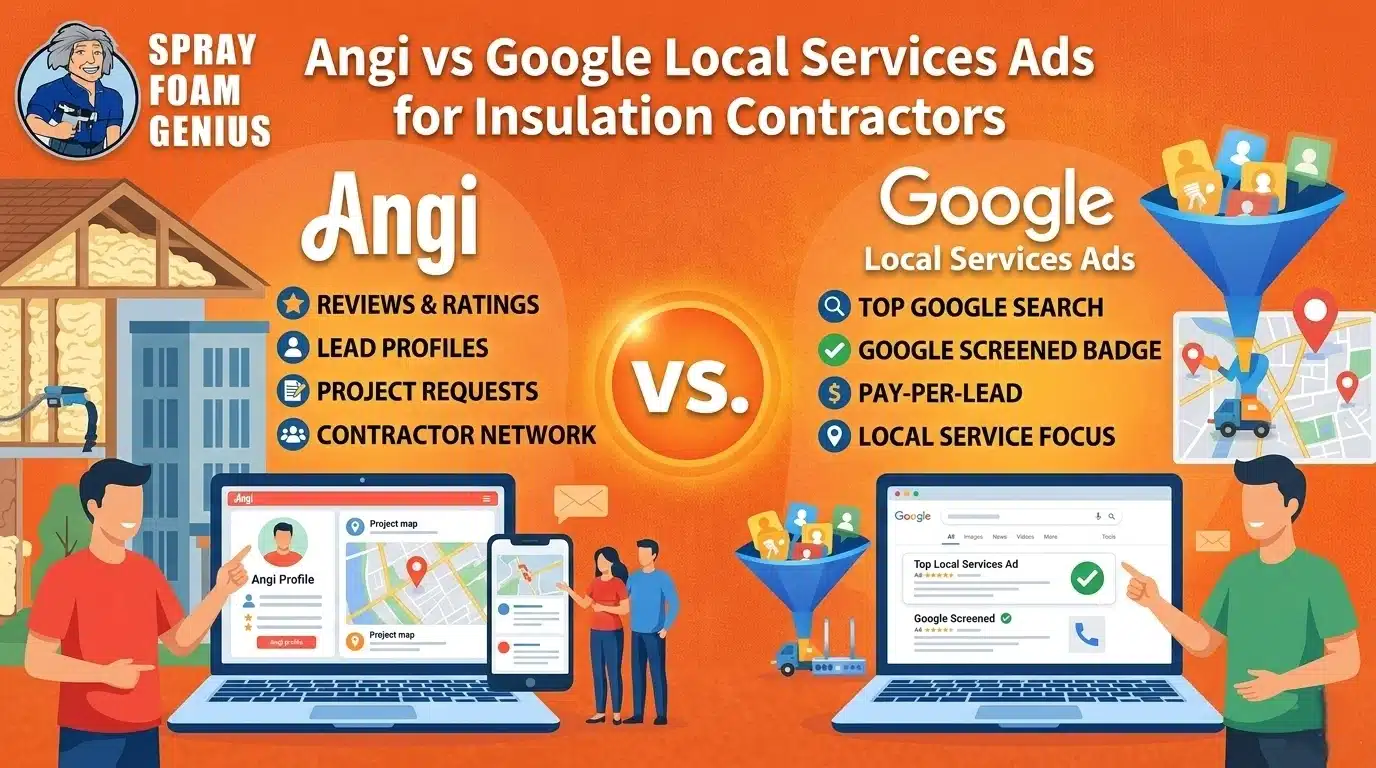
Google Ads campaigns aimed at buyer-intent searches, such as “attic insulation installers” or “commercial insulation services,” can bring in inquiries sooner than SEO. Pair them with conversion tracking so you can measure what each lead costs and which keywords lead to booked jobs. See Google Ads for insulation businesses.
Content and proof of work
Educational content such as cost guides, spray foam versus fiberglass comparisons, energy-savings explanations and seasonal tips builds trust and captures buyers who are still researching. Before-and-after photos, short job videos and customer testimonials show your work. A website with dedicated service pages, clear calls to action, financing details if you offer them, and a click-to-call button on mobile turns that attention into requests.
Clear positioning
Competing only on price is a losing game. Pick a niche you can own, such as crawl space encapsulation or attic retrofits, state outcomes you can actually deliver, and speak to customer problems. Value-based messaging, such as long-term energy savings or bundled air sealing and removal services, supports better pricing than a lowest-bid pitch.
Follow Up Faster and Automate the Basics
Most homeowners do not book on the first contact, and many leads are lost to slow replies. Lead-handling basics include:
- An instant text or email acknowledgment after a form submission
- A missed-call text-back so no inquiry goes cold while you are on a roof
- A short follow-up sequence for unbooked estimates
- Appointment reminders
- A CRM that records each lead, its source and its outcome
Add Referral and Partnership Channels
Referral partners provide high-trust leads with less ad spend. Good partners include HVAC contractors, home builders, roofing companies, real estate agents, energy auditors, architects and property managers. Ways to work with them:
- Offer a referral fee or reciprocal referrals, and agree on terms in writing
- Create co-branded service bundles or joint inspections
- Set up “preferred insulation partner” arrangements with a few builders or remodelers
- Respond quickly to partner referrals and keep them updated on the job
Strong partnerships help stabilize workflow and reduce seasonal swings. Our post on SEO versus referral marketing for insulation contractors compares the two approaches.
Tighten Operations to Protect Margin
Many insulation businesses lose profit to inefficiency rather than a lack of demand. Improving operations can reduce overhead and increase margin.
- Job management software, such as Jobber or ServiceTitan, can help with scheduling, invoicing and team communication.
- Faster, more consistent quoting speeds up estimates and improves pricing accuracy.
- Mobile tools let field crews send real-time updates and cut communication delays.
- Better material planning and job tracking help reduce waste and rework.
- Know your true cost per job. See how to calculate your true cost per job.
Expand Services Carefully
Adding services can raise revenue per customer and improve your market position, provided your crews are trained and any required certifications or compliance are in place.
- Spray foam insulation, if you do not offer it yet
- Air sealing, insulation removal and crawl space work
- Energy audits, which can lead naturally to insulation projects
- Commercial insulation, where jobs can be larger and relationships longer-term
Energy codes and incentive programs also change over time. Staying current on local building codes and available incentives lets you educate customers and offer compliance-focused solutions. Check official sources such as ENERGY STAR and the Department of Energy for current programs, since details vary by location.
Match the Plan to Your Stage
- Small crews: focus on local search, reviews, referrals and fast follow-up. These cost mostly time.
- Growing companies: add paid search, a CRM, tracking and content so the pipeline is more predictable.
- Larger or multi-location contractors: build a full system across SEO, paid search, partnerships and automation, with reporting by location.
- Commercial specialists: add outreach to builders, property managers and facility managers, and partnerships alongside bid opportunities.
Budget scales with goals and competition. See How Much to Spend on Insulation Marketing for how to think about it.
Measure What Matters
Track the numbers that connect marketing to revenue:
- Leads and calls by source
- Cost per lead and cost per booked job
- Close rate and average job value
- Revenue by channel
- Review count and rating over time
Use Google Analytics, call tracking and your CRM. Our guides to tracking marketing ROI and KPIs to track monthly can help.
Signs You Are on the Right Track
- Clear and consistent reporting on the numbers that matter
- Leads from repeatable channels like search, reviews and referrals
- Stable or improving cost per booked job over time
- Transparent pricing and timelines from any provider you use
- A strategy that fits your goals and capacity
If progress stalls, reassess your mix and how well it is being executed rather than adding more tactics.
Get a Clearer Picture of Where to Start
If you are not sure which of these to tackle first, Spray Foam Genius Marketing offers a free marketing audit that reviews your website, local search visibility and lead generation setup. Call USA: 877-840-3626 or email info@sprayfoamgeniusmarketing.com.
Frequently Asked Questions
Which strategy usually pays off fastest?
Answering leads quickly and following up on every estimate often helps first, because those jobs are already in your pipeline. Paid search can bring in inquiries sooner than SEO, while local SEO and a strong Business Profile build steadier lead flow over time. No one can promise exact timing.
How much should an insulation contractor budget for marketing?
It depends on your market, competition and goals. Start with the foundations, track cost per booked job, and invest more where results are clear. Be cautious of anyone who quotes a single percentage as right for everyone.
Is service diversification worth it?
It can be. Services such as air sealing, energy audits and spray foam can raise revenue per customer and improve cross-sell opportunities if your crews are trained and compliant.
How do you track ROI effectively?
Use analytics, call tracking and a CRM to connect each lead to a source and a result. Judge channels by cost per booked job and revenue, not just clicks.
What is the biggest mistake contractors make when trying to grow?
Relying on one channel, usually referrals, and ignoring measurable digital strategies limits long-term growth. Hiring or advertising before fixing follow-up and tracking is a close second.
What is the fastest way for an insulation company to grow?
For most companies, the quickest gains come from responding to leads quickly and following up on every estimate. Over the longer term, local SEO, reviews and a strong Google Business Profile tend to produce the most consistent new leads.