
Direct Answer
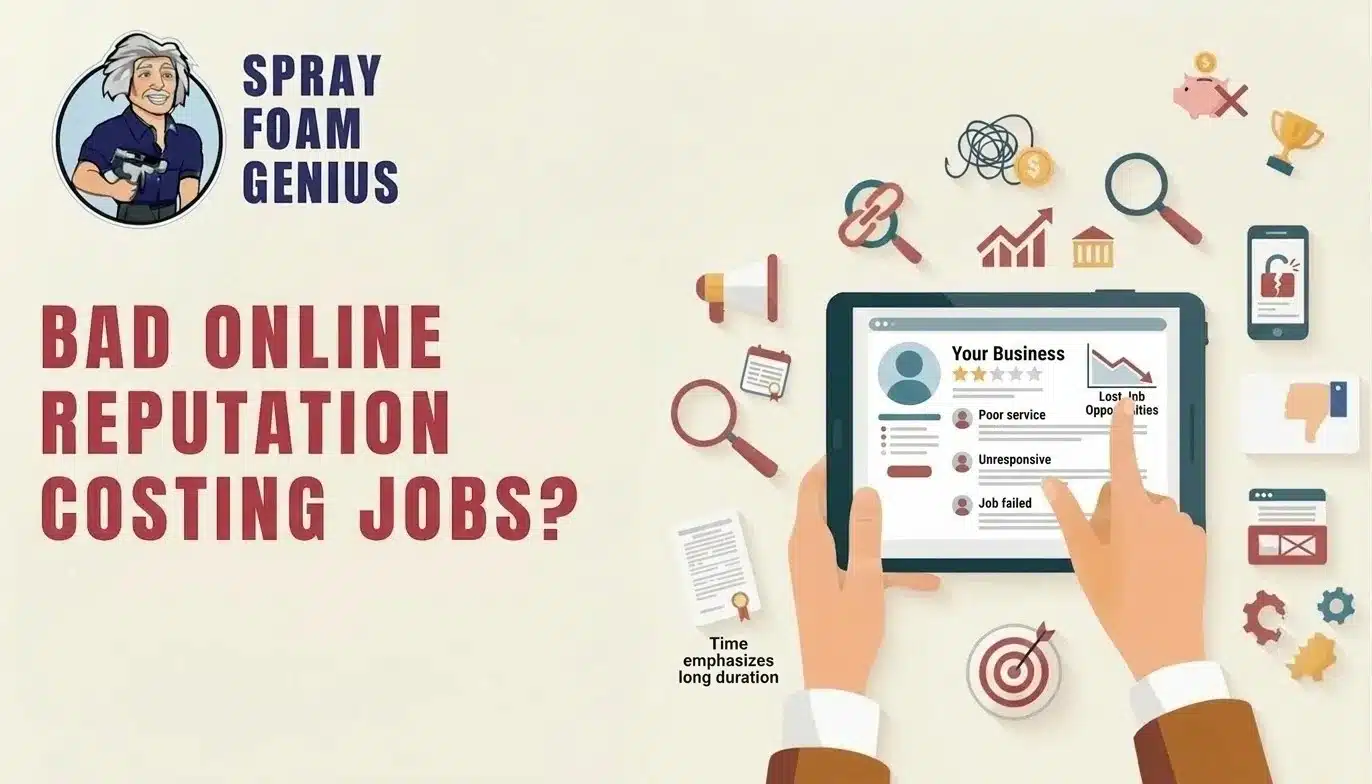
Many insulation contractors assume jobs are lost due to pricing, seasonal demand, or competition alone. The real issue today isn’t just what you charge; it’s how your potential customers perceive you online through your online reputation. In an era where 97% of consumers read online reviews before hiring a local business, even a few negative ratings or limited presence can dramatically reduce calls, leads, and contracts booked (BrightLocal Local Consumer Review Survey). There’s a significant gap between what insulation companies think drives sales and what actually drives purchasing decisions in 2026.
This article explains how your online reputation directly impacts revenue, what behaviors and channels drive customer decisions, why most insulation contractors struggle to capitalize on reputation, and exactly what successful companies are doing differently. You will walk away with a clear process to protect and grow your business through reputation management, not guesswork. A reputation management guide provides the framework and actionable steps needed to systematically build trust, improve visibility, and convert more leads into paying customers.
TLDR
- Customers rely heavily on reviews: Approximately 97% of homeowners check online reviews before hiring a contractor; 78% trust review scores as much as personal recommendations (BrightLocal).
- Negative sentiment removes trust instantly: A 1‑star rating difference can reduce lead conversion by up to 39% for service businesses (Harvard Business Review).
- Search visibility drives reputation: Companies ranking on page 1 of Google Local Pack get 70–92% of clicks; no visibility = no jobs (Google Developers Local SEO Guidelines).
- Review volume matters: Businesses with 50+ reviews convert at 2–3× higher than those with <10 reviews.
- Review velocity affects ranking: Frequent recent reviews improve Local SEO and perceived trust (Backlinko Local SEO Stats).
- Response behavior influences bookings: Companies responding professionally to reviews have higher booking rates (Harvard Business Review).
- Reputation pipelines create sustained demand: Strategic review acquisition fueled by automation outperforms manual reactive review management.
The Real Problem Most Insulation Companies Don’t See
Reality: Customers Don’t “Just Call Around”
Most insulation contractors believe that customers call a few companies, compare quotes, and choose the lowest price. In reality:
- Search behavior dominates: Homeowners start with Google search queries such as “best insulation contractors near me,” “insulation reviews,” “spray foam insulation reviews,” or “insulation company BBB rating.” They aren’t calling blindly, they are checking social proof (Search Engine Journal ).
- Review influence quantifies decisions: A customer evaluating insulation services compares stars, recency, review sentiment, and reviewer details before even looking at pricing.
- Multi‑source evaluation: They cross‑check Google, Yelp, BBB, social media, and industry directories before deciding.
Example Searches Homeowners Use Before Hiring:
- “Top rated spray foam insulation contractors in [city]”
- “Spray foam insulation company reviews near me”
- “Is [company name] reliable insulation installer?”
- “Best attic insulation contractor ratings”
This behavior reveals a gap between what contractors assume (price competition) and what customers actually do (validate reputation before contact). What looks like “price driven” loss is often a reputation lost.
Where Jobs Actually Come From
Here’s where insulation company leads and jobs originate, and why reputation presence on these channels matters:
1. Search Engine Results (Local Pack and Organic – ~70–92% clicks)Prospects searching “insulation company near me” primarily click on the Local Pack and top organic results. If your company has few reviews or low ratings, you rank lower (Google Developers).
2. Review Sites & Platforms (Influence ~97% of consumers)Reviews on Google, Yelp, HomeAdvisor, BBB, and specialized trade directories shape trust. Negative sentiment or low review count reduces conversion drastically (BrightLocal).
3. Social Proof on Social NetworksPositive posts, tagged jobs, and testimonials on Facebook, Instagram, and LinkedIn contribute to credibility.
4. Paid Ads + Reputation SynergyAds drive visibility, but conversion depends on reputation. Ads with strong review ratings convert better, reducing cost per lead (CPL).
5. Referrals Influenced by Reputation ContentEven direct referrals are validated online by customers before decisions.
Top Reasons Insulation Companies Struggle to Get Jobs
1. Inconsistent Review Acquisition
- Reviews are left only occasionally, leading to stagnation.
- No structured system to ask for reviews post‑job.
- Competitors consistently generate fresh reviews (Moz Local SEO Guide).
2. Poor Review Response Strategy
- Negative reviews go unanswered or are defensively handled.
- No public resolution shows prospects that issues were addressed.
Bad Response: “That was a misunderstanding.”Good Response: “We regret your experience, here’s how we resolved it…”
3. Low Review Volume
- Few reviews = low credibility.
- Consumers see companies with 50+ reviews as more legitimate.
- Competitors with higher review volume win trust first (Backlinko Local SEO Stats).
4. Ignoring Local SEO Essentials
- Missing keywords like “installation,” “spray foam,” “attic insulation,” and service areas.
- No optimized Google Business Profile categories or images.
- Poor location signals = lower search visibility.
5. Not Leveraging Reputation on Website and Marketing
- No badges, testimonials, or review snippets on website pages.
- Sales reps can’t leverage social proof during quoting.
6. Focusing Only on Pricing
- Companies believe lower pricing wins.
- Customers choose confidence and reliability backed by positive reputation more than price.
7. Failing to Track Reputation Impact
- No measurement of leads attributable to reputation channels.
- Missed insights on what types of reviews and keywords influence conversions.
What Successful Insulation Companies Are Doing Differently
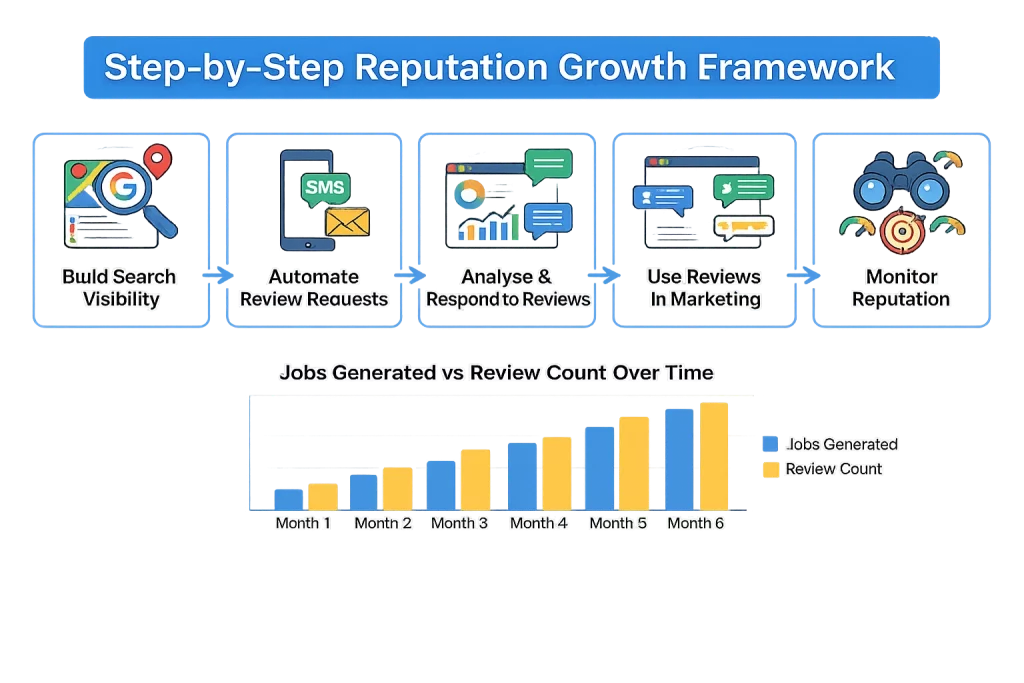
Step‑by-Step Reputation Growth Framework
Step 1: Visibility → Search Footprint BuildingOptimize Google Business Profile + industry directories with consistent NAP (name, address, phone) and high-quality images..
Step 2: Review Acquisition SystemImplement automated requests after job completion via SMS + email with direct links to review platforms (BrightLocal).
Step 3: Review Analytics and ResponseTrack sentiment, respond professionally, and resolve issues publicly (HBR).
Step 4: Leverage Reviews in MarketingEmbed testimonials on your website, quote sheets, and ads.
Step 5: Ongoing Reputation MonitoringDefine KPIs: review count growth, average rating, search ranking, and conversion from search to call.
Comparison: Short‑Term vs Long‑Term Reputation Strategies
Paid Ads (Short‑Term)
Pros: Quick visibility, scalable reach.Cons: Higher cost per lead without strong reputation; prospects click competitor with better ratings.
SEO & Reputation Growth (Long‑Term)
Pros: Sustainable visibility; compounding trust; lower CPL over time (Search Engine Journal).Cons: Requires ongoing effort and strategy.
Who Struggles Most vs Who Wins
Underperformers:
- React to reviews instead of guiding them.
- Assume reputation happens organically.
- Ignore search behavior data.
High Performers:
- Treat reputation as a revenue channel.
- Use data to refine messaging and targeting.
- Blend reputation with Local SEO and paid strategies.
Biggest Misconception
Misconception: “Good work speaks for itself.”
Customers don’t hire based on quality alone, they hire based on perceived quality infused through online validation (BrightLocal).
Real Question Contractors Should Ask
Are we shaping how our customers perceive us online at every step of the buying journey, from search to booking?
Strengthen Your Reputation & Convert More Jobs
Get Strategic Support Today
Spray Foam Genius MarketingGrow visibility, reviews, and revenue with systems built for insulation businesses.
Ready to turn your online reputation into more jobs? Contact Spray Foam Genius Marketing today. USA 877 840 FOAM | CA 844 741 FOAM | Email info@sprayfoamgeniusmarketing.com and let our experts help your insulation business dominate search, earn top reviews, and convert more leads.
Ready to Turn Your Reputation Into Jobs?
Your next jobs shouldn’t be lost because of visibility or reviews, let’s get you back on top.
FAQs
How many online reviews should an insulation company aim for?
Aim for 50+ quality reviews across platforms. Higher review volume increases trust, search ranking, and conversion rates.
Does responding to negative reviews actually help get more jobs?
Yes, potential customers look at how companies handle complaints. Professional responses signal accountability and often turn negative situations into positives.
Which review platforms matter most for insulation companies?
Google Business Profile, Yelp, BBB, and industry directories like HomeAdvisor are key because homeowners frequently reference them before hiring (BrightLocal).
How often should reputation monitoring be performed?
At minimum, reputation should be reviewed weekly to respond to new feedback, monitor trends, and adjust strategy.
Can reputation strategies improve search engine rankings?
Absolutely. Fresh reviews, optimized profiles, and high engagement signal relevance to search engines, helping improve local rankings.