
Spray foam and insulation are not like oil changes. Once a good installation is done, the homeowner may not need you again for a long time. That is why many contractors say they do not get repeat customers. The real issue is usually not the product. It is that the relationship ends the day the invoice is paid.
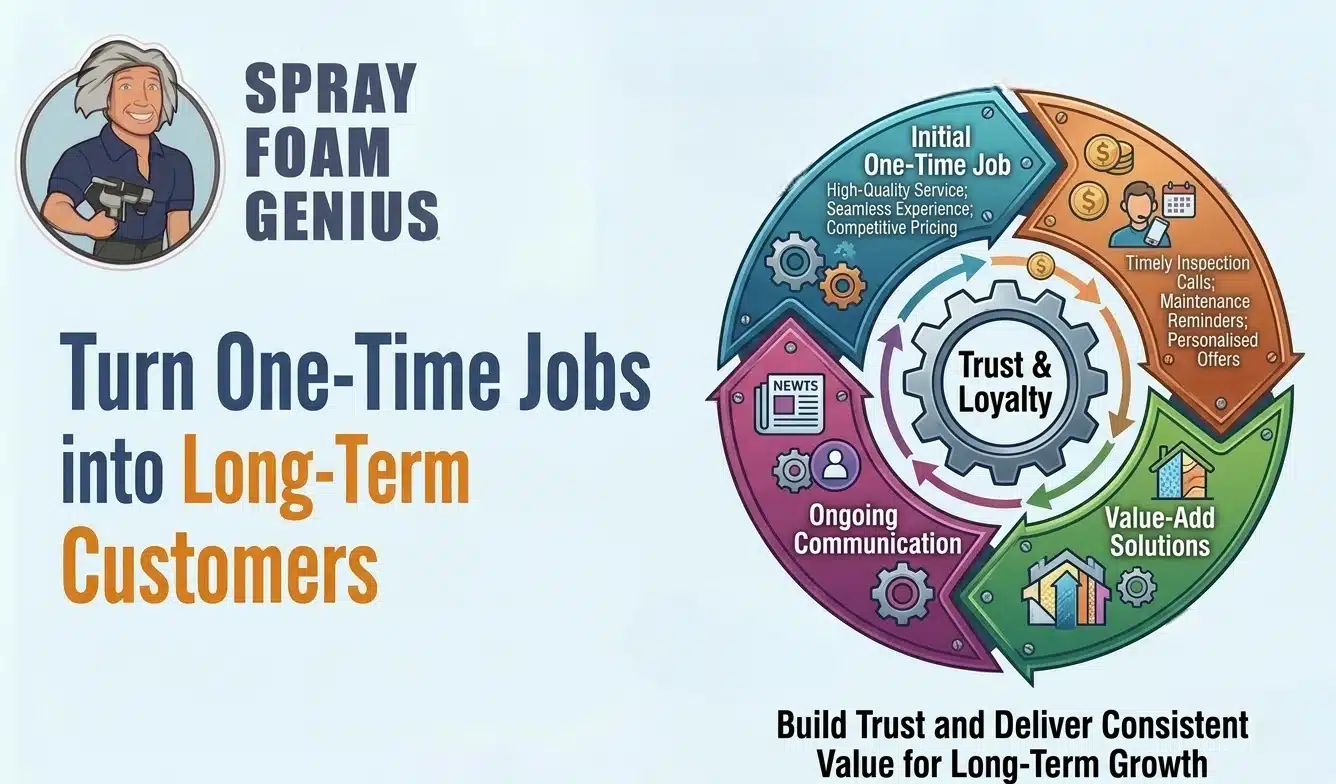
Repeat business in this trade looks different. It comes from the next project for the same owner, from other buildings they own, from neighbors and friends they recommend, and from builders and trades who keep sending you work. A simple system that keeps you in touch, asks for reviews and referrals and earns trust makes all of those more likely.
Why Repeat Customers Are Hard in Insulation
- Low frequency: a good installation lasts, so there is no natural reason to call again.
- Invisible results: homeowners may not notice the comfort or energy changes right away, so they forget who did the work.
- No follow-up: many contractors install, collect payment and move on to the next job.
- Seasonal swings: demand rises and falls with the weather, so you need steady relationships to smooth it out.
Harvard Business Review notes that acquiring a new customer can cost anywhere from five to 25 times more than retaining an existing one, depending on the study and industry (The Value of Keeping the Right Customers). That is general business research rather than data on insulation, but it supports the idea that past customers are worth the effort.
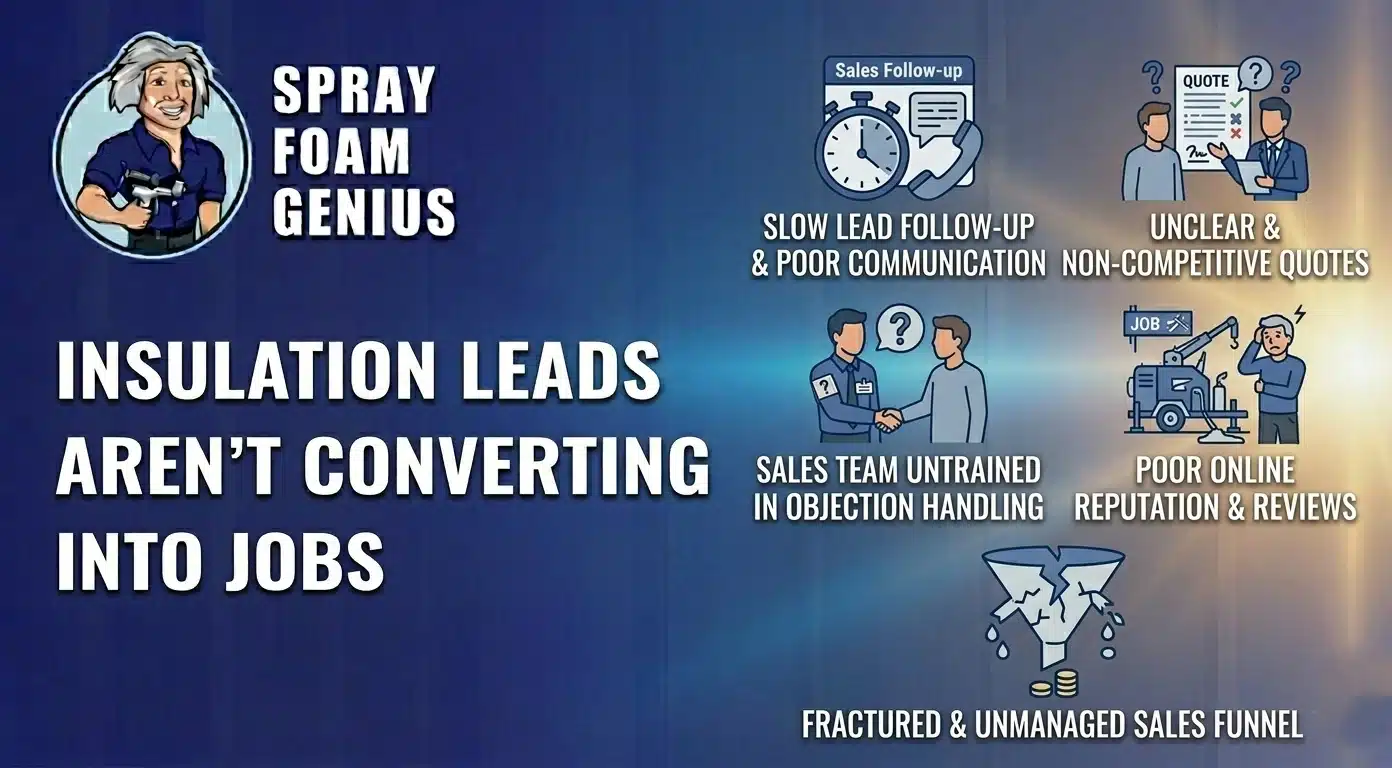
Related reading: Why Your Insulation Leads Aren’t Converting Into Jobs
Be Honest About What "Repeat" Means
Do not invent reasons for customers to call you back. A well-done spray foam job does not need yearly service, and pretending otherwise damages trust. Focus on real reasons to stay in touch:
- A genuine check-in after the job to make sure everything is as expected.
- Other services you offer that fit their building, such as air sealing, crawl space work, attic or garage insulation, or additions.
- Other buildings: a second home, a rental, a shop, a barn or a commercial property.
- Future projects: renovations, additions or new construction.
- Referrals to friends, neighbors and family.
- Partners: builders, HVAC contractors, inspectors and real estate agents who see many projects.
Step 1: Deliver and Document a Great Job
Everything starts with the job itself. Show up when you said you would, protect the property, clean up and explain what you did. Take photos of the finished work, the foam type and where it was applied. Give the customer a simple summary and any warranty or care information. A customer who understands what was done and why remembers you better.
Step 2: Follow Up After the Job
A short, planned follow-up sequence keeps you in mind and catches problems early. For example:
- The next day or two: a thank-you message, warranty and care information, and your direct contact number.
- About a week or two later: a quick satisfaction check-in. Ask if everything is as expected and if they have questions.
- A few weeks later: a request for a review, with a direct link to your Google reviews page. Google explains how in its tips to get more reviews.
- Later in the year: a seasonal note with a helpful tip and a reminder that you are available for other projects.
Send these by email or text with your CRM or email platform so they happen automatically. See our guides on choosing the best CRM for insulation contractors and marketing automation for spray foam contractors. If a customer reports a problem, respond fast. How you handle a problem often earns more loyalty than a flawless job.
Step 3: Ask for Reviews and Respond to Them
Reviews help new customers choose you and show past customers that you care. Ask every happy customer, make it easy with a direct link, and reply to each review. Do not buy or write reviews yourself. Our guide to Google reviews covers this in more depth.
Step 4: Build a Referral Habit
Referrals are one of the most natural sources of work for a trade business, because people hire contractors their friends already trust.
- Ask at the right moment: right after a successful job or a positive review.
- Make it easy: a short message they can forward or a card to hand to a neighbor.
- Say thank you: a handwritten note or a small gesture is often enough.
- If you offer a reward or discount, keep it simple, fair and legal. Check any rules that apply in your area and make sure it does not conflict with platform policies on reviews. Do not tie rewards to review ratings.
- Track where new leads came from so you can see which customers refer others.
- Stay in touch with trade partners, such as builders, HVAC contractors, inspectors and realtors, and thank them when they send work.
Step 5: Stay Useful Between Jobs
Educational content works well here because people are not buying right now. A few times a year, send something helpful:
- Seasonal tips on comfort, moisture and energy use.
- Short explainers on open-cell versus closed-cell foam, air sealing and other projects.
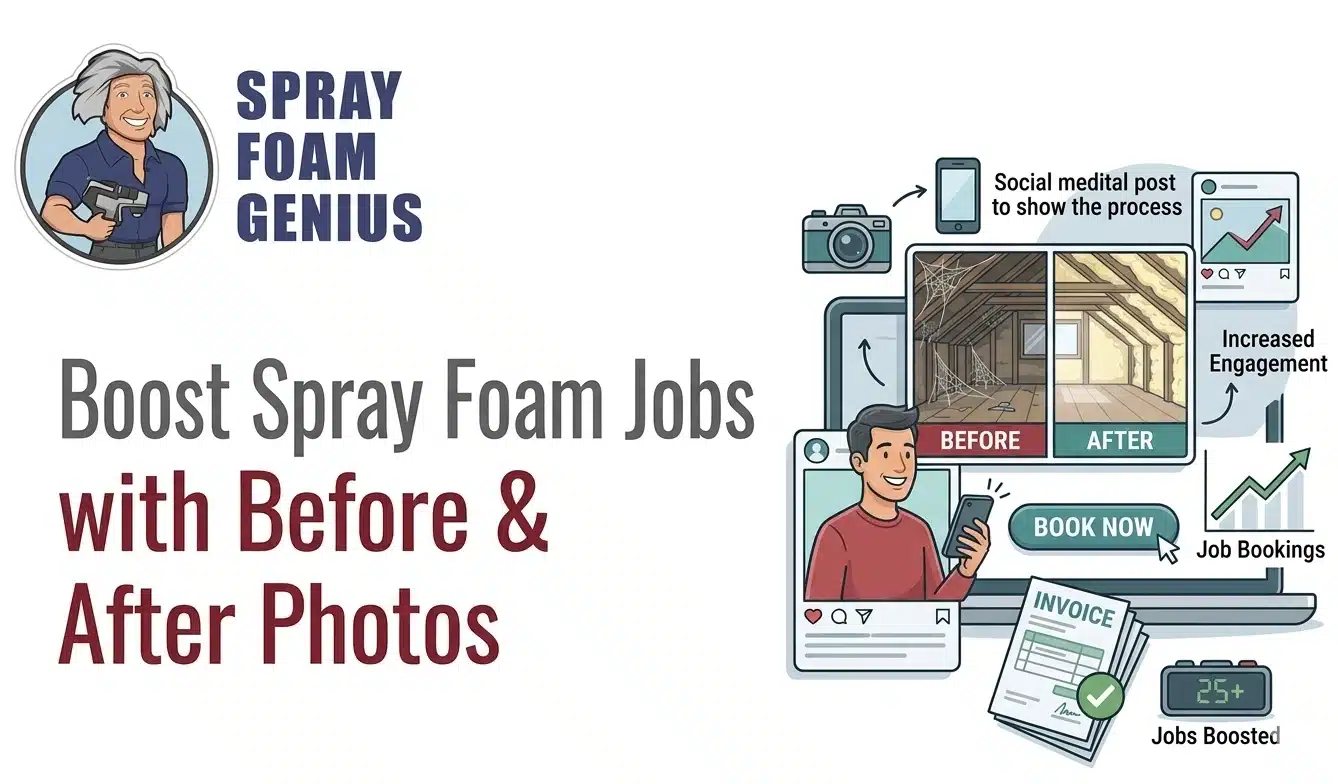
- Before-and-after stories from other jobs, with permission.
- Local updates, such as rebates and incentives where they exist. Check details before you share them.
If you mention energy savings, use careful wording. ENERGY STAR says homeowners can save an average of 15 percent on heating and cooling costs, or 11 percent on total energy costs, by air sealing and adding insulation in attics, floors over crawl spaces and basements (source). It is an average, not a promise for any one home.
Step 6: Offer Real Next Steps
Think of your services as a ladder rather than a single sale. Depending on what you do, relevant next steps may include:
- Air sealing or additional insulation in other areas of the building.
- Crawl space, garage or basement work.
- Insulation for additions, outbuildings or commercial spaces.
- An inspection or check if the customer has a concern, such as comfort problems or moisture.
- A referral to a trusted partner, such as an HVAC contractor, when it genuinely helps the customer.
Only recommend what the customer actually needs. Honest advice builds the kind of trust that brings people back and gets you recommended.
Step 7: Track It
You do not need a complicated system. Track:
- Past customers contacted and how many replied.
- Reviews received and your average rating.
- Referrals and repeat jobs, and where they came from.
- Which messages or offers led to calls.
Record these in your CRM or a simple spreadsheet. Review them every few months and adjust.
Signs It Is Working
- Past customers reply to your messages or call with questions.
- New leads mention being referred by someone.
- Reviews arrive steadily without a big push.
- Customers ask about additional work on other parts of their home or other properties.
- Trade partners send work your way.
Frequently Asked Questions
Why don't insulation customers come back?
Insulation is a long-lasting, low-frequency purchase, and many customers assume they will not need anything else. If you do not stay in touch, they forget who did the work. Repeat business usually comes from other services, other buildings, future projects and referrals.
How soon should you follow up after a job?
Within a day or two with a thank-you and care information, then a satisfaction check-in after a week or two. This gives you time to fix any issue and then ask for a review.
Do you need a CRM to get repeat customers?
Not strictly, but a CRM or email tool makes it easy to schedule follow-ups, track referrals and avoid forgetting people. A simple spreadsheet can work at first.
Is a referral program worth it?
Many contractors find referrals valuable because people trust recommendations from friends. You do not have to offer a reward. A sincere thank-you works well. If you offer a reward, keep it simple and legal, and never tie it to review ratings.
Should you sell maintenance plans for insulation?
Only if there is a real need. A well-installed job does not usually need annual service, so avoid inventing one. Offer inspections or checks when customers have a concern, and focus on honest follow-up, added services and referrals instead.
How do you get reviews from past customers?
Ask soon after the job and make it simple with a direct link. Reply to every review. Never buy reviews or write your own.
Is it cheaper to keep customers than to find new ones?
Harvard Business Review reports that acquiring a new customer can cost anywhere from five to 25 times more than retaining one, depending on the study and industry. It is not insulation-specific, but it supports putting effort into the customers you already have.
Get a Free Marketing Audit
If you want to see how well your follow-up, reviews and referrals are working, we can help. Ask us for a free marketing audit by calling 877-840-3626 (USA) or emailing info@sprayfoamgeniusmarketing.com.