Direct Answer
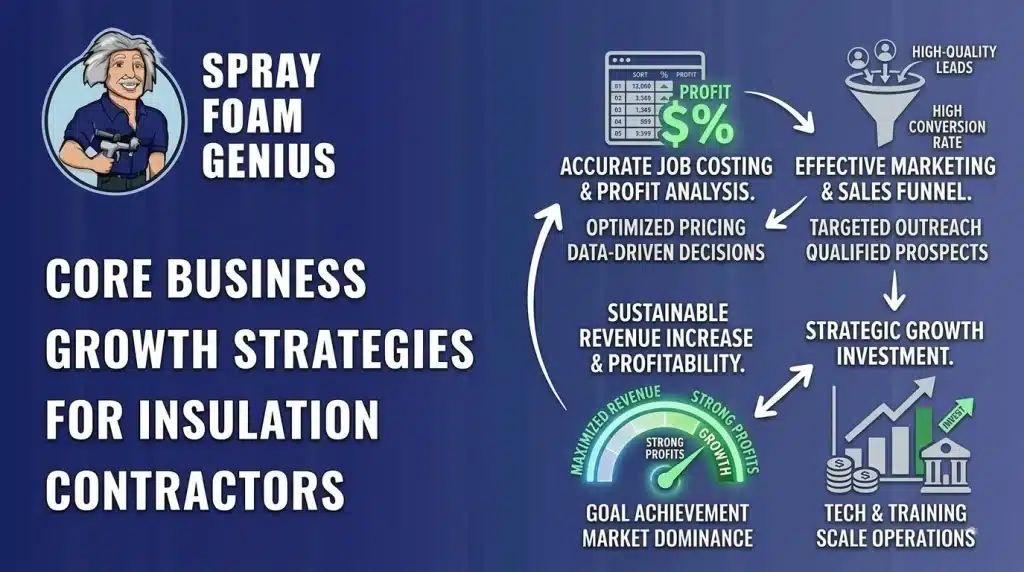
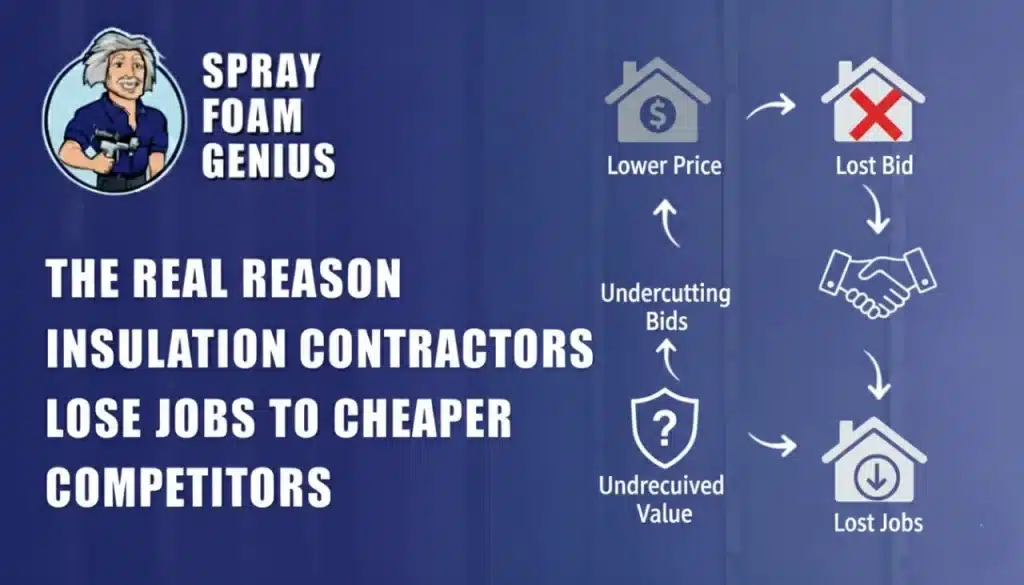
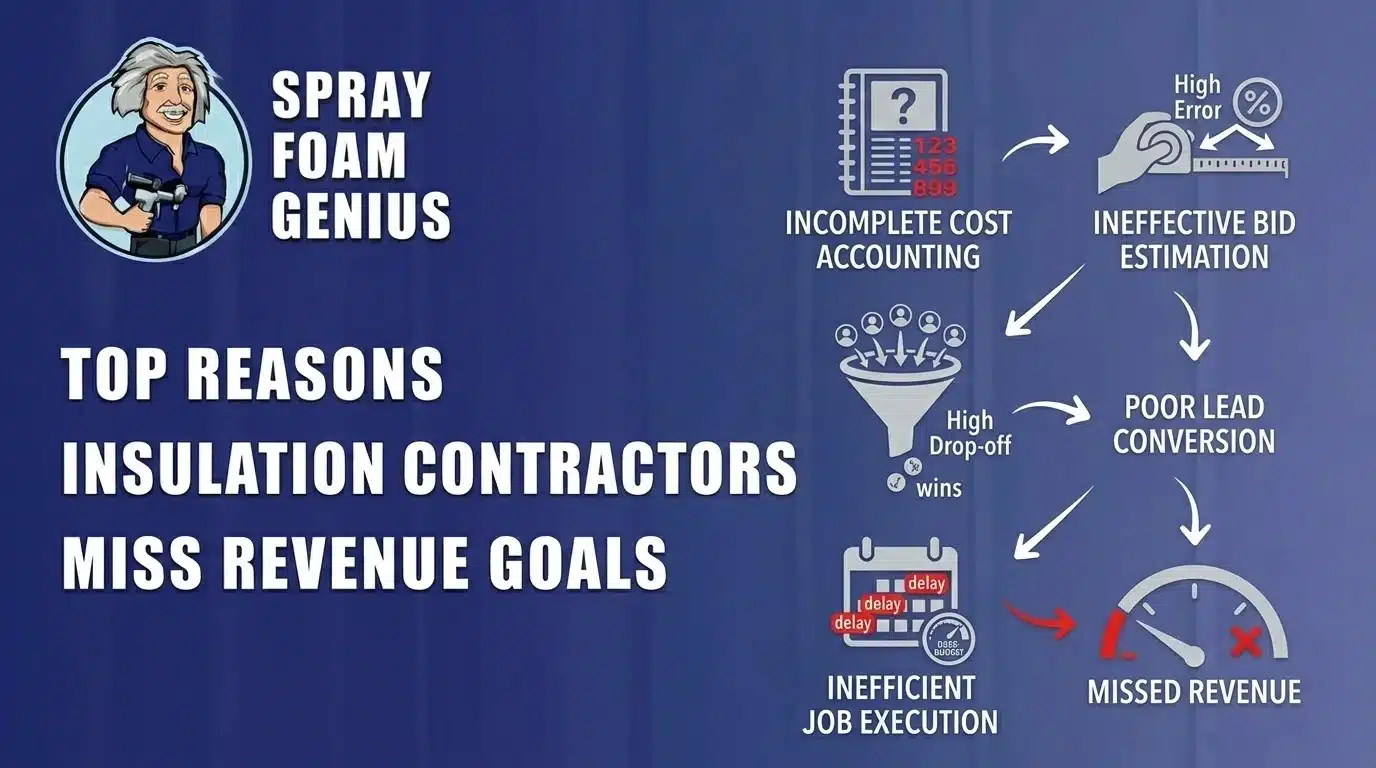
Insulation contractors often miss their revenue targets not because of “bad luck,” price competition, or poor service, but because of fundamental mismatches between how customers behave and how contractors market, sell, and scale their businesses.
Many assume that better sales skills or lower prices will automatically produce revenue growth. The real issue? Most insulation businesses aren’t aligning lead generation, customer expectations, and sales execution in a measurable, predictable system.
This article uncovers where revenue actually comes from, why most contractors struggle, and exactly what successful contractors do differently, with concrete steps you can take today.
TL;DR
- Leads ≠ Revenue: 70–80% of leads are unqualified without proper follow-up and screening systems. Volume alone won’t grow revenue.
- Misperception of Demand: Many contractors think demand equals urgency, but educational barriers and purchase hesitation delay buying decisions.
- Inefficient Lead Channels: Over-reliance on referrals or price-shopping markets starves the business of predictable demand sources.
- Closing Rate Gaps: Even technical experts often close less than 20% of proposals due to weak consultative sales processes.
- Lack of Customer Journey Optimization: Insulation purchases are research-heavy. Ignoring online experience loses up to half of prospects.
- Successful peers invest in predictable systems: Top performers track conversion KPIs from awareness to evaluation to booked jobs.
- Investment in brand trust pays dividends: Local SEO, reviews, and case studies significantly lift purchase intent.
- Data-driven marketing beats guesswork: Testing channels and messaging improves ROI vs “spray and pray” budgets.
The Real Problem Most Contractors Don’t See
Many insulation installers think that if customers need insulation, they’ll just pick up the phone and call. But real consumer behavior shows something different.
Customers searching for insulation often use queries like:
- “benefits of closed-cell vs open-cell spray foam”
- “cost to insulate attic in [city]”
- “what R-value do I need for my walls”
- “spray foam near me reviews”
These aren’t ready-to-buy searches; they are research queries, reflecting a consideration process. According to data from Think with Google, over 60% of home service purchases begin with online research before direct contact. That means contractors who rely on inbound calls from traditional directories or referrals miss most of the decision journey.
The gap: contractors assume demand equals urgency, but customers often delay purchase until they’re educated and comfortable. If your messaging doesn’t align with those stages, revenue stalls.
Understanding how homeowners move from research to purchase is a core part of modern contractor marketing, which is explored further in this spray foam digital marketing guide for contractors.
Where Revenue Actually Comes From
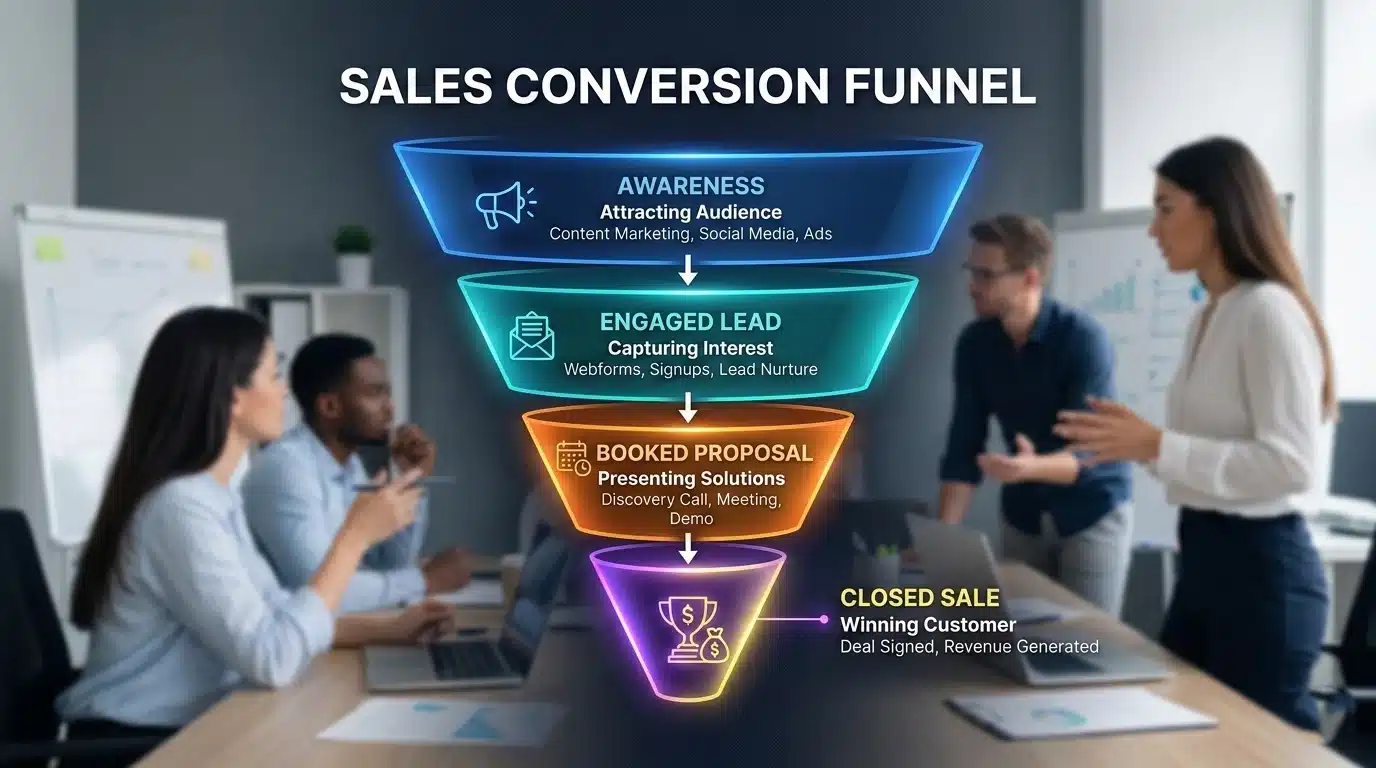
Revenue for insulation contractors doesn’t come from a single source; it comes from a funnel of stages.
Primary Revenue Sources (Approximate)
- Organic Search & Local SEO (~35%)
Customers researching solutions find you via Google Business Profile, organic rankings, or educational content (Search Engine Journal). - Paid Search & Advertising (~25%)
Targeted ads on Google, Facebook, or LinkedIn that align with purchase intent keywords (Think with Google). - Referrals & Repeat Customers (~20%)
Trust-based contacts from past clients and partners (BrightLocal). - Direct Outreach & Proposals (~15%)
Follow-up on leads, consultations, and bridging questions to conversions (MarketingProfs). - Other Channels (~5%)
Trade shows, community marketing, and email nurture campaigns (HubSpot).
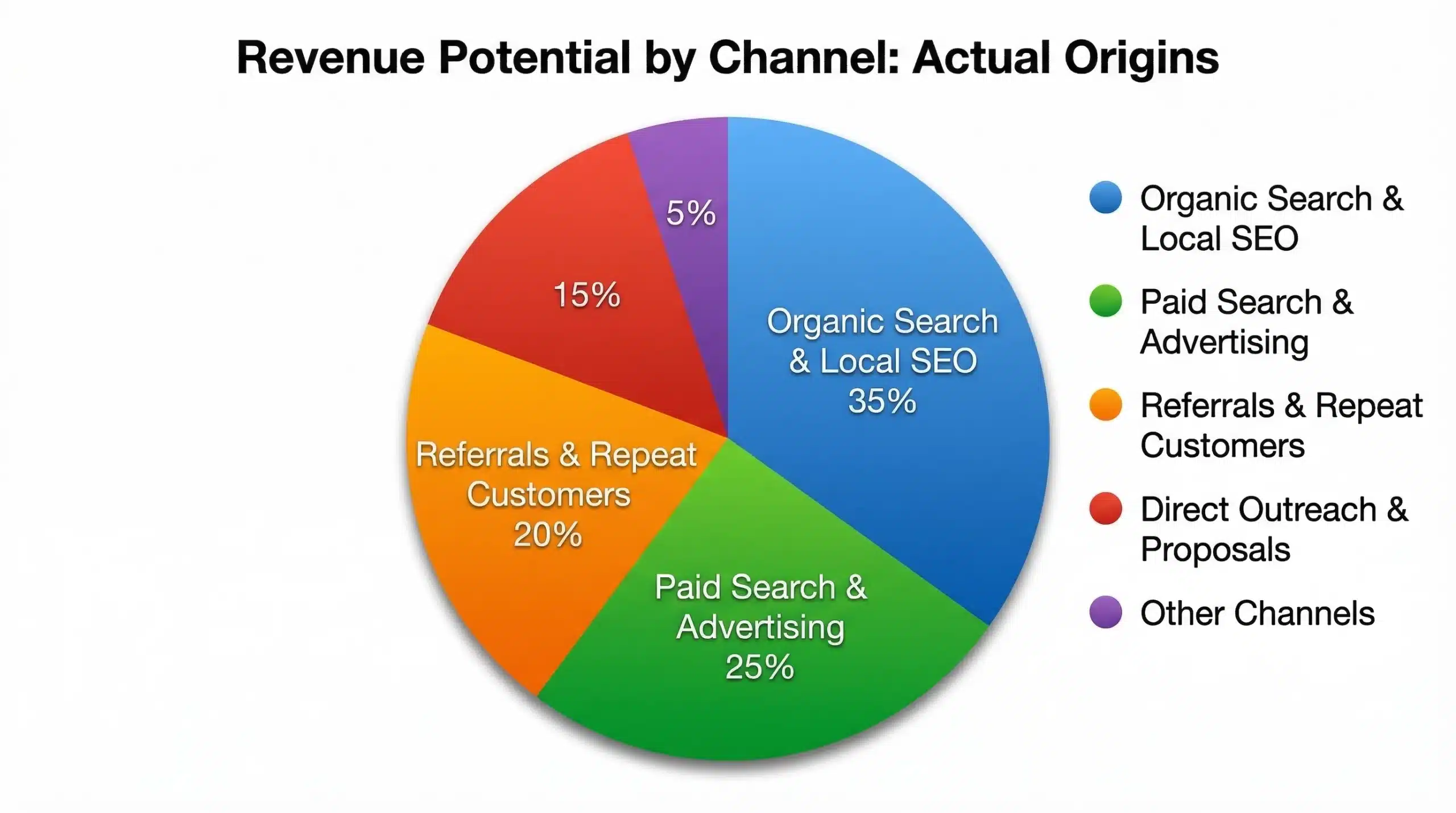
Each source has different buyer psychology. For example, organic search leads must be nurtured with trust-building content, while referrals often convert faster due to built-in credibility.
Top Reasons Insulation Contractors Struggle to Hit Revenue Goals
1. Ignoring the Customer Journey
- Problem: Contractors treat all leads the same.
- Reality: Some customers are in research mode, others in buying mode (MarketingProfs).
- Fix: Map content and messaging to each stage, awareness (education), evaluation (comparison), and decision (pricing + trust).
2. Under-Investing in Local SEO
- Local search drives most service searches. Google reports that near me + “best” searches have doubled year over year (Forbes).
- Many contractors don’t optimize Google Business Profile, reviews, or location pages.
3. Poor Lead Qualification
- Not all leads are equal; price shoppers vs projects with budgets differ drastically (HubSpot).
- Using systems to pre-qualify (online form fields, chatbots, quick phone screening) can boost proposal quality.
4. Weak Follow-Up Systems
- Most leads require multiple touchpoints before converting (Think with Google).
- Lack of automated follow-ups (email/SMS) means prospects go cold.
5. Sales Process Gaps
- Technically excellent teams often don’t sell, they just quote prices (MarketingProfs).
- Transforming the quoting process into a consultative conversation increases close rates.
6. Over-Reliance on Single Lead Channel
- When referrals dry up, revenue tanks (BrightLocal).
- Diversify channels and track performance.
7. No Measurable KPI Tracking
- Without tracking conversion rates at each funnel stage, teams can’t optimize bottlenecks (Search Engine Journal).
What Successful Insulation Contractors Are Doing Differently
| Strategy Category | Struggling Contractors | Successful Contractors |
| Lead Sources | Depends on referrals | Mix: SEO + Paid + Reviews (Search Engine Journal) |
| Follow-Up | Spotty, manual | Automated, multi-touch (HubSpot) |
| Sales Approach | Price quote only | Consultative discovery (MarketingProfs) |
| Metrics | Revenue focus only | Conversion ratios measured (Think with Google) |
Successful teams treat lead generation as a system, not luck.
Step-by-Step Revenue Growth Framework
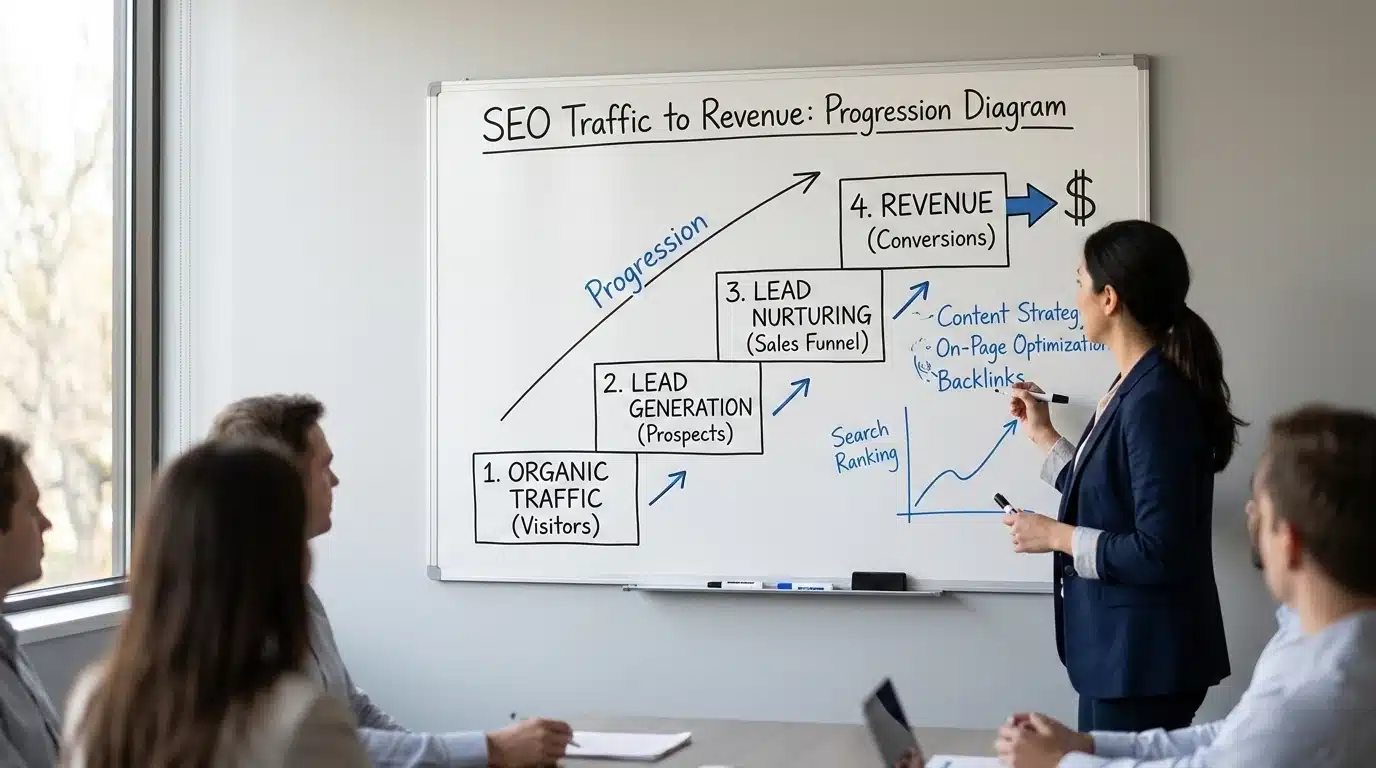
- Traffic / Awareness
Use SEO, PPC, and content to attract research-stage visitors. - Engagement / Lead Capture
Convert visitors with forms, calculators, quizzes, and educational assets (HubSpot). - Lead Qualification / Nurture
Automatic follow-ups + segmentation according to intent (Think with Google). - Consultative Sale / Proposal
Educate, align need vs solution, propose tailored options. - Close / Contract
Clear pricing, transparent process, urgency triggers. - Delivery / Referral Loop
Satisfied customers become repeat business + advocates (BrightLocal).
Short-Term vs Long-Term Strategies
Short-Term (Paid Ads)
- Fast lead flow (Think with Google)
- Control over targeting
- – Costs scale with spend
- – Less trust built over time
Long-Term (SEO, Content, Reviews)
- Compounding organic equity (Forbes)
- Lower cost per lead over time
- – Slow ramp up
- – Requires consistency
Who Struggles Most vs Who Wins
Struggling Traits
- Reactive marketing
- Ignoring data
- Treating sales as one-time events
Winning Traits
- Proactive measurement
- Systems that scale
- Alignment between marketing + sales (MarketingProfs)
Biggest Misconception
Misconception:
“If I build a website and pay for a few ads, revenue will naturally follow.”
Truth:
Revenue comes from a system that nurtures people through decisions, not just throwing them at a website.
The Real Question Contractors Should Ask
“How can I predictably convert my best potential customers into booked, profitable jobs month after month?”.
Ready to Break Through Revenue Plateaus?
Ready to turn leads into predictable revenue? Spray Foam Genius Marketing helps insulation contractors generate, nurture, and close high-quality jobs. Call us USA: 877‑840‑FOAM | CA: 844‑741‑FOAM or email [email protected] to get started today.
Let our expertise give you clarity, credibility, and ROI. Your best year starts with a smarter strategy, not just more hustle.
FAQs
What are the best online channels for insulation contractor leads?
The most effective channels include optimized local SEO, Google Ads for high-intent keywords, and review aggregation platforms. Diversifying channels reduces dependency on referrals and increases predictability.
How can insulation businesses improve lead conversion rates?
Conversion improves when contractors qualify leads early, use automated follow-ups, and implement consultative sales practices that focus on problem solving rather than quotes alone.
What metrics should contractors track to measure revenue health?
Track lead volume, lead quality scores, proposal close rates, cost per lead, and time to conversion. These KPIs indicate where the funnel is leaking revenue.
Why do online reviews matter for service contractors?
Reviews build trust and influence local search rankings. Many customers check review platforms before contacting a contractor, making ratings a key differentiator in competitive markets.
Is paid advertising worth the cost for insulation companies?
Yes, when aligned with intent-based keywords (such as “attic insulation cost” or “spray foam installers”), paid ads can deliver qualified leads quickly. However, they perform best when supported by strong landing pages and follow-up systems.
Sources
- Think with Google – Home Services Consumer Insights — https://www.thinkwithgoogle.com/
- Google Search Behavior Data —https://www.google.com/insights/
- HubSpot – Lead Nurturing Stats — https://blog.hubspot.com/
- Forbes – Local SEO Importance —https://www.forbes.com
- Search Engine Journal – Local Business Ranking Factors —https://www.searchenginejournal.com/
- BrightLocal – Online Review Statistics —https://www.brightlocal.com/
- MarketingProfs – Customer Journey Mapping —https://www.marketingprofs.com/

Spencer is a Google ranking expert and SEO consultant who has helped businesses in the spray foam marketing industry achieve their online marketing goals. Spray Foam Genius Marketing has a proven track record of success, having achieved some impressive results for his clients.