
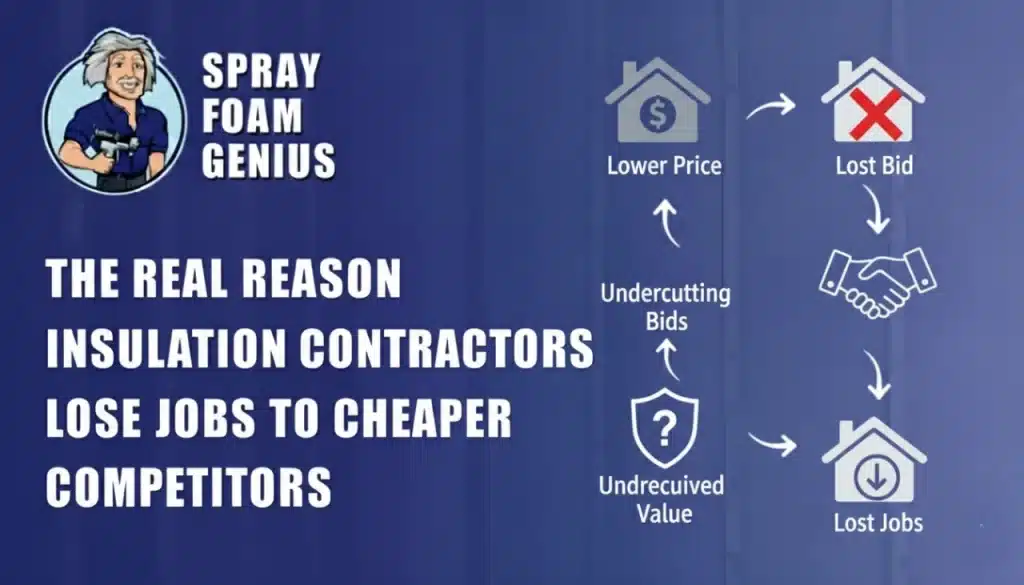
When a spray foam or insulation job goes to someone else, the easy explanation is price: "They were cheaper." Sometimes that is true. But often, price is the explanation customers give because it is the easiest thing to compare, and the real gap is something else: the other contractor was easier to find, easier to trust, quicker to respond or clearer about what the customer was buying.
That is good news, because those are things you can improve without simply cutting your price. This guide explains why jobs get lost, how to compete on value, and why cheap marketing can make the problem worse.
Price Matters, but It Is Rarely the Whole Story
Spray foam is a technical, high-ticket purchase. Customers often cannot judge installation quality, foam type, thickness or coverage, so they look at what they can see: who showed up first in search, who has good reviews, who answered the phone, and whose estimate was clear. When two quotes look like the same product at different prices, the cheaper one wins. When customers understand why yours is different, price becomes only one factor.
We cannot say how many of your lost jobs are about price. Your own records can: if you ask customers why they chose someone else, you will learn more than any general statistic can tell you.
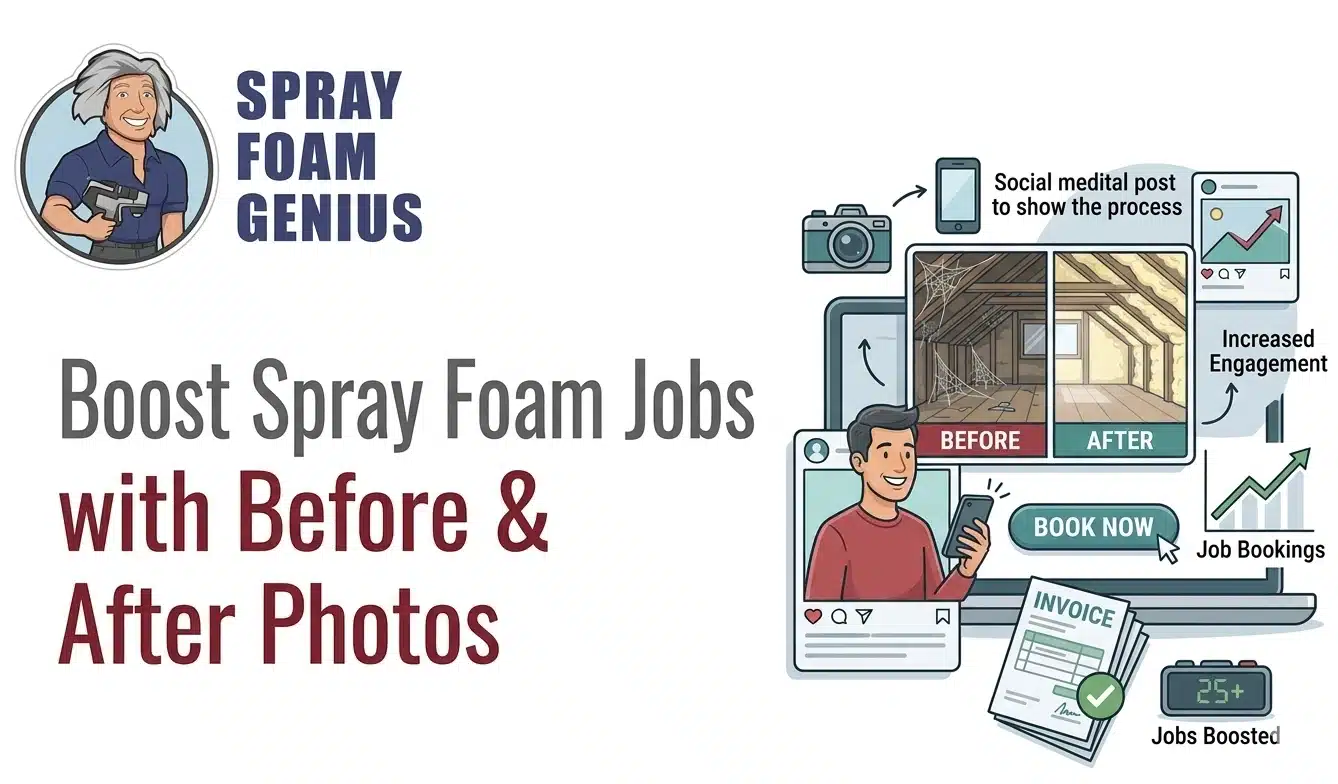
Related reading: How to Get More Spray Foam Jobs Using Before and After Photos Online
The Real Reasons Insulation Contractors Lose Jobs
1. They Never Found You
If a homeowner searches for "attic insulation contractor near me" or "spray foam insulation cost" and you do not appear, you are not in the running, regardless of your price. Weak local search visibility usually looks like this:
- A Google Business Profile that is incomplete or unclaimed.
- Few or no service pages, or no pages for the places you serve.
- No content that answers the questions customers are searching for.
2. They Did Not Trust What They Found
Customers look for proof before they call. Low trust shows up as:
- Few reviews, or reviews that are old or unanswered.
- No project photos, case studies or before-and-after examples.
- Generic website copy that could belong to any contractor.
- No visible licensing, insurance, certifications or warranty information.
3. You Were Slow or Hard to Reach
Homeowners often contact more than one contractor, and the one who responds first with a clear next step has an advantage. You are often on a roof or in an attic when the call comes in. Common problems include:
- Missed calls with no text back or voicemail follow-up.
- Web forms that sit unanswered for hours.
- No easy way to request a quote on a phone.
Research from Harvard Business Review on online sales leads found that most companies are not responding nearly fast enough (The Short Life of Online Sales Leads). Quick acknowledgement, even an automated text, can keep a lead warm.
4. The Message Was All About Price
If your website and estimates only talk about cost, customers will compare cost. When you do not explain what you do differently, they cannot see value. Look for:
- No explanation of open-cell versus closed-cell spray foam and which one fits their project.
- No comparison with other insulation types.
- No description of prep, process, cleanup or warranty.
- No explanation of what is included in the estimate.
5. The Estimate Looked the Same as Everyone Else's
A one-line price invites price comparison. A clear estimate shows the area covered, the type and thickness of foam, how the space will be prepared and protected, the timeline, and the warranty. It makes it easier for a customer to see that two quotes are not the same job.
6. Inconsistent Branding and Information
Different phone numbers on different listings, outdated photos or a logo that does not match your trucks all create doubt. Consistent branding and information signal an organized, established company.
7. No Authority Content
Customers who have been reading your guides on cost factors, foam types, moisture and what to expect on install day arrive better informed and more comfortable with you. Customers who have only seen a price have nothing else to go on.
How to Compete Without Cutting Your Price
Think of the customer's path as: be found, build trust, make contact easy, present a clear estimate, follow up.
Be Found
- Complete and maintain your Google Business Profile, with accurate services, hours, photos and a service area. See Google's tips to improve your local ranking.
- Create a clear page for each service and the main areas you serve.
- Publish helpful content that answers the questions customers ask. Our guide to content strategy and blogging for spray foam contractors covers this.
Build Trust
- Ask every happy customer for a review and reply to all reviews. Google explains how in its tips to get more reviews.
- Show your own project photos, short case studies and, with permission, customer testimonials.
- Display licenses, insurance, certifications and warranty terms.
- Keep your name, phone number and branding consistent everywhere.
Make Contact Easy
- Put your phone number and a short quote form on every page, especially on mobile.
- Respond quickly. An automatic text or email acknowledging the inquiry buys you time.
- Return missed calls promptly, and consider call tracking so you can see which calls you missed.
Present a Clear Estimate
- Explain the scope, foam type, thickness, area, prep, timeline and warranty in plain language.
- Offer a short explanation of why you recommend what you do.
- Where it fits, explain financing or payment options.
- Be honest about what is and is not included.
Follow Up
- Check in after sending an estimate, and answer questions without pressure.
- If you lose a job, politely ask why. The answers can guide your next improvements.
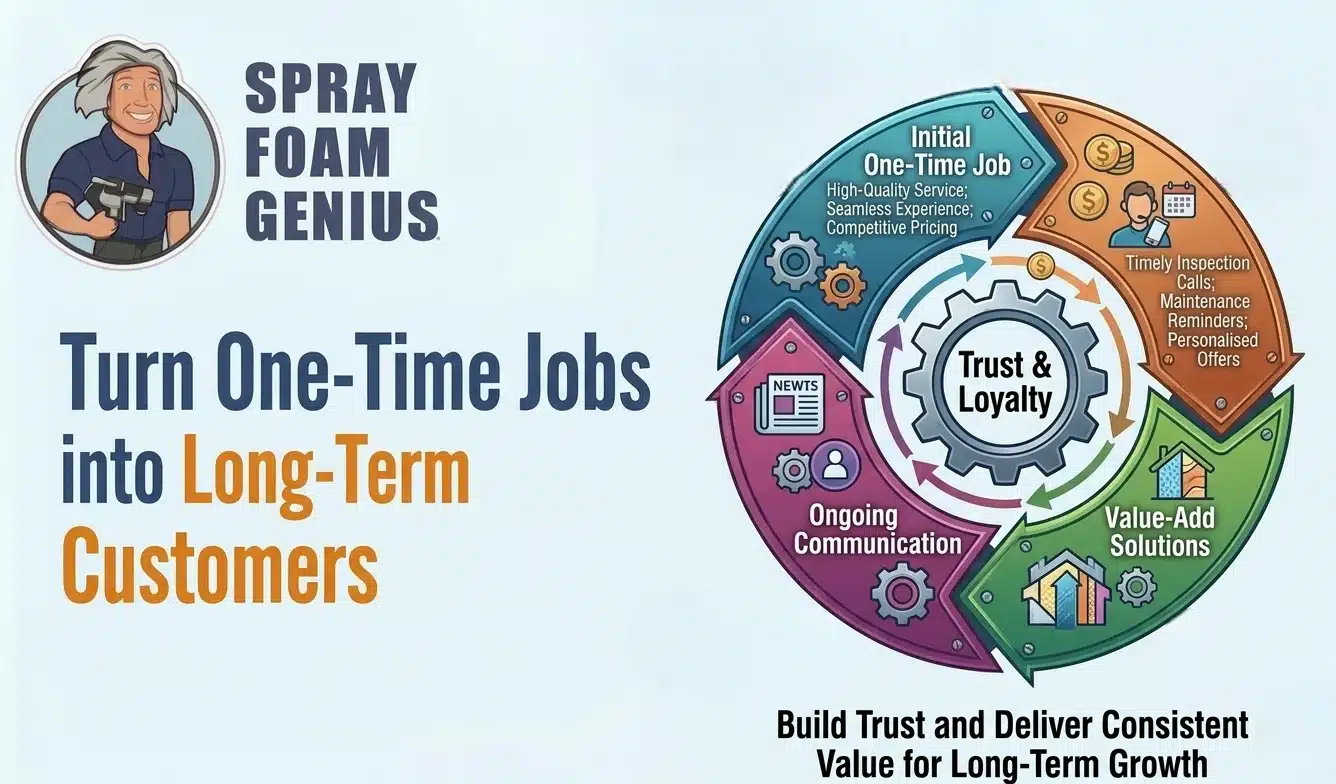
- Keep in touch with past customers for referrals and future projects.
When Price Really Is the Issue
Sometimes the customer just wants the lowest number, and that is okay. Know which jobs you want. If a project is a poor fit, or the customer wants a cheaper material, a thinner application or skipped prep, you may decide not to chase it. Competing on price alone usually means thin margins and difficult customers. It is better to be clear about the value you offer, quote what the job needs and let the customers who value that choose you.
Why Cheap Marketing Makes This Worse
Many contractors respond to lost jobs by cutting costs, including marketing costs. Cheap marketing can be a trap, because it often prioritizes cheap leads over durable assets.
- Rented leads: shared-lead platforms and low-cost ads may bring inquiries quickly, but they stop when the spending stops, and you may be competing with several other contractors for the same homeowner.
- Click volume over quality: a low cost per click is not a low cost per booked job.
- Template websites: generic sites with no local pages, no real photos and no helpful content give customers little reason to choose you.
- Low-quality shortcuts: spammy backlinks, mass-produced content and other tactics can violate Google's spam policies and put your visibility at risk.
- No tracking: without call tracking and lead source records, you cannot tell what is working.
- Vendor churn: switching providers every few months means you never build anything lasting.
The goal is not to spend more for its own sake. It is to spend on things that build lasting value, such as your Google Business Profile, reviews, helpful pages, a fast and clear website and a reliable follow-up process, and to measure the results.
Questions to Ask Any Marketing Provider
- What exactly will you do, and how will the work and results be reported?
- Will the business own its website, Google Business Profile, ad accounts and analytics?
- How will calls and form submissions be tracked, and what will you report?
- Do you promise rankings or leads? A provider who guarantees a rank or an exact number of leads is overpromising, because Google controls rankings.
- What tactics do you use, and are they consistent with Google's guidelines?
- What is the contract term, and what happens if the contract ends?
Frequently Asked Questions
Do customers really choose the cheapest insulation contractor?
Some do, but many weigh trust, reviews, responsiveness and clarity too. Customers who cannot judge installation quality look for other signals. If you often lose jobs, ask customers why, and look at your visibility, reviews and estimate clarity.
How do you stop losing bids to cheaper competitors?
Improve how easy you are to find, how much customers trust you, how quickly you respond, and how clearly your estimates explain value. Then follow up on every estimate.
Should you lower your price to win more jobs?
Not as a first move. Look for gaps in visibility, trust, response time and estimate clarity first. Lower prices can erode margins, and you may attract the customers least likely to value your work.
How important are reviews?
They are one of the most visible trust signals, especially in local search. A steady flow of recent, genuine reviews with thoughtful replies helps customers feel confident. Never buy reviews or write your own.
How fast should you respond to inquiries?
As fast as you reasonably can. Many homeowners contact several contractors, so a quick acknowledgement and a clear next step helps. An automated text or email can bridge the gap when you are on a job.
Is cheap marketing always bad?
Not always. A low-cost step like completing your Google Business Profile or asking for reviews can be very effective. The problem is cheap marketing that buys rented leads or shortcuts without building lasting assets, tracking or trust.
Can SEO or paid ads fix this?
They can help people find you, but they will not fix slow responses, unclear estimates or weak trust signals. Treat them as part of a system. Nobody can guarantee rankings, and paid ads stop producing when the budget stops.
Get a Free Marketing Audit
If you suspect you are losing jobs for reasons other than price, we can help you find out where the gaps are. Ask us for a free marketing audit by calling 877-840-3626 (USA) or emailing info@sprayfoamgeniusmarketing.com.