
We know running a spray foam insulation business keeps you busy on job sites, not staring at analytics dashboards. But if you want your website to bring in real leads instead of sitting quietly on page five of Google, you need to understand what is actually happening with your SEO. That is exactly where Google Search Console comes in.
In this guide, we explain what Google Search Console is, why every spray foam contractor needs it, and how to use it to track rankings, fix errors, and grow organic traffic without spending extra money on ads.
What Is Google Search Console?
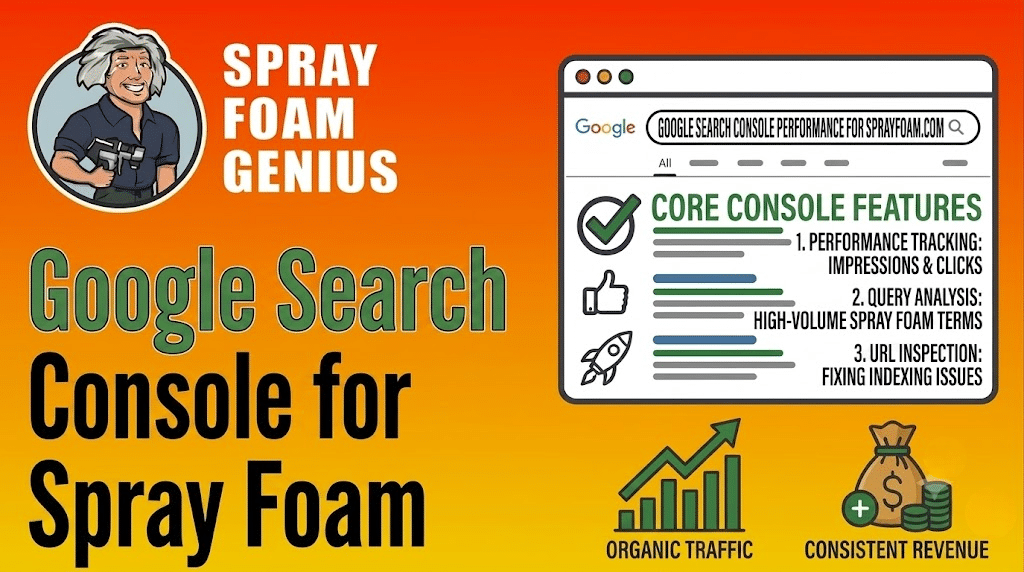
Google Search Console (GSC) is a free tool from Google that shows you exactly how your website performs in search results. You use it to see which keywords bring visitors to your site, how many people click on your listings, which pages Google has indexed, and which pages have technical problems blocking them from ranking.
Unlike guesswork or third-party tools, GSC gives you data straight from Google itself. According to Google’s official Search Console documentation, it covers search performance and indexing status, and helps you fix indexing problems.
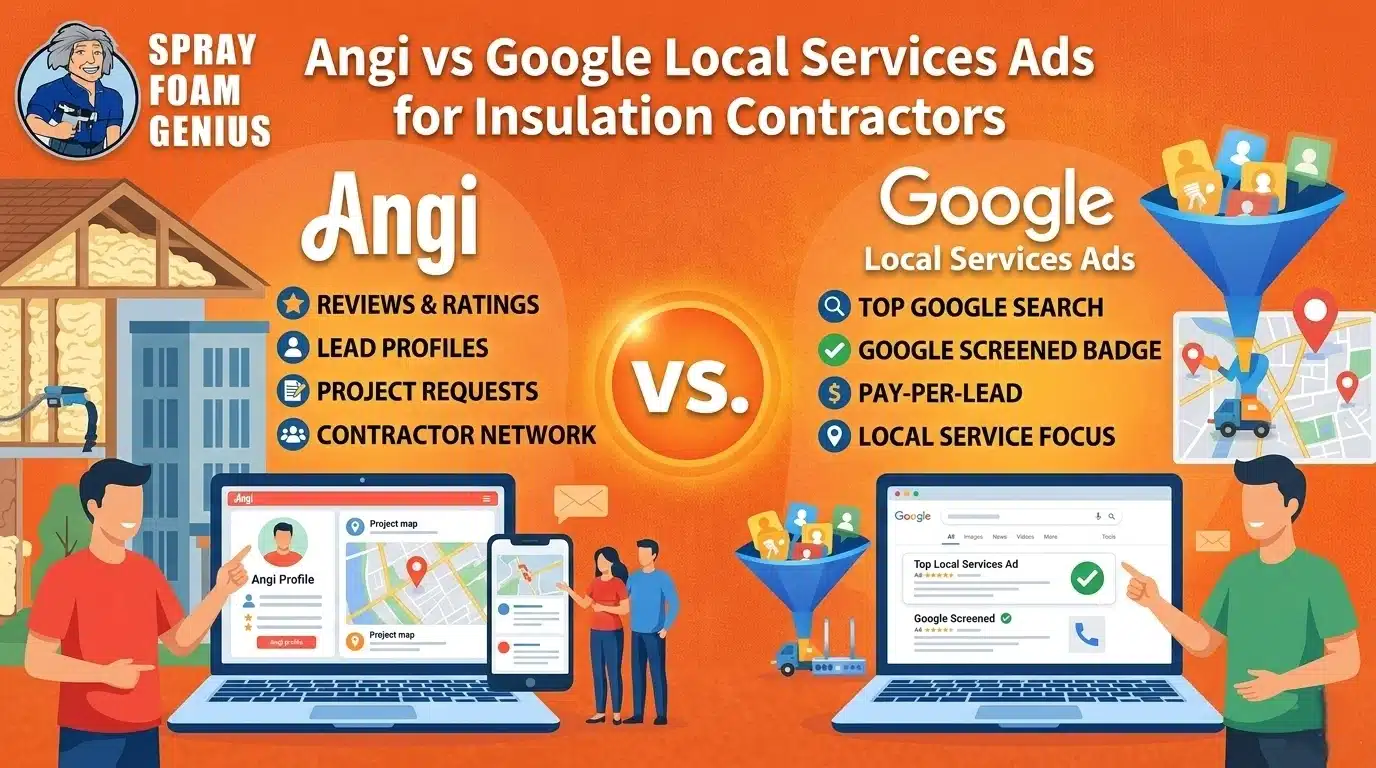
Related reading: Angi, HomeAdvisor and Google Local Services Ads for Insulation Contractors: What Is Worth It?
Why Spray Foam Contractors Need Google Search Console
Most spray foam companies compete in a local market. You might serve five, ten, or twenty cities around your base of operations, and your competitors are fighting for the same searches like “spray foam insulation near me” or “attic insulation contractor.” If you do not track your SEO performance, you have no way of knowing whether your website is actually working for you.
Here is what you gain when you connect your site to GSC:
- You see the exact search terms bringing customers to your site, including semantic queries like “closed cell spray foam cost” or “best insulation for metal buildings.”
- You catch indexing issues before they cost you leads, such as pages that Google cannot crawl.
- You monitor your click-through rate and identify which service pages need better titles and descriptions.
- You check how fast your pages load for real visitors in the Core Web Vitals report, since most homeowners search for contractors from their phones.
- You can ask Google to look at a new or updated page with the URL Inspection tool. Google says a request does not guarantee the page will be indexed and that there is a daily limit on requests, so use it for your most important pages and rely on your sitemap for the rest.
If you want your marketing budget to work harder, treat GSC as a daily habit, not a one-time setup.
Setting Up Google Search Console for Your Spray Foam Website

Start by signing in with a Google account, then add your website as a property inside GSC. We usually choose the “Domain” property type because it gives you full visibility across your entire site, including subdomains and both HTTP and HTTPS versions. Once you verify ownership through DNS or an HTML tag, submit your XML sitemap so Google can crawl your service pages, blog posts, and location pages more efficiently.
If you run into verification trouble, check Google’s Search Console verification guide for step-by-step instructions.
The Performance Report: The Most Important Tool
The Performance report is where you will spend most of your time. It shows you clicks, impressions, average position, and click-through rate for every keyword your site ranks for. Filter by query to find out which searches, like “spray foam roofing contractor” or “open cell vs closed cell insulation,” bring the most traffic.
Also cross-reference average position with CTR. If you rank in position 5 to 15 for a keyword with decent search volume but your CTR is low, you know it needs a stronger title tag or meta description to earn more clicks.
One thing to keep in mind for 2026: Google says clicks and impressions from AI Overviews and AI Mode are included in the Performance report, under the “Web” search type (see Google’s AI features documentation). That means your impressions can rise while your clicks stay flat, simply because a searcher got the answer from an AI summary instead of visiting your site. Search Console also links from the Performance page to a report on your site’s performance in generative AI features. Do not panic when you see this pattern. Treat it as a sign to strengthen your content so it earns the click anyway.
Fixing Indexing Problems with the Page Indexing Report
The Page indexing report (under Indexing, then Pages, in the left menu) tells you which pages Google has indexed and which ones it has not. Older guides call it the Coverage report. Click a reason in the “Why pages aren’t indexed” table to see example URLs. If you publish a new blog post about attic insulation and it never shows up in search, check this report first. Common causes include duplicate content, weak internal linking, pages that redirect or return a 404, and pages blocked by robots.txt or a noindex tag.
Two reasons deserve a plain explanation. “Discovered, currently not indexed” means Google knows the page exists but has not crawled it yet. “Crawled, currently not indexed” means Google looked at the page and has not added it to the index, and per Google’s Page indexing report help it may be indexed later without you resubmitting it. If many pages sit in that second group, the usual fix is better, more distinct content on those pages and clearer links to them from other pages on your site, not more submissions.
Also check the Sitemaps report regularly. A big gap between submitted URLs and indexed URLs almost always signals a problem worth fixing right away, whether that is a broken sitemap or pages blocked by robots.txt.
Core Web Vitals and Page Speed
Google retired the Mobile Usability report, the Page Experience report and the Mobile-Friendly Test in late 2023, so you will not find them in Search Console today (Search Engine Land covered the change). The Core Web Vitals and HTTPS reports are still there. The Core Web Vitals report only shows data once enough real visitors have loaded your pages, so a newer or low-traffic site may see “not enough usage data” and that is normal. To check a page yourself, run it through PageSpeed Insights. Slow pages, text that is too small to read and buttons placed too close together on a phone are still worth fixing, because they cost you calls even when no report flags them. web.dev’s Core Web Vitals documentation explains how each metric is measured and what score to aim for.
Turning Search Console Data Into More Leads
Data alone does not fill your calendar with jobs. You need to act on it. Every week, review your top-performing queries and build more content around them. Fix crawl errors as soon as they appear. Improve your meta titles for pages with high impressions but low clicks. Also make sure your Google Business Profile and website work together, since local SEO and organic SEO reinforce each other for contractors.
This is exactly the kind of ongoing SEO management that most spray foam business owners do not have time to handle alone, and honestly, that is where a lot of contractors start losing ground to competitors who outsource it.
If you want expert help growing your spray foam business online, reach out to Spray Foam Genius Marketing for a free marketing audit. Our team specializes in SEO, Google Business Profile optimization, and lead generation built specifically for spray foam and insulation contractors. You can call 877-840-3626 or email info@sprayfoamgeniusmarketing.com to get started today.
Final Thoughts
Google Search Console gives you a direct line into how Google sees your website. When you use it consistently, you catch problems early, understand what your customers are actually searching for, and make smarter decisions about your content and technical SEO. For spray foam contractors, that translates into more calls, more quotes, and more jobs booked.
If tracking and improving your SEO feels overwhelming, Spray Foam Genius Marketing offers a free marketing audit to show you exactly where your website stands and what to fix first. Call 877-840-3626 or email info@sprayfoamgeniusmarketing.com to claim yours.
Frequently Asked Questions
1. What is Google Search Console used for in SEO?
You use Google Search Console to monitor how your website performs in Google search results. It shows you clicks, impressions, keyword rankings, indexing status, and technical errors that affect your visibility.
2. Is Google Search Console free for spray foam contractors?
Yes, Google Search Console is completely free. Any contractor can verify their website and start tracking performance data without paying anything.
3. How long does it take for Google Search Console to show data?
You usually see performance data appear within a few days after verifying your property, though it can take a few weeks for newer sites to fully populate with data.
4. Why is my spray foam website not showing up in Google search?
This usually happens because of indexing issues, thin or duplicate content, weak internal linking, or technical errors. Open the Page indexing report in Google Search Console (Indexing, then Pages) to find the exact cause, and use the URL Inspection tool on the page to see what Google found.
5. How often should contractors check Google Search Console?
We recommend checking it at least once a week to catch indexing errors early, track keyword performance, and spot opportunities to improve underperforming pages.
6. Where did the Coverage and Mobile Usability reports go?
The old Coverage report is now called the Page indexing report. Google retired the Mobile Usability report and the Page Experience report in late 2023. The Core Web Vitals and HTTPS reports remain, along with the Performance, Sitemaps and Removals reports.
7. Does asking Google to index a page guarantee it will appear?
No. Google says a request does not guarantee that a page will appear in its index, and there is a daily limit on requests. Indexing often takes a day or so but can take a week or two or longer. For many pages, submit a sitemap instead.