
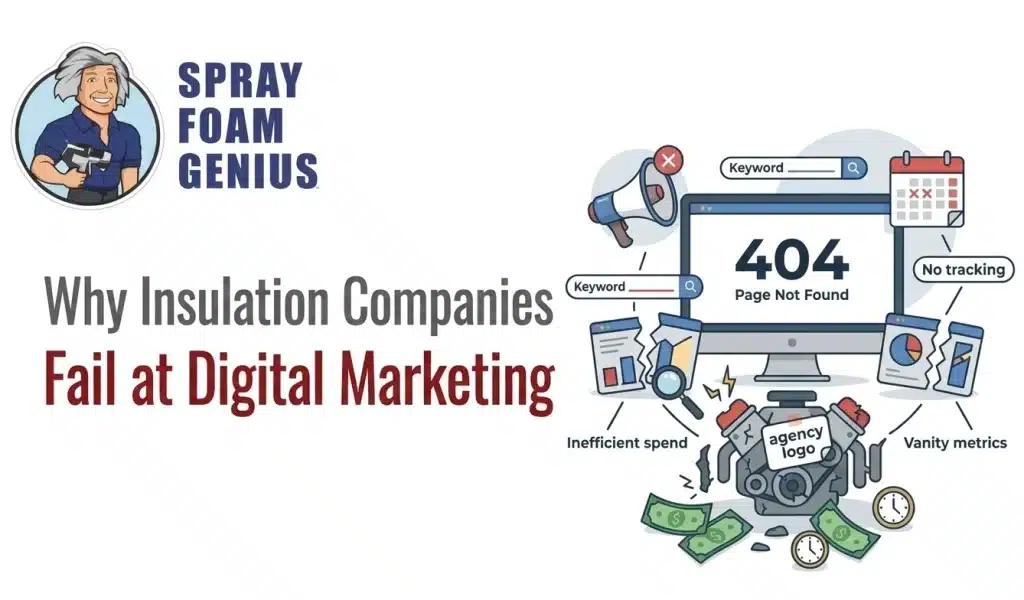
Direct Answer
Most insulation contractors believe digital marketing success comes from running ads, posting on social media, or launching a modern website. In reality, results come from being visible exactly when homeowners search for solutions, not when businesses decide to promote themselves.
Research from Think with Google consistently shows that high-intent searches drive the majority of service purchases. This article explains why insulation companies struggle online, where real leads originate, and the simple framework that consistently produces calls and revenue.
To learn how to align your marketing with how homeowners actually search and make decisions, explore this spray foam digital marketing guide.
TL;DR
- Most insulation leads come from high-intent searches rather than social media exposure.
- Local search visibility and maps listings often generate more calls than ads alone.
- Marketing that focuses on services instead of homeowner problems fails to convert.
- Consistency across SEO, reviews, and ads creates compounding growth.
- Trust signals such as reviews, authority content, and citations strongly influence conversions.
- Contractors who track search intent outperform those tracking vanity metrics.
The Real Problem Most Insulation Contractors Don’t See
Homeowners rarely search for insulation companies directly. They search for solutions to problems.
Typical searches include:
- “Why is my house cold in winter”
- “How to reduce attic heat”
- “Spray foam insulation cost near me”
- “Best insulation for old homes”
Behavioral research cited in Harvard Business Review shows that buyers define needs before they choose providers. The disconnect is simple. Contractors market services, but customers search for outcomes.
If a company is not visible when homeowners search, it effectively does not exist to them.
Where Insulation Leads Actually Come From
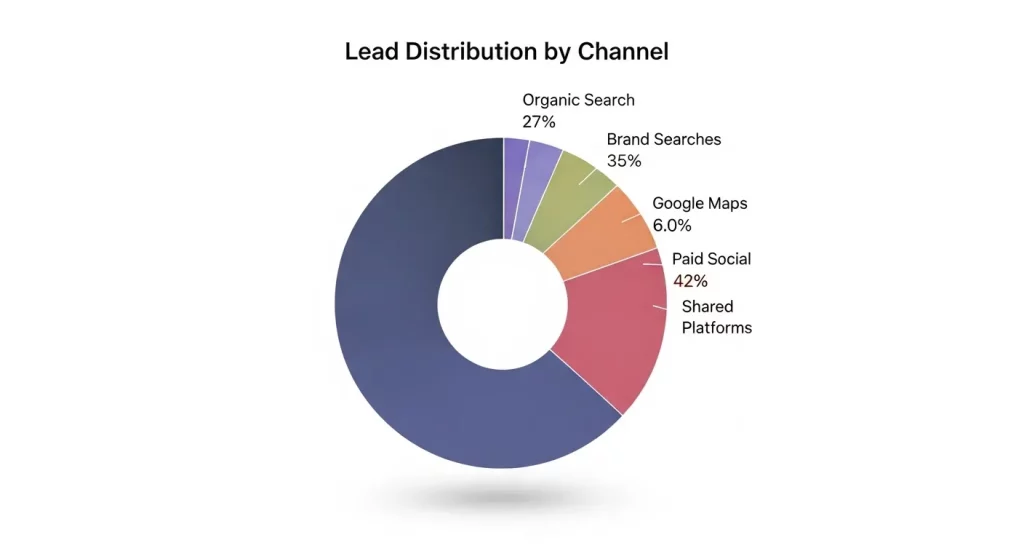
Digital leads usually originate from a few core sources:
- Local search results (40 to 50 percent)Listings on Google Maps and optimized local pages capture urgent buyers. Local ranking factors are explained in detail on Moz.
- Paid search ads (20 to 30 percent)Campaigns through Google Ads convert well when targeting problem-based keywords. Conversion data benchmarks are available from WordStream.
- Review platforms (10 to 15 percent)Sites like Yelp and Angi influence trust and selection. Consumer trust statistics are documented on BrightLocal.
- Referral marketplaces (5 to 10 percent)Networks such as HomeAdvisor can supplement leads but rarely sustain growth alone.
- Social media (less than 5 percent)Platforms like Facebook primarily reinforce brand credibility rather than generate immediate calls. Social influence patterns are discussed on Pew Research.
Top Reasons Insulation Companies Struggle to Get Leads
1. Marketing the Service Instead of the Problem
- Ads emphasize “spray foam insulation”
- Customers search for comfort, savings, or moisture control
2. Weak Local Search Presence
- Incomplete listings
- Few reviews
- Inconsistent contact information
Local ranking consistency guidelines are outlined on Google Business Profile Help.
3. Overreliance on Paid Ads
- Ads bring traffic but not authority
- Leads stop when the budget stops
4. Lack of Content That Answers Real Questions
- Missing pages addressing homeowner concerns
- Lost opportunities for long-tail searches
Search intent strategies are well documented on Search Engine Journal.
5. Ignoring Reputation Signals
- Low review counts reduce click rates
- Poor response management hurts trust
Trust metrics research is available on Nielsen.
6. Tracking the Wrong Metrics
- Focus on impressions or clicks
- Ignore calls, booked jobs, and acquisition cost
What Successful Insulation Companies Are Doing Differently
Successful companies win because they appear repeatedly across search results, maps listings, and trust platforms.
A Simple Framework That Produces Calls
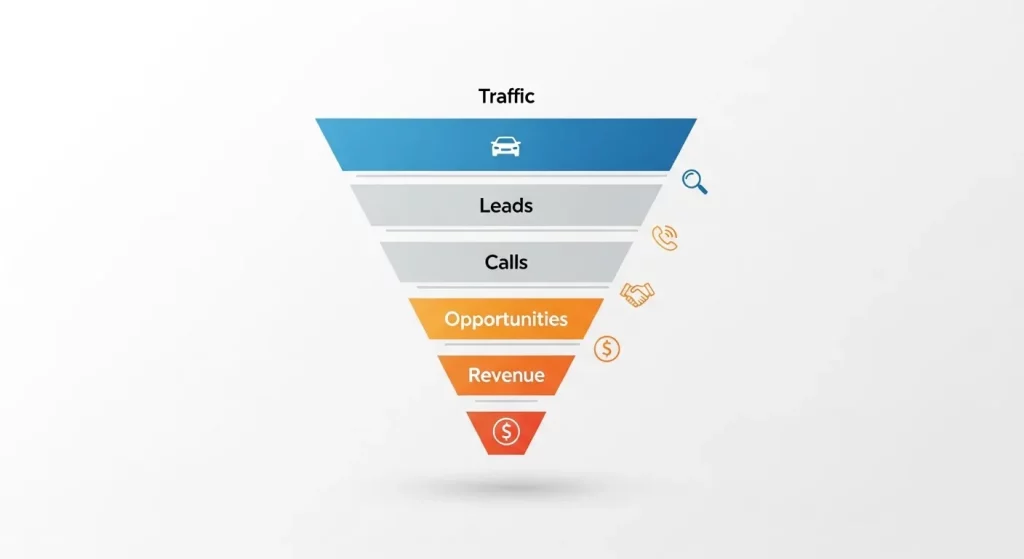
Think of marketing as a progression:
Visibility → Traffic → Leads → Calls → Revenue
- VisibilityAppear in search results and local maps
- TrafficAttract visitors using intent-based keywords
- LeadsCapture forms and phone calls
- CallsConvert inquiries into booked visits
- RevenueClose jobs consistently
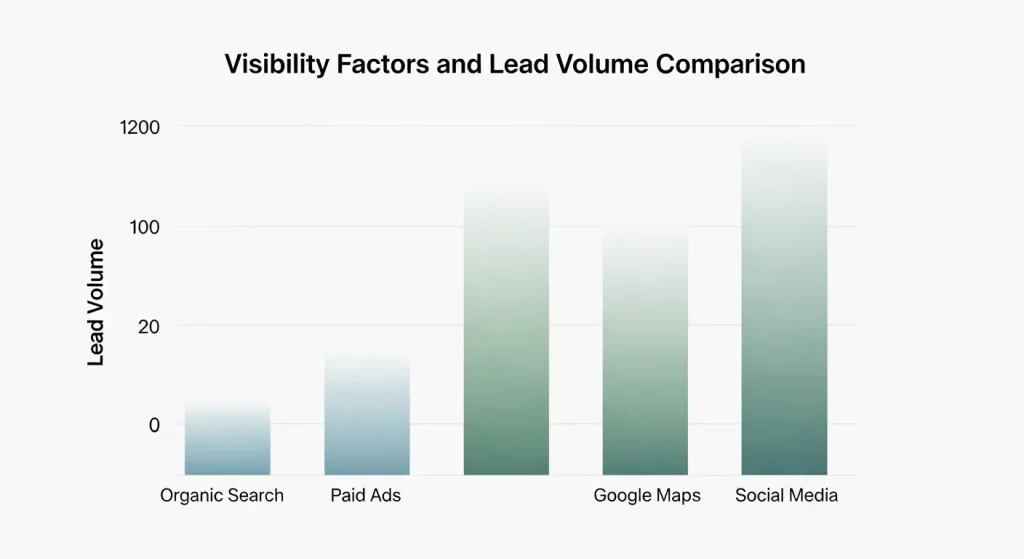
SEO vs Ads: Short-Term vs Long-Term Growth
Industry comparisons of paid versus organic performance are explored on HubSpot.
The strongest insulation companies use ads for speed and SEO for sustainability.
Who Struggles Most vs Who Wins
Underperforming Contractors
- Depend on one marketing channel
- Update websites rarely
- Treat reviews as optional
- Chase traffic instead of conversions
High Performing Contractors
- Invest in multi-channel visibility
- Track real lead sources
- Maintain consistent SEO and content
- Prioritize trust signals and local authority
The Biggest Misconception Contractors Need to Drop
The common belief is that more marketing activity equals more leads.
The reality is that more visibility at the right moment produces more leads. Purchase-moment research on McKinsey shows that companies that win search visibility dominate decision stages.
Success comes from appearing when homeowners are ready to act.
The Real Question Contractors Should Ask
Not:“Which marketing tactic should be tried next?”
But:“Are homeowners finding the business when they search for insulation solutions?”
That shift moves focus from activity to outcomes.
Take the Next Step Toward Consistent Leads
Get a Clear Picture of Digital Visibility
Most insulation companies do not need more marketing. They need better positioning where buyers are already searching. A professional audit reveals missed opportunities, weak search presence, and untapped lead channels.
Spray Foam Genius MarketingUSA: 877-840-FOAMCA: 844-741-FOAMEmail: info@sprayfoamgeniusmarketing.com
The right strategy turns online visibility into predictable revenue, and it starts with understanding where the business stands today.
FAQ
Why do insulation companies struggle to rank on Google?
Most rely on generic service pages instead of content targeting homeowner problems. Search engines reward relevance, authority, and helpful content.
Do paid ads work for spray foam contractors?
Paid ads can generate immediate leads, but performance improves significantly when supported by strong SEO and review credibility.
How important are reviews for insulation businesses?
Reviews influence both ranking and trust. Companies with strong ratings typically earn higher click rates and conversions.
How long does SEO take for insulation companies?
Early traction often appears within three to six months, while meaningful compounding growth usually occurs after consistent optimization over a year.
What marketing channel produces the best ROI for insulation contractors?
Local search visibility combined with strong review signals generally delivers the lowest cost per lead.