
Reputation management for an insulation contractor costs whatever it takes to do three jobs consistently: ask every happy customer for a review, answer every review you get, and keep an eye on what is being said about you online. What varies is who does that work. You can do it yourself with your own time, add software to make it easier, or hire a service to run it for you. Each option has a different price, and the right one depends on how many jobs you finish each month, how competitive your market is and how much of your week you can spare.
We are not going to publish a price list here. Dollar figures for this kind of service vary so much from provider to provider and market to market that any single number printed in a blog post is a guess. What we can do is show you what you are paying for, what moves the price up or down, and how to judge a quote when you get one. If you want a second opinion on a quote, we offer a free marketing audit (see the end of this post).
What You Are Actually Paying For
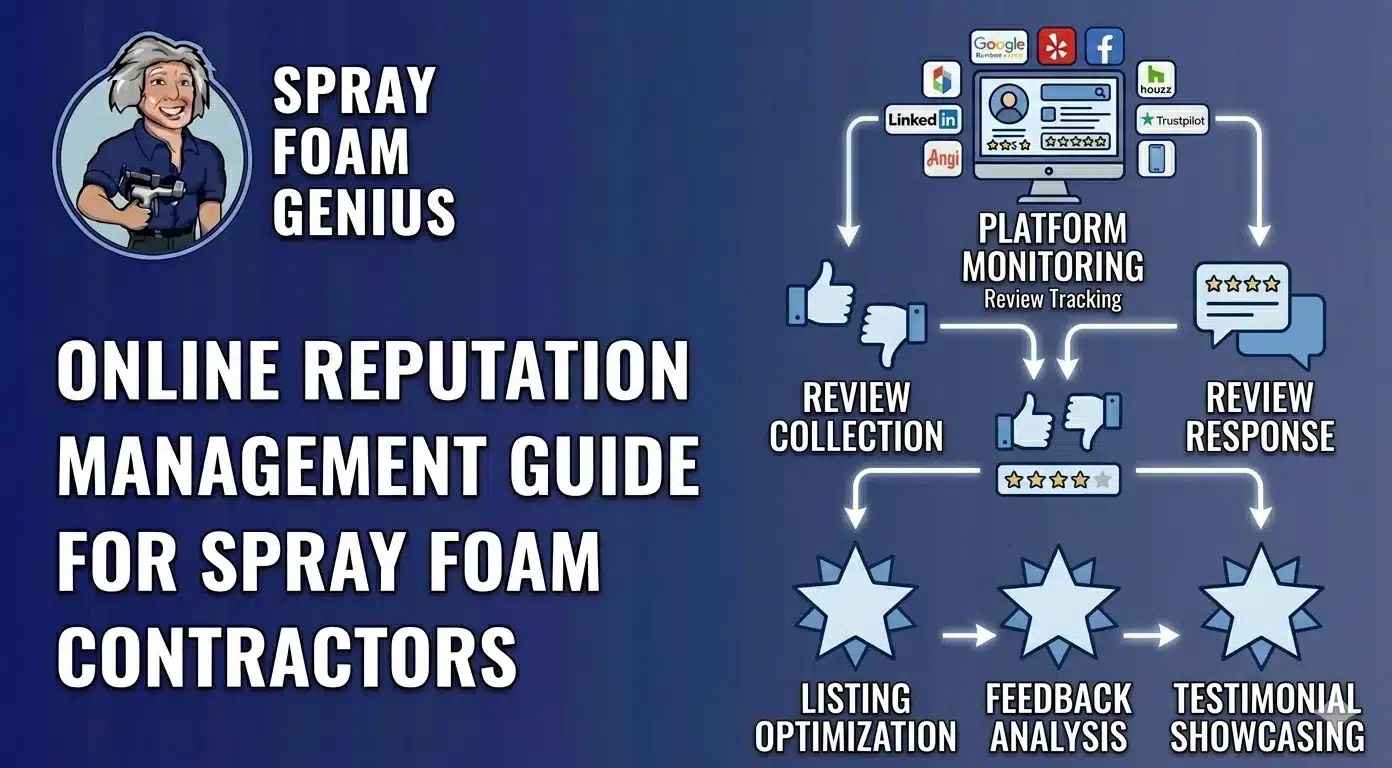
Managing reviews is more than replying to comments. A complete service, whether you do it or someone else does, usually covers these pieces:
- Asking past and current customers for reviews, ideally with a direct link sent right after the job.
- Watching new reviews and mentions so nothing sits unanswered.
- Writing replies to positive reviews and calm, professional replies to negative ones.
- Reporting reviews that break Google's policies, such as fake reviews or reviews about the wrong business.
- Keeping your Google Business Profile accurate and active.
- Using your best reviews on your website, in estimates and in your ads.
For the full playbook behind each of these, read our online reputation management guide for spray foam contractors.
Related reading: The Complete Guide to Online Reputation Management for Spray Foam Contractors
Three Ways to Pay for It
Do it yourself
This costs time rather than a monthly bill, but time has a price. Here is an example only, so swap in your own numbers: if an office employee spends three hours a week on review requests and replies at $25 an hour, that is $75 a week, or about $300 over a four-week month. The risk with DIY is not the hours, it is consistency. Review requests tend to get skipped in busy season, which is exactly when your crews are finishing the most jobs.
Software and automation
Review request tools can send a text or email with a direct review link when a job is marked complete, and many collect new reviews in one dashboard. Pricing is usually a monthly subscription, and it differs by tool, by number of locations and by the features you pick. Software saves time, but it does not write a good reply for you or decide how to handle a tough review. Someone on your team still needs to own it.
A managed service or agency
A service takes the process off your plate: setting up the review requests, monitoring, drafting or posting replies, and reporting. Expect a monthly fee, and sometimes a one-time setup fee for auditing your profiles and connecting your job software. Ask exactly what is included, because "reputation management" can mean anything from a monitoring dashboard to a full program that also touches your Google Business Profile, content and ads.
What Changes the Price
- Market competition: in a crowded metro, you may need a steadier flow of new reviews to keep up with nearby competitors.
- Service area size: covering several cities or counties generally means more profiles, more places to monitor and more reviews to build.
- Where you are starting: a business with a handful of reviews and a few unanswered complaints needs different work than one with hundreds of reviews and a steady rhythm.
- How much is done for you: coaching your office staff costs less than having someone handle every request and reply.
- Add-ons: profile optimization, website review widgets, review content in ads and crisis response are often priced separately.
- Growth goals: holding your current position costs less than pushing into new territory.
The Hidden Costs of Doing Nothing
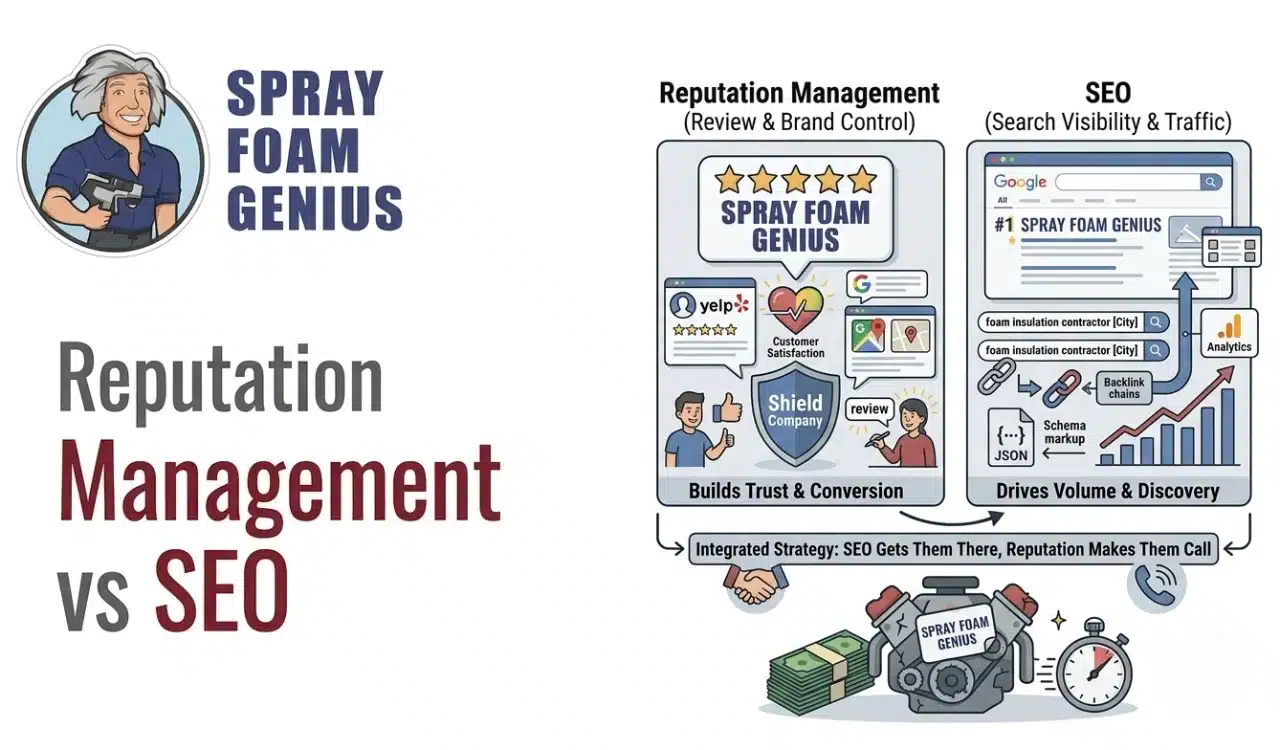
The biggest cost usually is not the fee. It is the calls you never see. A homeowner comparing contractors looks at star ratings, how many reviews each company has, how recent they are and whether the owner replied. If your profile looks thin or neglected next to a competitor's, you may lose the call before you ever get a chance to quote.
There is research behind the idea that ratings affect revenue, though not in our trade. A Harvard Business School study of Yelp restaurant ratings found that a one-star increase was associated with a 5 to 9 percent increase in revenue for independent restaurants. Restaurants are not insulation jobs, so do not treat that as a forecast for your business. It does show that star ratings can change buying behavior.
Reviews also matter for map results. Google says in its local ranking help page that local results are based mainly on relevance, distance and prominence, and that more reviews and positive ratings can help your business's local ranking. Nobody outside Google knows how much weight each piece carries, so be wary of any provider who claims to know.
Cheap Shortcuts That Cost You More
Some providers sell a quick fix: a batch of five-star reviews, or review requests that only go to customers likely to be happy. Do not buy it. Google's policy on contributed content does not allow reviews that have been paid for, incentivized reviews, or selectively asking only for positive reviews, and it says violating content will be removed. The FTC's rule on consumer reviews, which took effect on October 21, 2024, also covers buying fake reviews. The risk is real: lost reviews, a suspended profile and legal exposure, all to save a little effort.
Also be careful with any provider who promises a specific number of reviews, a ranking position or a result by a certain date. No one can guarantee those.
Questions to Ask Before You Sign
- What exactly is included each month, and what costs extra?
- Who writes the replies, and do you get to approve them before they post?
- How do you request reviews, and are requests only ever sent to your real customers, taken from your own job records?
- Will your Google Business Profile stay under your ownership?
- How long is the contract, and what happens if you cancel?
- What do you report on, and how often?
- How do you handle a negative review or one that breaks Google's rules?
Is It Worth It for a Small Contractor?
It depends on your volume and your market. If you finish only a few jobs a month, the basic free steps may be enough for now: claim and complete your Google Business Profile, send a direct review link after every job and reply to every review. Paying for help starts to make sense when you are busy enough that requests are being missed, when competitors clearly have more reviews, or when you are spending on ads and the ratings that show next to your name are weakening your results.
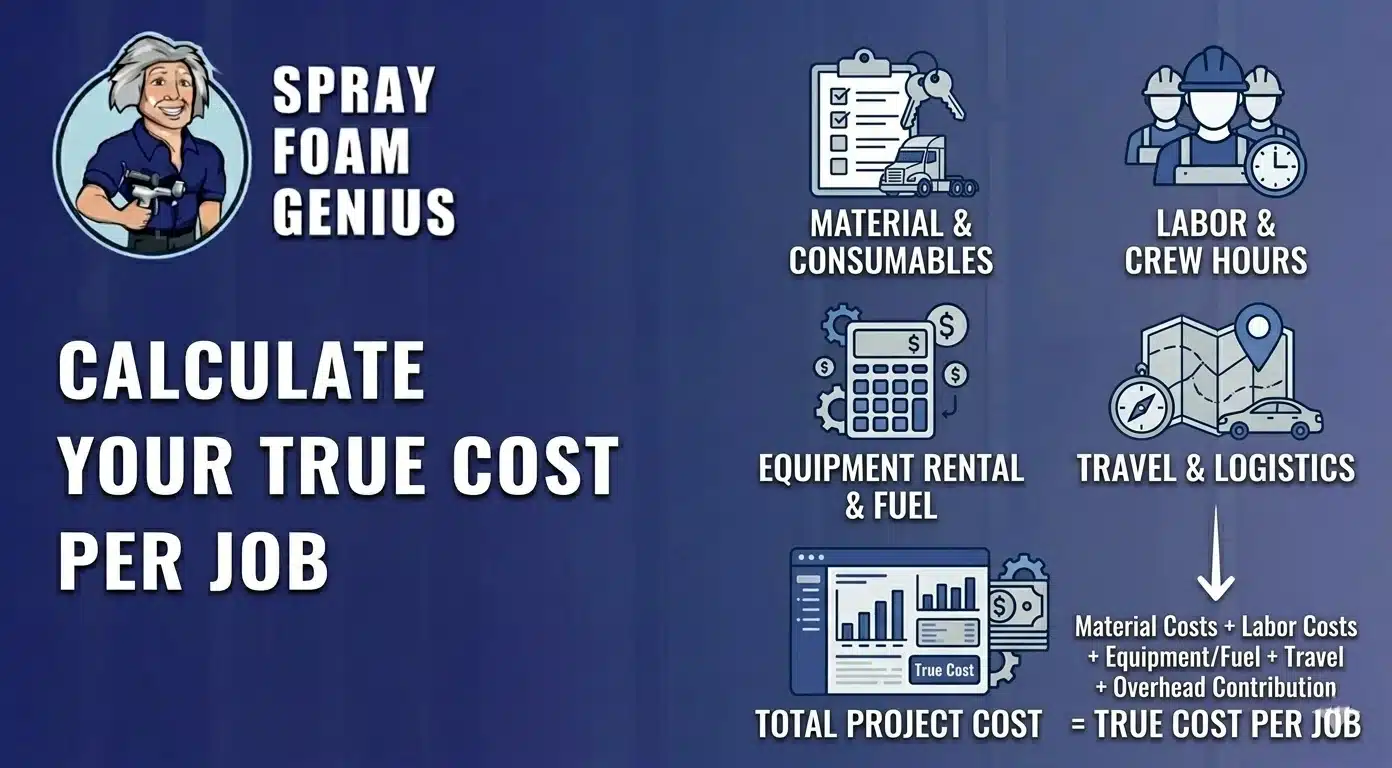
A simple way to judge it is to do the math with your own numbers. Here is an example only: if your average job brings in $4,000 and better reviews help you win one extra job in a month, that is $4,000 of revenue to compare against the monthly cost. Track calls and booked jobs from your Google Business Profile before and after, so you are working from your own data rather than a promise.
Get a Second Opinion on Your Reputation
If you want to know where your reviews stand against nearby competitors, or you have a quote and want help reading it, ask us for a free marketing audit. Call 877-840-3626 (USA) or email info@sprayfoamgeniusmarketing.com. You can also read about our reputation management services.
Frequently Asked Questions
How much does reputation management cost for an insulation contractor?
It depends on whether you do the work yourself, use software or hire a service, and on your market, service area and starting point. Doing it yourself costs staff time, software is usually a monthly subscription, and a managed service is a monthly fee that may include a setup charge. Ask for written quotes that spell out what is included.
Can you handle reputation management yourself?
Yes, and many contractors start there. The challenge is consistency: sending a review request after every single job and replying promptly, even in your busiest weeks. A simple checklist and a direct review link go a long way.
How long does it take to see results?
Reviews arrive one job at a time, so progress depends on how many jobs you complete and how many customers respond. Nobody can promise a timeline. What you can control is whether every finished job gets a request and every review gets a reply.
Are negative reviews always harmful?
Not always. A calm, specific reply shows future customers how you treat people when something goes wrong, and Google's own tips for replying to reviews suggest being honest, apologizing when appropriate and responding promptly. A few mixed reviews next to many good ones can also look more believable than a flawless record.
Can a service guarantee five-star reviews?
No, and you should avoid anyone who tries. Paid, incentivized or selectively requested reviews break Google's policies and can lead to removed reviews or a suspended profile. A legitimate service helps you ask every real customer and respond well.
Does reputation management replace other marketing?
No. It supports your other channels. Strong reviews help your Google Business Profile, your website and your ads, but you still need those channels to bring in searches and clicks.