

Ask five agencies what SEO costs and you will likely get five very different answers. That is not random. SEO pricing reflects how much work your market demands, what you want ranked, where your website and Google Business Profile start, and who does the work. Price lists online (including ones from agencies and blogs that sell SEO) are generalizations, and we cannot verify them, so this guide does not publish a dollar figure for the "average" contractor. We also do not list our own prices here.
What we can do is show what drives cost, what a fair quote should include, where contractors waste money, and how to work out whether SEO makes sense for your numbers. If you want a specific answer for your market, ask for a free marketing audit at the end of this guide.
Three Ways to Pay for SEO
- Do it yourself: the lowest cash cost, but you pay in time. You will need keyword and tracking tools, plus the hours to write pages, manage reviews and fix technical issues. It tends to work best in small, low-competition markets.
- A freelancer or consultant: useful for specific jobs such as an audit, copywriting or link outreach. Expect to coordinate several people and to carry the strategy yourself.
- An agency retainer: usually covers strategy, content, technical work, local optimization, link building and reporting in one coordinated plan. It costs more in monthly fees and takes less of your time.
Many contractors also pay a one-time setup or audit fee on top of ongoing monthly work. Ask exactly what is covered by each, and what happens if you cancel.
Related reading: Best SEO Companies for Insulation Contractors: How to Find One That Actually Works
What Drives the Cost
1. Market Size and Competition
This is usually the biggest driver. Ranking for "spray foam insulation contractor" in a small town with a couple of local competitors takes less effort than the same search in a big metro where several companies have invested in SEO for years. The more competitors and the longer they have been at it, the more content, links and local signals it takes to compete.
2. Which Services You Want to Rank For
Services differ in demand and competition. The more services you want found, such as open-cell and closed-cell spray foam, attic insulation, crawl space encapsulation, blown-in insulation and commercial work, the more pages, content and local work are needed.
3. Where You Are Starting From
A contractor with an existing website, some rankings, a verified Google Business Profile and a good base of reviews needs less foundation work than one starting with a new domain, no content and no review profile. Any agency should audit your current situation before quoting. If a provider quotes without looking, be skeptical.
4. How Many Service Areas You Cover
Local SEO is geographic. Ranking in your home city is one effort, and ranking in five surrounding towns is a larger one. Each area needs its own useful page, local signals and often its own content.
5. How Fast You Want to Grow
Steady growth and aggressive market capture are priced differently. Wanting to dominate a whole metro quickly calls for more content, more link building and often paid ads alongside SEO. A longer runway lets you invest at a lower level and let the work build.
6. Website and Review Quality
A fast, well-structured site with clear service pages is cheaper to improve than one that needs a rebuild. A thin or outdated review profile adds work, since reviews matter for local results. Google says more reviews and positive ratings can help local ranking (source).
What You Are Paying For
A real SEO program usually includes some mix of the following. Use this as a checklist when you compare quotes:
- An audit of your website, Google Business Profile and competitors
- Keyword research mapped to specific pages
- Google Business Profile setup and ongoing optimization
- Clean, consistent business listings (citations)
- Service pages and city pages written for your actual services and areas
- New content that answers customers' questions
- Technical fixes: speed, mobile, indexing, site structure
- A review process (asking, replying, monitoring)
- Link building and local partnerships
- Reporting on calls, form fills and booked jobs, not only rankings
Local and Google Maps work, such as profile optimization, citations and reviews, is a narrower scope than a full program that also includes ongoing content and links. Quotes that look very different may be covering very different amounts of work, so compare scopes before comparing prices. If you are mainly after map visibility, read our guide on how to rank your spray foam business on Google Maps.

Four Ways Insulation Contractors Waste Money on SEO
1. Buying Very Cheap Packages
Be wary of packages priced far below everyone else. At very low prices the work is often templated content, a handful of low-quality directory links, and a monthly report full of impressive-looking numbers that say little about calls or jobs. Cheap SEO that does not move your business is expensive.
2. Relying on Shared Leads Instead of Building Something You Own
Lead marketplaces such as HomeAdvisor, Angi and Thumbtack can send the same inquiry to more than one contractor, so you may be competing on price with others who got the same lead. They can fill gaps while your own marketing builds, but money spent there does not build a ranking or an audience that belongs to you. See Angi vs Google Local Services Ads for a closer look.
3. Hiring a Generalist
An agency that handles dentists, restaurants and online stores may not understand how a homeowner moves from a cold attic to a hired contractor, or which searches signal a real buying intent. Insulation SEO needs trade-specific topics (open-cell vs closed-cell, R-value, moisture, rebates and local codes) and local tactics built around how your customers search.
4. Quitting Too Early
Google's SEO Starter Guide says changes can take anywhere from hours to months to show up. Nobody can promise a date. Canceling after a couple of quiet months means you may pay for the setup and miss the part where the work compounds. Agree on what you will measure and when you will review it before you start.
SEO vs Paid Ads: Do You Need Both?
For many contractors the answer is both, for different reasons. Paid ads can bring calls quickly while organic work builds, but the leads stop when the budget does. SEO takes longer to build, but a strong page or profile can keep working without a per-click charge, as long as you keep it up. Contractors who only run ads are renting their visibility; those who only do SEO may wait longer for the first results. See SEO vs Google Ads for insulation contractors and our guide to Google Ads for insulation businesses.
How to Judge the Return
The useful question is not "how much does SEO cost?" but "how many extra booked jobs do you need to cover it, and is that realistic?" Work it out with your own numbers.
Example only, with made-up figures: suppose an average job leaves you $2,000 in gross profit and an SEO program costs $2,000 a month. Then you need about one extra booked job each month to break even, and anything beyond that is return. If the same job leaves $4,000 of gross profit, you need one extra job every two months. Use your own average job profit, close rate and fee.
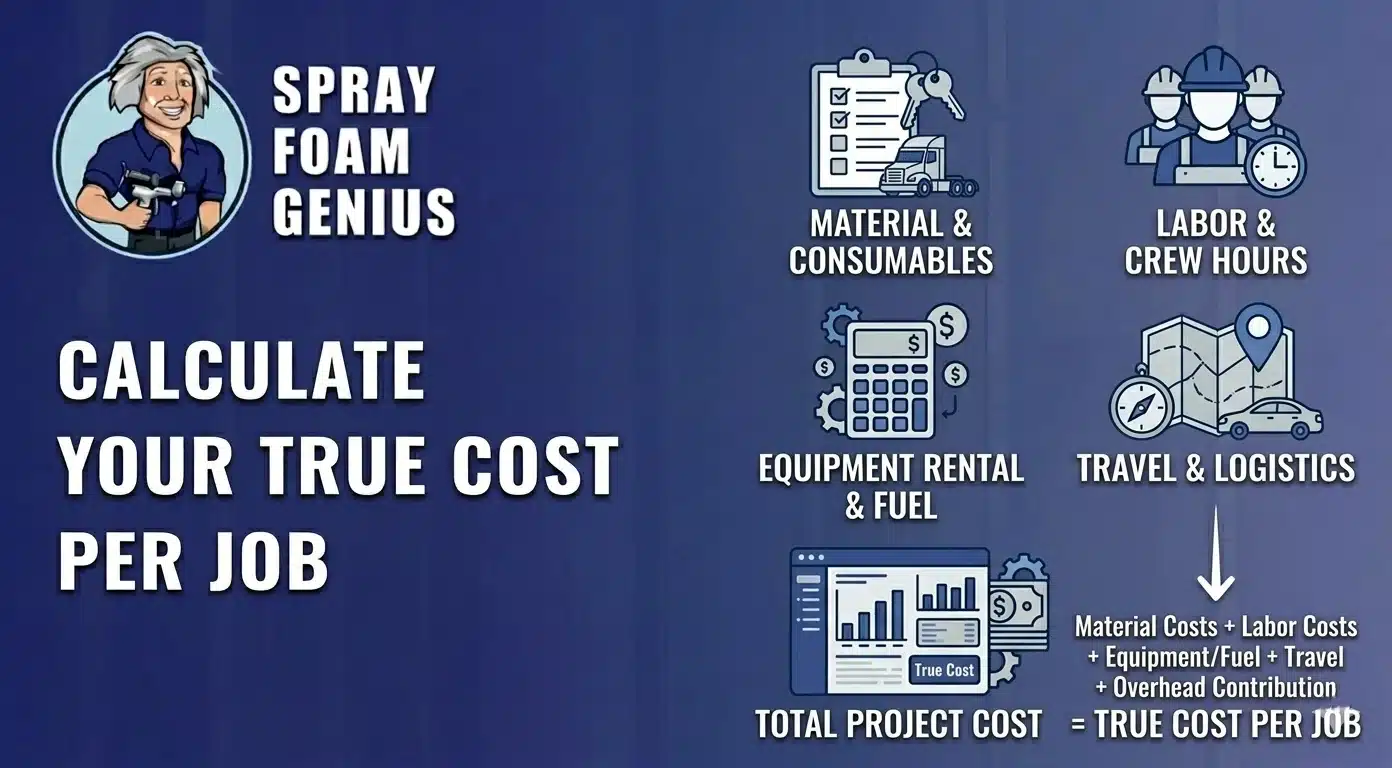
Then track what matters: calls, form fills, quotes, booked jobs and revenue from search and Google Maps. Our guide on tracking and analyzing marketing ROI walks through the setup, and calculating your true cost per job helps you put a number on it. SEO also depends on what happens after the call: slow follow-up or weak estimating will limit any marketing channel.
What to Ask Before You Sign
Contractors who have been burned by agencies often wish they had asked these first. For a longer list, see our agency vetting checklist.
- Will they audit your site and Google Business Profile before quoting?
- What exactly is included each month, and who does the work?
- Do they work with insulation or spray foam contractors specifically, and can they explain how your customers search?
- How do they build links, and will they avoid buying low-quality ones?
- Will you own your website, content, Google Business Profile and analytics accounts if you part ways?
- What do they report: calls, forms and booked jobs, or only rankings?
- What is the contract length, and how do you cancel?
- Do they promise rankings? (A promise of a guaranteed ranking or timeline is a red flag, because no one controls Google.)
Get a Straight Answer for Your Market
Because pricing depends so heavily on your market and goals, the fastest route is a look at your actual situation. Spray Foam Genius Marketing works with spray foam and insulation contractors, and we offer a free marketing audit of your website, Google Business Profile and local visibility. Call 877-840-3626 or email info@sprayfoamgeniusmarketing.com.
Frequently Asked Questions
Is SEO worth it for a small insulation company with one truck?
Often yes, especially in a smaller market with fewer competitors, because local search puts you in front of people already looking for the work. The key is targeting the services and areas you can realistically win and making sure you can handle the jobs that come in. See is SEO worth it for small insulation companies.
How long does SEO take to work?
It depends on your market, competition, starting point and consistency, and nobody can promise a date. Google says changes can take from hours to months to appear. Plan for foundation work first and judge progress by calls and booked jobs.
Should you start with SEO or Google Ads?
If you need leads right away, ads can help while SEO builds. If you have time and steady work from other sources, starting SEO earlier lets it begin compounding sooner. Many contractors run both and adjust the mix as results come in.
Can you do SEO yourself?
Some of it. Claiming and completing your Google Business Profile, asking for reviews and making sure your website names your services and areas are all manageable. Technical work, content production and link building usually take more time and experience than a working contractor has, so the real question is whether your time is better spent on jobs.
What happens if you stop paying for SEO?
Your pages and profile do not vanish the day you stop, but they can slip over time if competitors keep working and your content goes stale. That is why SEO works best as an ongoing investment rather than a one-off project.
Is a one-time SEO setup enough?
Setup work, such as an audit, profile optimization and technical fixes, is important, but it is not the whole job. Reviews, content, listings and tracking need ongoing attention.
How do you know if a quote is fair?
Compare scopes, not just prices. A fair quote explains what is included, who does it, how it is reported and how long the commitment lasts, and it should follow an audit of your situation.
Further reading
Official guidance from Google on the topics in this article: