
Direct Answer
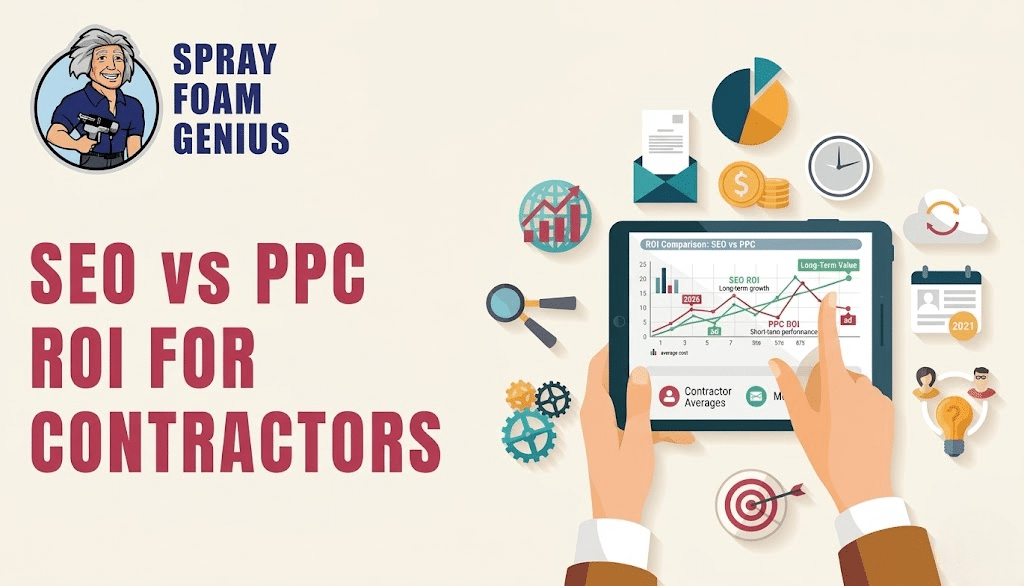
Tracking ROI for SEO vs Google Ads in insulation businesses comes down to understanding time horizon, cost structure, and ownership of leads. Google Ads delivers immediate, paid visibility, you pay per click, and leads stop when the budget stops. SEO, on the other hand, builds long-term organic visibility, where traffic compounds over time and continues even after initial investment.
To measure ROI effectively, insulation companies must track cost per lead (CPL), cost per acquisition (CPA), conversion rate, lifetime value (LTV), and channel attribution. Google Ads is easier to track in the short term with direct attribution, while SEO requires longer tracking windows and multi-touch attribution models. According to Google, businesses that implement full conversion tracking significantly improve campaign efficiency and ROI measurement accuracy.
Strategically, Google Ads is best for fast lead generation and testing markets, while SEO is ideal for sustainable growth, brand authority, and lower long-term acquisition costs. The most effective insulation companies don’t choose one, they measure both and allocate budget based on performance over time.
TLDR
- Google Ads delivers leads in 1–7 days, while SEO typically takes 3–6 months to gain traction
- Average Google Ads CPL: $50–$200+, SEO CPL decreases over time and can drop below $30–$80
- Ads stop instantly when spend stops; SEO traffic is owned and compounding
- SEO ROI improves over 6–12 months; Ads ROI is immediate but often plateaus
- Best use case: Ads for urgent jobs & new markets, SEO for long-term dominance
- Track both channels using conversion tracking, call tracking, and CRM integration
Understanding ROI in Insulation Marketing
Before comparing channels, define ROI correctly:
ROI Formula:
(Revenue – Marketing Cost) / Marketing Cost
But for insulation companies, ROI depends heavily on:
- Job size ($2,000–$10,000+ per project)
- Lead quality
- Seasonality (winter spikes, summer slowdowns)
According to HubSpot, companies that track ROI beyond surface metrics are more likely to improve performance.
Core Metrics You Must Track
SEO ROI: What to Measure
SEO is a long-term asset, not a short-term expense.
Key SEO Metrics
- Organic traffic growth
- Keyword rankings (local + service-based)
- Organic leads (form fills + calls)
- Cost per organic lead (total SEO cost ÷ leads)
- Conversion rate of organic traffic
Industry research from BrightEdge shows that organic search drives a significant portion of traffic.
Example Scenario
- Monthly SEO investment: $2,500
- Leads generated after 6 months: 60/month
- Close rate: 30% → 18 jobs
- Avg job value: $4,000
Revenue: $72,000Cost per lead: ~$41ROI: Extremely high and compounding
SEO Strengths
- Lower long-term CPL
- Builds brand authority in local markets
- Compounds over time
- Higher trust (organic listings outperform ads in credibility)
SEO Weaknesses
- Slow ramp-up
- Requires consistent investment
- Harder attribution (multi-touch journeys)
For insulation companies looking to track SEO performance and maximize long-term ROI from organic search, see this spray foam contractor SEO framework.
Google Ads ROI: What to Measure
Google Ads is fast, measurable, and scalable, but costly.
Key Google Ads Metrics
- Cost per click (CPC)
- Click-through rate (CTR)
- Conversion rate
- Cost per lead (CPL)
- Cost per booked job (CPA)
- Return on ad spend (ROAS)
According to WordStream benchmarks, CPC varies widely.
- Monthly ad spend: $3,000
- Avg CPC: $8
- Clicks: ~375
Revenue: $36,000Cost per lead: ~$81ROI: Strong but dependent on ongoing spend
Google Ads Strengths
- Immediate traffic and leads
- Easy to track and optimize
- Great for testing offers and markets
- Scalable quickly
Google Ads Weaknesses
- Costs rise over time (competitive bidding)
- Leads stop when ads stop
- Lower trust vs organic
- Requires constant optimization
For insulation contractors looking to optimize Google Ads performance, reduce CPL, and improve ROAS, see this Google Ads framework for spray foam contractors.
Side-by-Side ROI Comparison
What Insulation Companies Often Get Wrong
1. Only Tracking Leads, Not Revenue
Not all leads are equal. Track:
- Job size
- Close rate per channel
2. Ignoring Call Tracking
Data from Invoca shows the importance of calls.
3. Comparing SEO Too Early
SEO ROI should be evaluated over 6–12 months, not 30 days.
4. Not Using CRM Attribution
Platforms like Salesforce help connect marketing to revenue.
Strategy: Hybrid ROI Optimization
Phase 1 (0–3 Months)
- 80% Google Ads
- Goal: Generate immediate leads
Phase 2 (3–6 Months)
- SEO begins generating traffic
Phase 3 (6–12 Months)
- Organic leads reduce dependency on paid ads
Research from Search Engine Journal highlights combined strategies.
Factors That Affect ROI for Both Channels
When to Prioritize Each Channel
Choose SEO When:
- You want long-term growth
- You’re in a competitive local market
- You want lower acquisition costs over time
Choose Google Ads When:
- You need leads immediately
- You’re entering a new market
- You’re testing services or offers
Best Approach:
Use both, but track ROI separately and adjust monthly.
Turn Your Marketing Into a Predictable Revenue Engine
If you’re tired of guessing where your leads come from or wasting money on underperforming campaigns, it’s time to build a data-driven marketing system that tracks real ROI, not just clicks.
Spray Foam Genius Marketing specializes in helping insulation companies dominate both SEO and paid ads while tracking every dollar back to revenue.
Contact Info:Spray Foam Genius MarketingUSA: 877-840-FOAMCanada: 844-741-FOAMEmail: info@sprayfoamgeniusmarketing.com
Make every marketing dollar accountable, and profitable.
FAQs
How long does it take to see ROI from SEO for insulation companies?
Typically 3–6 months for initial traction, with strong ROI appearing around 6–12 months as rankings and traffic grow.
What is a good cost per lead for insulation services?
A healthy CPL ranges from $50 to $150 depending on market competition, though SEO can reduce this over time.
Is Google Ads worth it for small insulation businesses?
Yes, especially for immediate leads. However, relying solely on ads can become expensive without SEO support.
How do I accurately track ROI across channels?
Use a combination of call tracking, Google Analytics, and CRM systems to connect leads to actual revenue.
Should I stop Google Ads once SEO starts working?
Not completely. Reduce dependency over time, but keep ads for high-converting keywords and seasonal demand spikes.
Sources
- https://support.google.com/google-ads/answer/6325025
- https://blog.hubspot.com/marketing/marketing-statistics
- https://www.brightedge.com/resources/webinars/organic-search-driving-more-than-50-percent-of-website-traffic
- https://www.wordstream.com/blog/ws/google-ads-benchmarks
- https://www.invoca.com/blog/call-tracking-statistics
- https://www.salesforce.com/products/crm/what-is-crm/
- https://www.searchenginejournal.com/seo-vs-ppc/