
Starting an insulation company requires more than just a rig and foam. We created this guide to help you manage legal setup, equipment buying, and lead generation from day one. Follow these steps to build a profitable business that stays booked year-round.
How to Start a Spray Foam Business in 7 Steps
- Research your market: Look at local competitors, building activity and whether homeowners, builders or commercial clients will be your main customers.
- Set up your business: Form an LLC or S-Corp, register for taxes and get any business or contractor licenses your state requires.
- Get insured: You'll need general liability, commercial auto and workers' comp before you put a crew on a job.
- Buy your rig and equipment: A new, fully equipped spray foam rig typically costs $70,000 to $105,000.
- Get trained and certified: Complete manufacturer field training and consider SPFA certification to build trust with customers.
- Set your pricing: Price by board foot or square foot based on product and thickness, and know your material cost on every job.
- Start marketing before your first job: Launch a website, claim your Google Business Profile and start collecting reviews so customers can find you on day one.
Below, we walk through each step in detail.
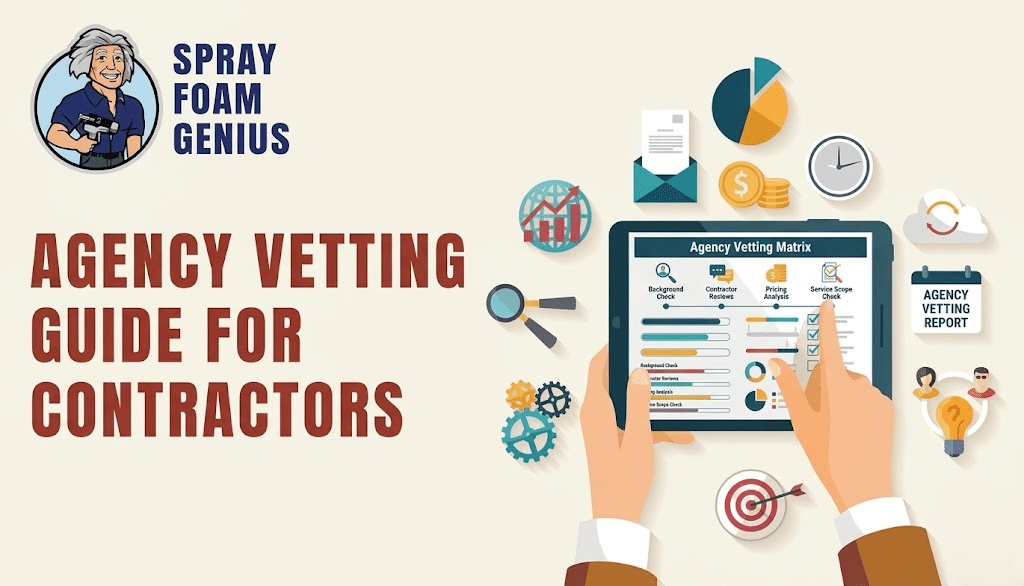
Related reading: How to Vet a Marketing Agency as an Insulation Company Owner: A Complete Checklist
Legal and Financial Setup
Every successful operation starts with a solid legal base. We recommend forming an LLC or S-Corp to protect your personal assets while setting up your tax structure.
This initial phase ensures you can hire employees, open credit lines with suppliers, and operate without legal headaches. We suggest consulting with a local accountant to decide which business structure fits your goals.
Choosing a Business Structure
Selecting the right entity affects how you pay taxes and your personal liability. According to the Small Business Administration, an LLC is a popular choice for service businesses because it offers protection without the paperwork of a large corporation.

Registering for Taxes
You need an Employer Identification Number (EIN) from the IRS to pay federal taxes. This number acts like a social security number for your business. It is necessary for opening a bank account and applying for business licenses in your city or county.
Equipment and Material Sourcing
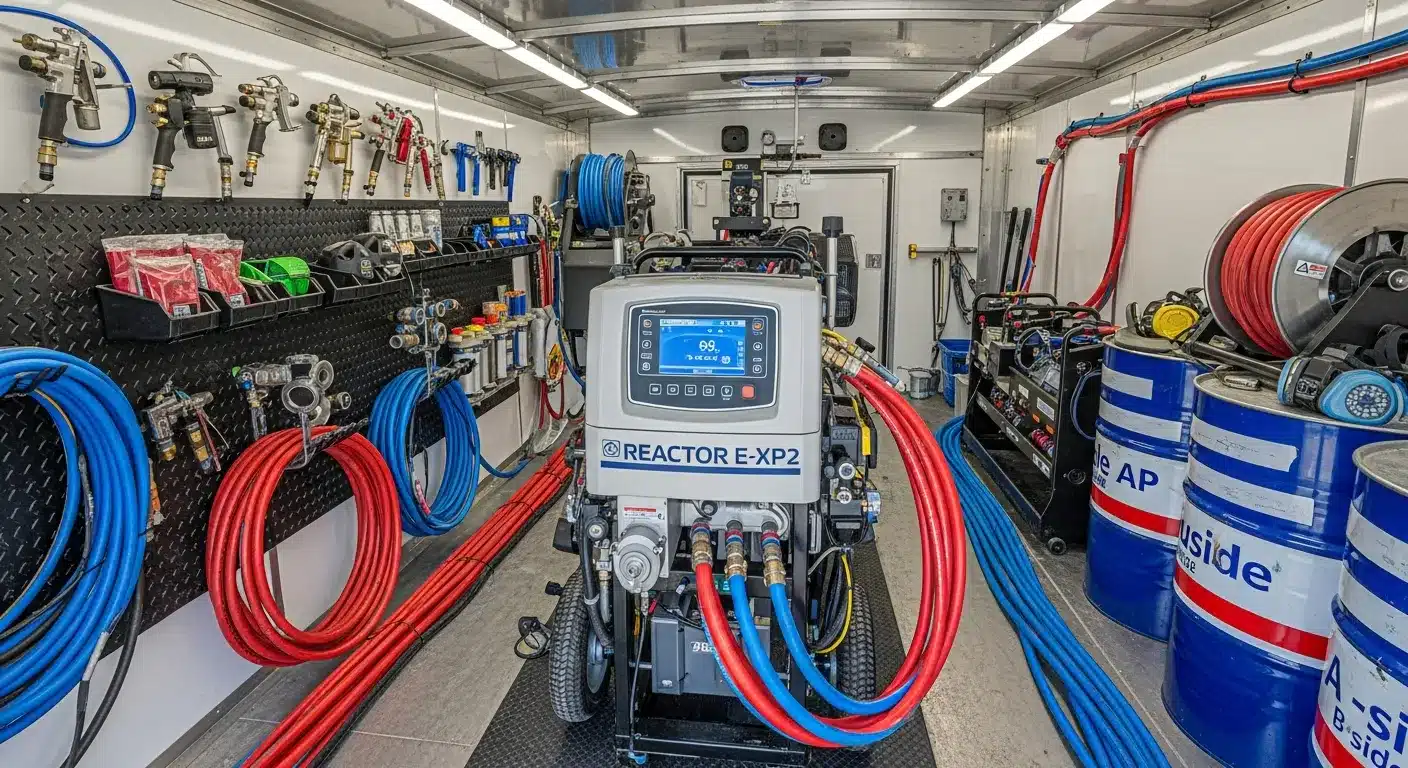
Buying the wrong rig can sink a new business before the first job. We suggest looking for manufacturers that offer training alongside the equipment purchase to get your crew up to speed quickly.
Your rig is your most expensive asset, so we advise researching whether a shore-power or generator-run system works best for your target market. Small residential jobs might only need a compact setup, while large commercial projects require high-output machines.
Selecting Your Proportioner
The proportioner is the heart of your rig. It heats and pumps the chemicals at the correct ratio. Investing in reliable equipment early prevents costly repairs later.
Air-Driven Machines
These are often cheaper but require a large compressor.
Electric Machines
These are consistent and great for residential work.
Hydraulic Machines
These are the gold standard for high-volume commercial jobs.
Material Suppliers
Build relationships with foam manufacturers early. Some suppliers offer better pricing if you commit to a certain number of sets per month. We also suggest keeping a stock of spare parts, such as spray gun seals and O-rings, so you never lose a day of work to a minor equipment failure.
Marketing and Local Authority
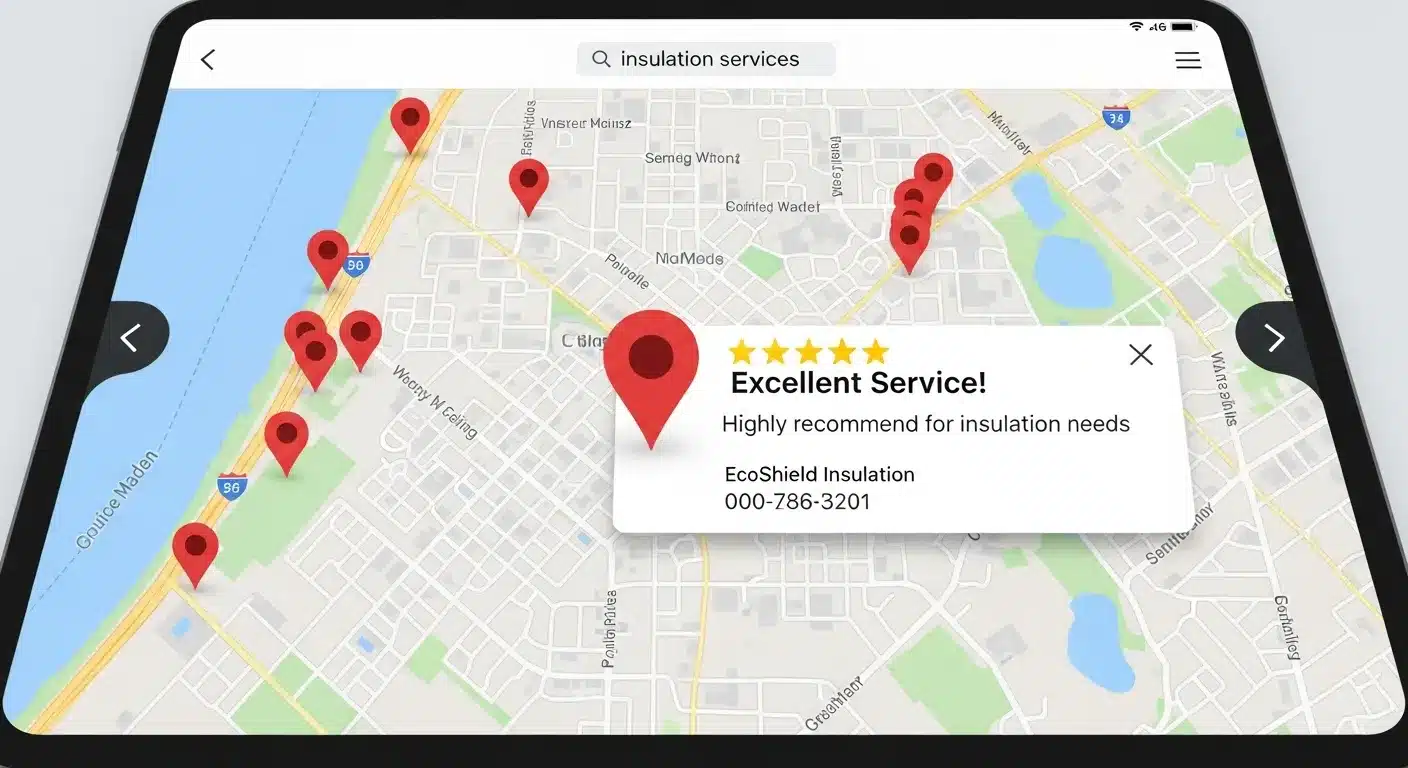
You cannot rely on word of mouth when you are just starting out. We focus on building a digital presence that puts your services in front of homeowners actively searching for insulation contractors in your area.
Local visibility starts with your online reputation. We recommend setting up your profile on Google Business Profile as soon as you have your business address and phone number ready to go.
Building Your Website
Your website should do more than just list your phone number. It needs to explain the benefits of spray foam, such as lower utility bills and improved comfort. We suggest including a clear “Free Quote” button on every page to make it easy for customers to contact you.
Local SEO Strategies
Search engines prioritize businesses that show they are active in their community. We help contractors by creating location-specific pages for every town they serve. This helps you show up when someone searches for “attic insulation” or “crawl space spray foam” in a specific zip code.
Claim Your GBP
Optimize your profile with photos of your rig and finished jobs.
Gather Reviews
Ask every customer for a review immediately after the job is done.
Local Content
Write blog posts about the specific insulation needs in your climate.
Best Insulation Company
Use Google Ads to get immediate leads while your SEO builds up.
Lead Generation Systems
Automating your lead intake helps you stay organized. We recommend using a simple CRM to track every inquiry from your website or phone calls. This ensures no potential job falls through the cracks while you are busy on a job site.
Crew Training and Safety
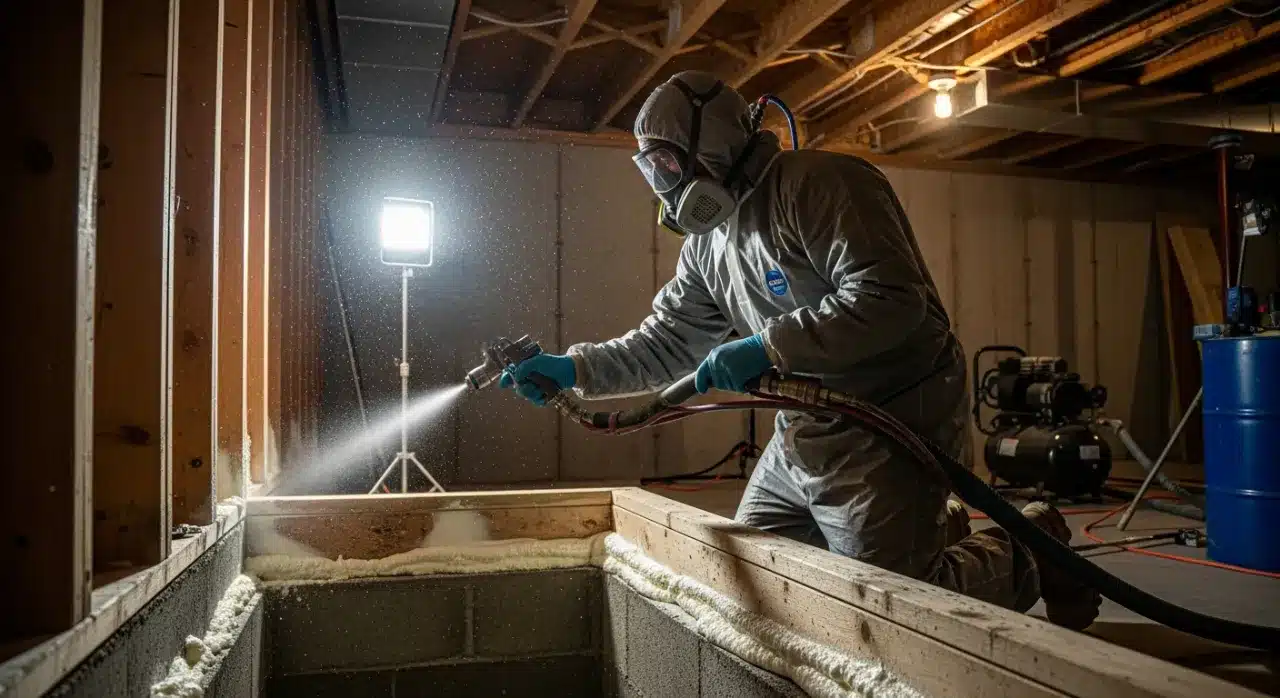
Safety is the top priority when handling spray foam chemicals. We suggest ensuring every crew member completes comprehensive safety training before they ever pull a trigger on a job site.
Having a trained crew also improves your profit margins. An efficient team uses less material and finishes jobs faster without sacrificing quality. We recommend documenting your spray process so every job meets the same high standard.
Personal Protective Equipment (PPE)
Your team needs high-quality respirators, suits, and gloves. Proper ventilation is also necessary to keep the job site safe for both your workers and the homeowners. We advise following all OSHA guidelines to avoid fines and keep your team healthy.
Sales and Bidding
Learning how to bid accurately is a skill that comes with experience. We suggest using digital estimating tools to calculate the board footage of a project quickly. This helps you provide professional quotes on the spot, which often helps you win the job over slower competitors.
Problem
Inland Northwest Spray Foam Insulation had limited online visibility across a large service area. This made it difficult to attract consistent, high-quality local leads. They needed a stronger digital strategy to reach the right customers.
Frequently Asked Questions
How much does it cost to start a spray foam business?
Most contractors spend between $70,000 and $105,000 for a fully equipped rig and initial marketing. This includes the trailer, proportioner, hoses, and first few sets of foam.
Do I need a special license for spray foam?
License requirements vary by state. Most areas require a general contractor license or a specialty insulation license. Check with your local building department for specifics.
How do I find my first customers?
Start with local SEO and Google Business Profile. Networking with HVAC companies and home builders is also a great way to get referred for new projects.
What insurance do I need?
You need general liability, workers compensation, and often a pollution policy. These protect you from accidental damage or chemical-related claims.
Ready to Scale Your New Business?
Launching your rig is just the first step. To keep your schedule full, you need a marketing partner who understands the insulation industry. At Spray Foam Genius Marketing, we specialize in generating high-quality leads for spray foam contractors through SEO and paid ads.