
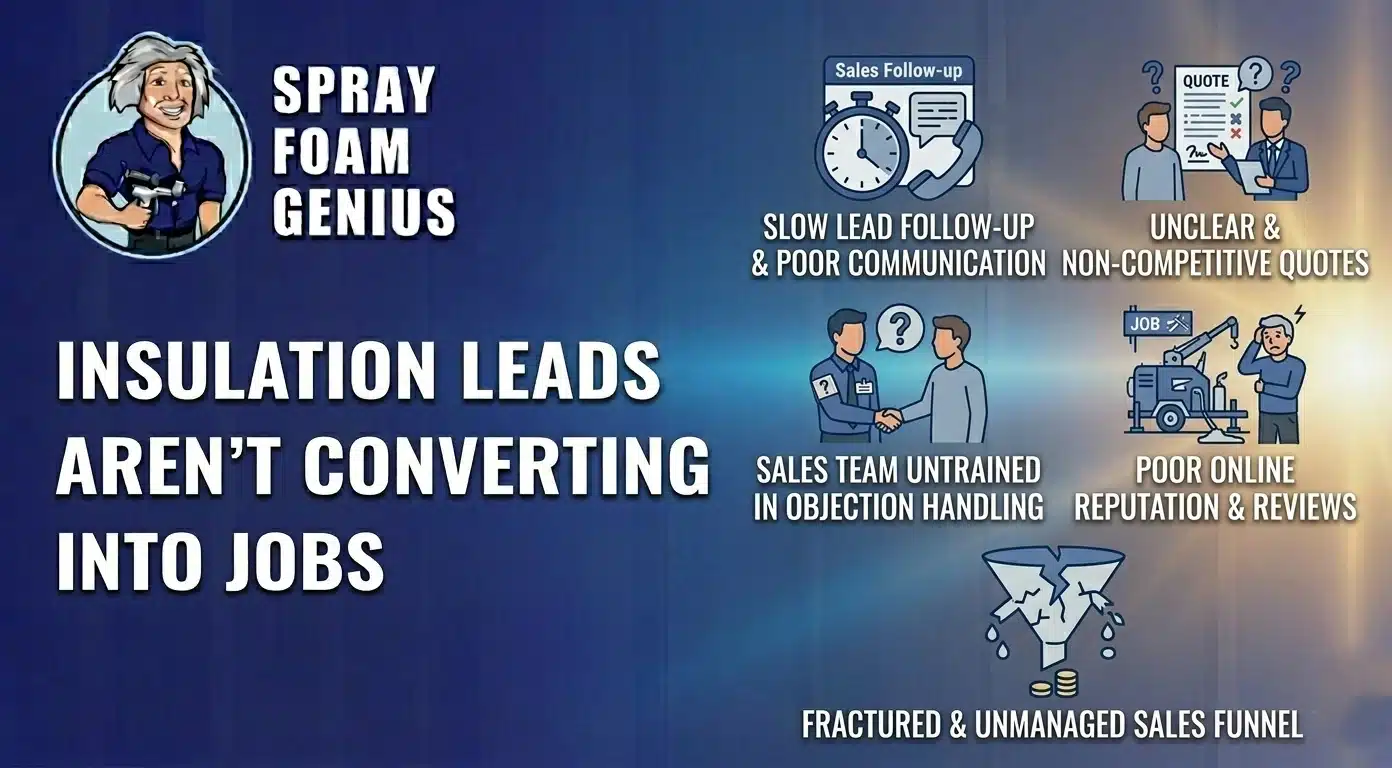
If leads are coming in but jobs are not getting booked, the problem is usually not that you need more leads. It is what happens between the inquiry and the signed job: how fast you respond, whether the lead was exclusive, how you qualify, how you follow up and how much trust you build along the way. Even real leads are lost to a faster or more professional competitor.
This guide walks through the common conversion leaks for insulation and spray foam contractors, with a practical fix for each. Nobody can promise a specific close rate, so treat the steps below as a way to find your own leaks and measure the change.
The Real Problem Is Usually Conversion Leaks, Not Lead Volume
Many contractors assume more leads automatically means more revenue. Lead generation is only the first step of a pipeline. Demand for insulation work is there: homeowners search when energy bills climb, a room will not stay comfortable or a moisture problem shows up. The question is how many of those inquiries you actually turn into inspections and signed work.
The leaks usually fall into three places:
- Speed of response
- Lead quality and whether the lead is exclusive to you
- Qualification, sales process and follow-up
For a bigger picture of how an inquiry becomes a job, see our spray foam lead generation system.
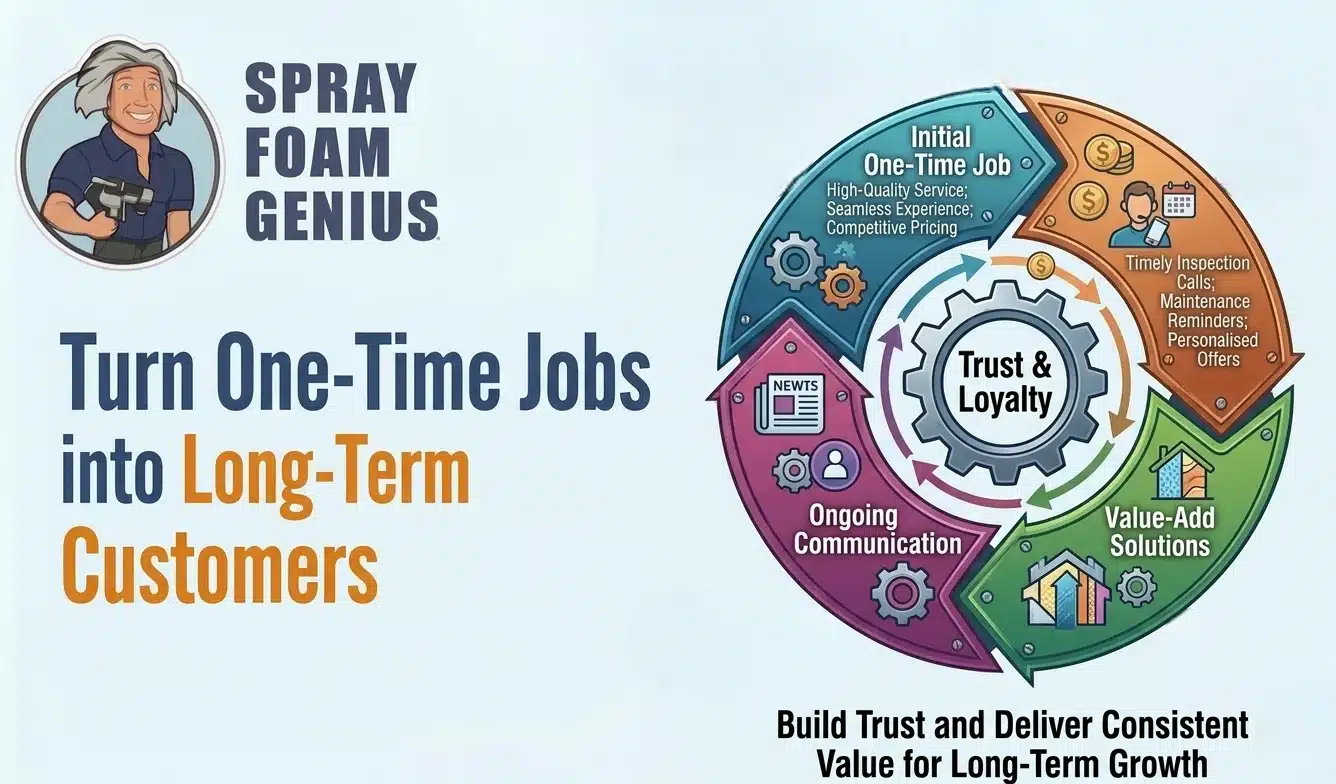
Related reading: How to Turn One-Time Insulation Jobs Into Repeat Customers and Referrals
1. Shared Leads Create Instant Competition
Many lead platforms sell the same homeowner request to several contractors at once. That changes how the sale works:
- Price becomes the main differentiator
- The homeowner gets a wave of calls and texts and stops answering
- Trust goes to whoever responds first, not to the best contractor
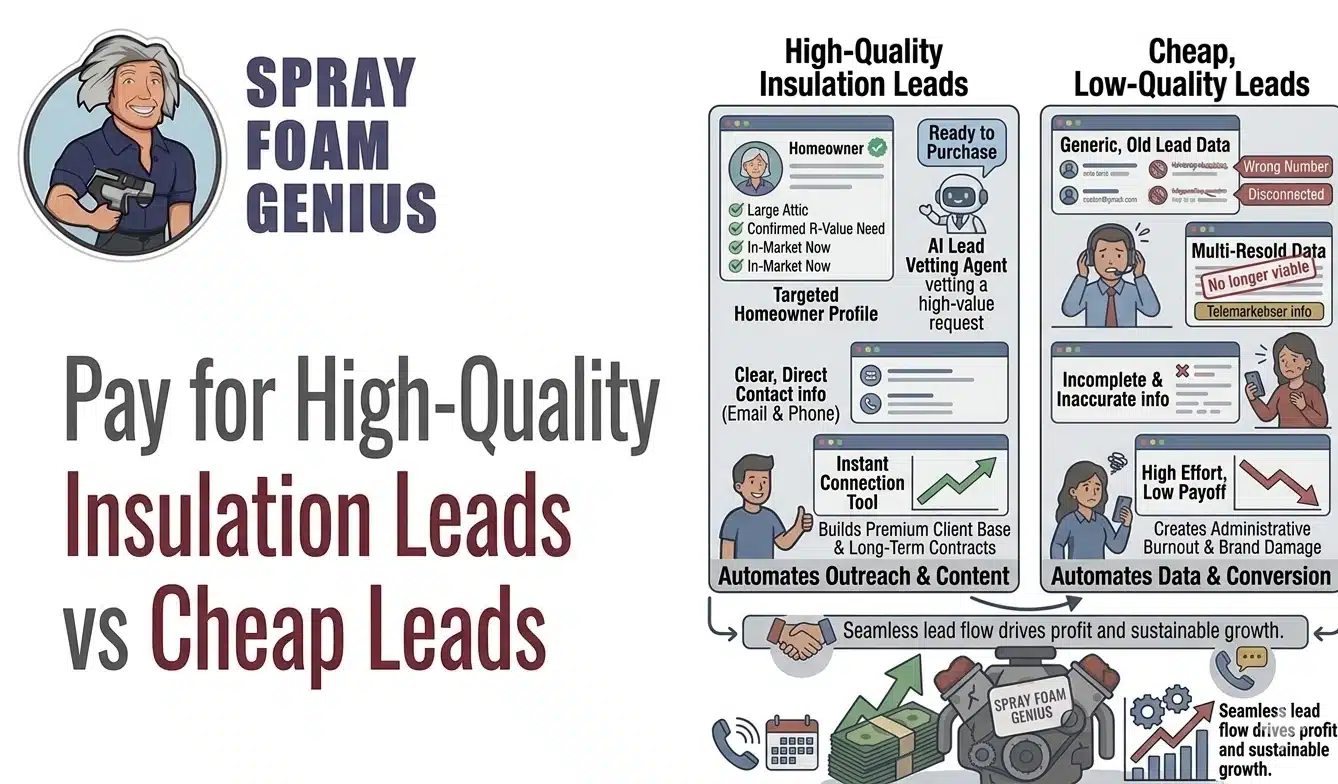
Picture a homeowner who submits a "spray foam insulation quote" form. One contractor calls within minutes and books an inspection. A second calls well after, and the homeowner is already talking to someone else. The third never gets a real conversation, even if that contractor is the best installer of the three. When leads are shared, speed and exclusivity matter more than ad spend. For a closer look at what you are paying for, see high-quality insulation leads vs cheap leads.
2. Slow Response Time Costs You Jobs
Speed to first contact is one of the most fixable revenue leaks. Harvard Business Review research found that most companies are not responding to online leads nearly fast enough, and homeowners often reach out to several contractors at once. We cannot give you a magic number of minutes, but the direction is clear: the faster you reach a lead, the better your chance.
Where insulation contractors lose the race:
- Leads are handled manually, and nobody is alerted when one arrives
- Calls are returned hours later, or the first reply is an email only
- After-hours and weekend inquiries sit until the next business day
- There is no instant text or email confirming you received the request
What stronger contractors do: get a phone or text alert the moment a lead arrives, call right away, send a short confirmation text, and try to book the inspection on that first call. A simple auto-reply helps, for example: "Thanks for reaching out. One of our spray foam specialists will contact you shortly. For urgent questions, call us at [your number]."
3. Poor Lead Qualification Wastes Your Time
Not every inquiry is a serious buyer. Treating all of them the same leads to wasted drive time and burnout. Common gaps are no screening for property type (residential or commercial), no sense of timing, no check that the person owns the home and no confirmation that the request matches a service you offer. A short qualification script on the first call fixes most of this:
- What kind of project are you considering, and what problem are you trying to solve (high bills, drafts, moisture, noise)?
- When do you want it done?
- Are you the homeowner or decision maker?
- Is the property residential or commercial, and where is it?
These questions quickly separate qualified prospects from people just researching prices, and they give you something specific to reference in your follow-up.
4. No Structured Sales Process
Many contractors treat the sale as an estimate instead of a guided process. Homeowners usually need education and reassurance before committing to a job this size. A process that works well for many contractors:
- Respond immediately and ask the qualification questions
- Schedule an in-home inspection
- Show the problem: attic photos, visible gaps or thermal imaging if you use it
- Present a clear proposal with options at different levels
- Follow up within a day or two of sending the proposal
Lead with what the homeowner cares about, which is comfort, energy bills, moisture and air quality, rather than just materials and price. ENERGY STAR says homeowners can save an average of 15% on heating and cooling costs (11% on total energy costs) by air sealing and adding insulation. Treat that as an average, not a promise for any one home, and be careful not to promise savings you cannot back up.
5. No Follow-Up System
Many homeowners compare several quotes and take time to decide. Contractors who send one estimate and never call back are handing the job to whoever does follow up. A reasonable follow-up pattern uses several touchpoints across a week or two, mixing channels:
- Phone call first, because it is the fastest way to a real conversation
- If there is no answer, a personal text that mentions the project
- An email with helpful information and photos of similar jobs
- A check-in a day or two after the proposal, then another a few days later
- A last, polite message before you close the lead
Make each message specific. "Hi Sarah, thanks for your interest in insulating your attic. Want to talk through options for your home?" beats a generic template. Use a CRM or text tool to automate reminders and to flag old quotes you can revisit, since many homeowners get a quote, get busy and still need the work.
6. Weak Trust Signals
Insulation is a high-trust, high-ticket service. Homeowners want proof before they commit. Speed alone will not save you if the first thing they see is a thin online presence. What buyers look for:
- Recent Google reviews and replies to them
- Before-and-after photos of real jobs
- Licenses, certifications and insurance
- Local project experience in their town or neighborhood
Add reviews and photos to your proposals and follow-up emails, and put a few recent reviews near the quote button on your service pages. For ideas, see how to use social proof to build credibility.
7. Unclear Pricing Communication
Contractors who avoid talking about price, or give vague numbers, create doubt. Homeowners want to feel in control of the decision. What tends to work better:
- Explain what drives price: area, open-cell or closed-cell foam, depth, access, existing insulation to remove
- Give an honest range when you can, and say the inspection sets the final number
- Offer good, better and best options so the homeowner can compare
When a homeowner says it costs too much, explain what the money buys, what the alternatives are and what they give up. If you offer any incentive, tell the customer the deadline plainly.
8. No CRM or Tracking
Spreadsheets and sticky notes lose leads. A CRM, even a simple one, can alert you to new leads, schedule follow-ups, store notes and show you where leads drop off. If you cannot say how many leads you received last month, how many got an inspection and how many signed, you cannot fix the pipeline. See our guide to choosing the best CRM for insulation contractors.
What a Better Close Rate Is Worth: A Simple Example
This is arithmetic, not a benchmark. Suppose you receive 100 leads in a month and your average job is $4,000. If you close 10, that is $40,000 in revenue. If tighter response, follow-up and qualification lift you to 20, revenue doubles to $80,000 with the same lead cost. Use your own numbers: leads, inspections booked, proposals sent, jobs won and average job size. Improving the sales process often pays back faster than buying more leads.
Seven Fixes to Start With
1. Set a Fast-Response Rule
Set up phone and text alerts, and decide who calls each new lead and how quickly, including evenings and weekends.
2. Move Toward Exclusive Lead Sources
Your own website, Google Business Profile and referrals send leads that are not shared with competitors. That tends to improve your odds, though results depend on your market.
3. Write Your Follow-Up Sequence
Map out calls, texts and emails across a week or two, and automate the reminders.
4. Add Trust Assets
Put reviews, a before-and-after gallery and your licenses and certifications on your site and in your proposals.
5. Pre-Qualify Every Lead
Use the short script or form questions above before you drive out.
6. Standardize Your Sales Conversation
Prepare consistent answers for price, timing, safety and "we need to think it over", so every call sounds professional.
7. Track Every Lead
Log source, response time, inspection, proposal and outcome in a CRM so you can see what to fix next.
Frequently Asked Questions
Why are your insulation leads so expensive but not converting?
High lead costs combined with shared distribution mean you are competing with several contractors, which can hurt close rates even when the leads are real. Slow response and weak follow-up compound the problem.
How fast should you respond to a new insulation lead?
As quickly as you realistically can. Leads often contact several contractors at once, so the faster you reach them, the better your chance of booking the inspection. There is no guaranteed cutoff, but minutes beat hours.
Are shared leads worth it for insulation contractors?
They can generate volume, but they tend to bring heavy competition and price-driven selling. Compare the cost per signed job, not the cost per lead, before you decide.
How many follow-ups should an insulation company make?
There is no single right number. Many homeowners take time to decide, so a handful of well-spaced calls, texts and emails after the proposal is more reasonable than a single try. Stop when the lead asks you to, and keep a note to revisit old quotes later.
What is the biggest mistake contractors make with leads?
Giving up after the first call attempt or the first quote. Consistent follow-up is one of the cheapest ways to improve results.
Should you focus on marketing or sales first?
Both matter, but if leads are already coming in and not closing, start with response speed, qualification and follow-up. Fixing conversion often returns more than buying additional leads.
Find Where Your Leads Are Dropping Off
Want a second set of eyes on your lead handling? Ask us for a free marketing audit. Call 877-840-3626 or email info@sprayfoamgeniusmarketing.com, and we will help you find where inquiries are being lost and what to fix first.