
Every insulation and spray foam contractor eventually faces the same choice: pay someone else for leads, or build a system that brings in your own. Cheap leads look attractive on a spreadsheet. A lead that costs less per name can still cost more per booked job, and it leaves you with nothing you own when the budget stops.
The short answer: price per lead is the wrong number to chase. What matters is your cost per booked job and the margin left on that job. Purchased leads can help you start fast or fill a gap. An owned system takes longer, but it can lower your dependence on other platforms and build trust that shared leads do not. For most contractors, the practical answer is a mix.
The Short Version
- Buying leads is fast, but you usually pay each time, compete with others, and own nothing when you stop.
- Building your own system (Google Maps, SEO, reviews, your own ads and a conversion-ready website) takes longer to start, but the visibility and reputation stay with your business.
- Lead price varies with your market, the service, exclusivity and competition. Your close rate and job margin decide whether any lead is worth it.
- Fast response, good tracking and a clear sales process matter with either approach.
Types of Leads You Can Buy or Build
- Shared leads: the same homeowner request goes to several contractors. These are common on lead marketplaces.
- Exclusive leads: sold to one contractor only. They usually cost more per lead, and you should ask exactly how the provider defines exclusive.
- Pay-per-lead ads: ad products such as Google Local Services Ads charge per valid lead. See our comparison of Angi, HomeAdvisor and Local Services Ads.
- Your own paid campaigns: Google Ads or social ads that you or your agency control, where you pay for clicks and own the landing page and the data.
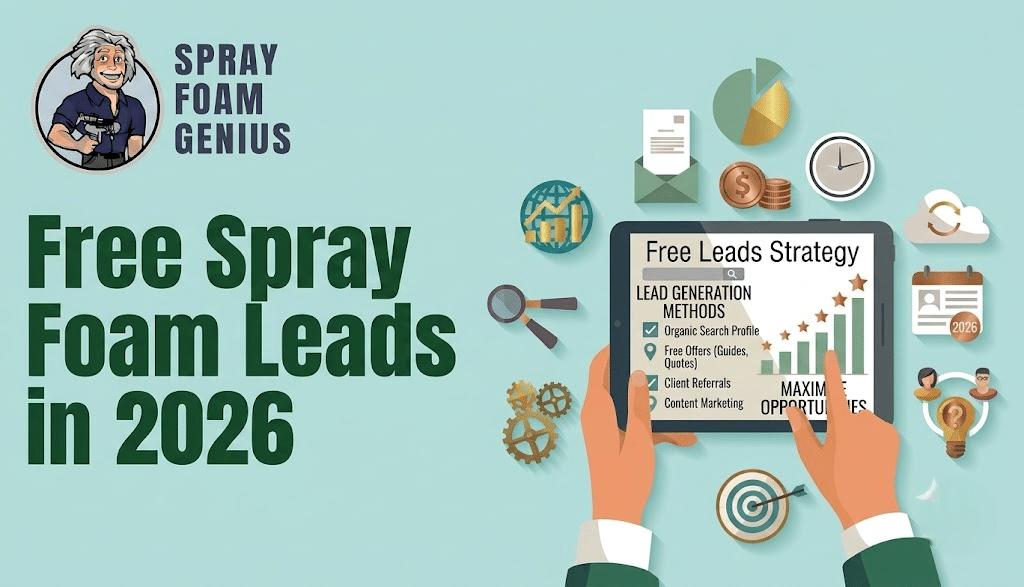
- Owned leads: calls and form fills from your Google Business Profile, your website, your reviews and your content. You still invest time or money, but the visibility belongs to you.
What Drives Lead Pricing
Lead prices are not random. They tend to move with:
- Market competition: dense metro areas with many contractors are usually more expensive.
- Service type: spray foam, attic insulation and energy retrofit jobs differ in size and demand.
- Exclusivity: a lead sold to one contractor typically costs more than one sold to several.
- Intent: someone asking for a quote right now is different from someone filling out a form to browse.
- Seasonality: demand for insulation changes through the year.
- Ad platform costs: when clicks get more expensive, providers pass it on.
Because of these factors, no honest article can give you the price of a good insulation lead for your area. Ask providers for current terms, and treat any benchmark as a rough starting point. For a broad cross-industry reference on ad costs, see our guide to SEO vs Google Ads for insulation contractors.
Why the Cheapest Lead Can Cost the Most
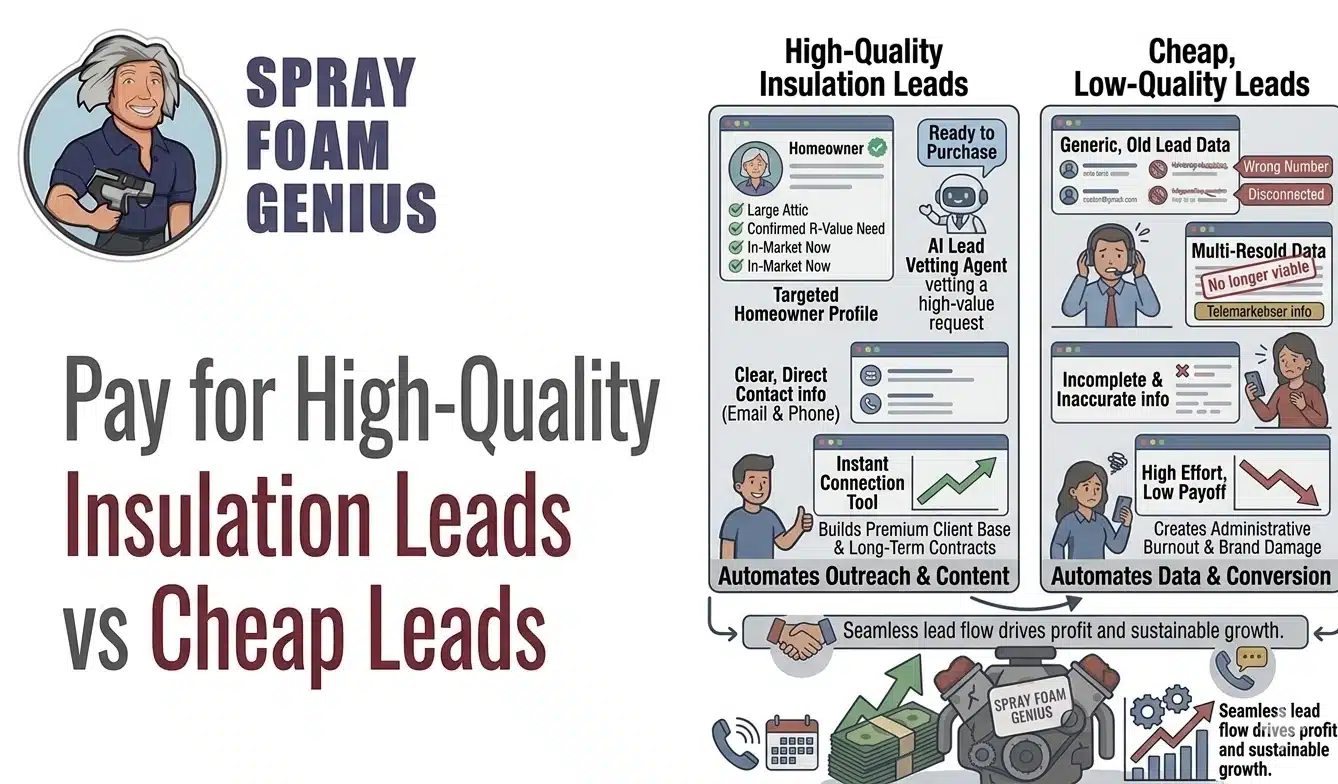
A cheap lead hides its real cost in wasted time, missed appointments and low close rates. Common problems include:
- Several contractors calling the same homeowner within minutes.
- A larger share of price shoppers and people just collecting quotes.
- Leads that are outdated, incomplete or poorly matched to your service area.
- Fuel, estimator time and schedule slots spent on low-intent prospects.
- No exclusivity and no chance to stand out on anything but price.
Here is the math with made-up numbers, just to show the idea. Say you buy 100 cheap leads at $30 each, a $3,000 spend, and 3 close: that is $1,000 per booked job. Say you pay $150 each for 30 better-matched leads, a $4,500 spend, and 9 close: that is $500 per booked job. Your real close rates will differ, which is why you have to track them. The cheaper lead only wins if it closes often enough.
The Problem with Shared Leads
When several contractors get the same request, the homeowner naturally compares prices, quotes and promises. That tends to push the conversation toward the lowest bid instead of your experience, your crew or your materials, and it can shrink your average sale.
- Speed wars: the contractor who calls first often gets the first conversation, which rewards fast over best.
- Commoditization: instead of talking about open-cell versus closed-cell foam, moisture control or R-value performance, you end up competing on price alone.
- Overwhelmed homeowners: several calls in a short time can lower trust in everyone, including you.
- Weak branding: when you are one of many names in a shared lead, it is hard to build a reputation or earn repeat referrals.
When Buying Leads Can Make Sense
- You are a new contractor who needs jobs now and has no online presence yet.
- You want to fill specific schedule gaps or test a new service area.
- You have a strong inside sales process, someone to respond within minutes, and margins that absorb leads that do not close.
- You track results and will drop a provider that does not pay.
Even then, treat purchased leads as a supplement. Pay-per-lead stops working the moment you stop paying, and it does not compound the way reviews, content and local rankings can.
Speed to Lead Matters Either Way
Harvard Business Review has reported that most companies respond to online inquiries too slowly. For contractors, the practical point is simple: the sooner a human replies, the better your odds, especially when other contractors are also calling. Make it easy to answer quickly:
- Set up call and text notifications so the right person sees every new lead.
- Use an automatic text or email reply that confirms you got the request.
- Set your own response target, and measure whether you hit it.
- Follow up more than once, in different ways, in the first day.
What Building Your Own Lead System Looks Like
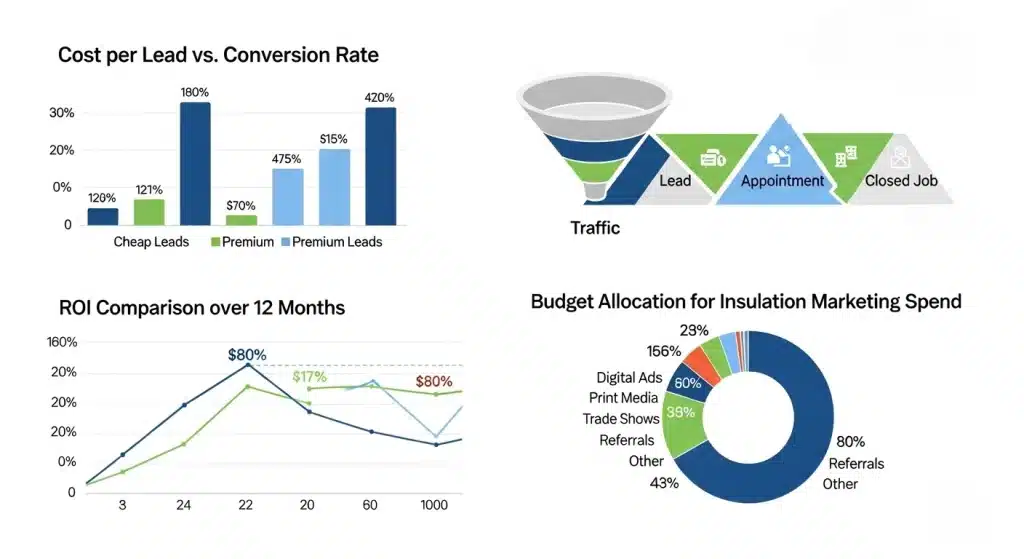
An owned system is a set of assets that keep working, with paid ads layered on top when you need speed:
- Google Business Profile and Maps: complete your Google Business Profile, keep your name, address and phone number consistent, post real project photos and ask for reviews after every job.
- SEO: service pages and city pages for each job you want, plus helpful content that answers homeowner questions about cost, energy savings and moisture. See our spray foam SEO strategy.
- Your own ads: Google Ads, Local Services Ads and geo-targeted social ads like Facebook ads for spray foam contractors, where you control the budget, the message and the data.
- A website that converts: fast, mobile-friendly, with a visible phone number, reviews, project photos and a clear way to ask for an estimate.
- Follow-up: email or text sequences, and retargeting for visitors who did not call yet.
- Tracking: call tracking and a CRM so you know which source produced which booked job.
This takes longer than buying leads. Google says some SEO changes can take effect in hours and others several months, so plan for a gradual build, and no one can guarantee a ranking. What you get in return is visibility, reviews and data that belong to your business.
Buy vs Build: Side by Side
- Speed: buying is immediate. Building usually takes months.
- Ownership: bought leads come from someone else’s platform and often someone else’s list. Owned leads come from assets you control.
- Competition: shared leads put you head to head with others. Owned leads can face less competition, since the homeowner found you.
- Cost over time: buying stays tied to spend. A built system can lower your cost per lead over time, though it needs ongoing effort.
- Control: when you buy, a platform sets the rules. When you build, you set the message, the offer and the follow-up.
How to Track Whether Any Lead Source Pays
- Cost per lead: total spend divided by leads from that source.
- Close rate: leads that become booked jobs.
- Cost per booked job: total spend divided by booked jobs. This is the number to compare.
- Profit per job: revenue minus materials, labor and the marketing cost.
- Review monthly, drop sources that do not pay, and move budget to the ones that do.
Steps to Take Now
- List every place your leads come from and mark which are shared.
- Calculate cost per booked job for each source, even if it is a rough estimate.
- Fix response time and follow-up before you spend more on any lead source.
- Complete your Google Business Profile and start a steady review habit.
- Pick one owned channel to build first, such as service page SEO, and one paid channel to test.
- Review results every month and reallocate.
Frequently Asked Questions
How much do insulation leads cost?
It varies by market, service, exclusivity and provider, and no single number fits every contractor. Ask for current pricing, then calculate the cost per booked job using your own close rate. That is the figure worth comparing.
Are cheap insulation leads worth it?
They can help a new company get started, but they are often shared and lower intent, which can lower your close rate. The cheaper lead only pays if it closes often enough to beat the cost per booked job from other sources.
Are shared leads always bad?
Not always, but they tend to be more price-driven and time-sensitive. If you respond fast, sell well and have healthy margins, they can work as a supplement. Track them like any other channel.
What type of leads convert best?
Leads from homeowners who found you directly, such as through Google Maps, search or a referral, often convert well because they chose you. Test this in your own data by tracking close rate by source.
How can you lower your cost per lead?
Improve your website’s conversion, build your Google Business Profile and reviews, tighten ad targeting, and respond faster. Fixing these usually helps all your lead sources at once.
Can you buy leads and build your own system at the same time?
Yes. Many contractors use paid leads or ads for speed while they build their owned system. The key is to set a budget and a tracking plan so the paid side does not crowd out the long-term work.
How do you know if a lead provider is profitable?
Track cost per booked job and profit per job. If acquisition cost exceeds what your margin allows, or the close rate stays low after a fair test, the provider is not sustainable.
Get a Clear Look at Your Lead Mix
If you want help comparing what you pay for leads with what your own website and Google Business Profile could produce, ask for a free marketing audit. Call 877-840-3626 or email info@sprayfoamgeniusmarketing.com. You can also see how we approach lead generation for spray foam contractors.