
Direct Answer:
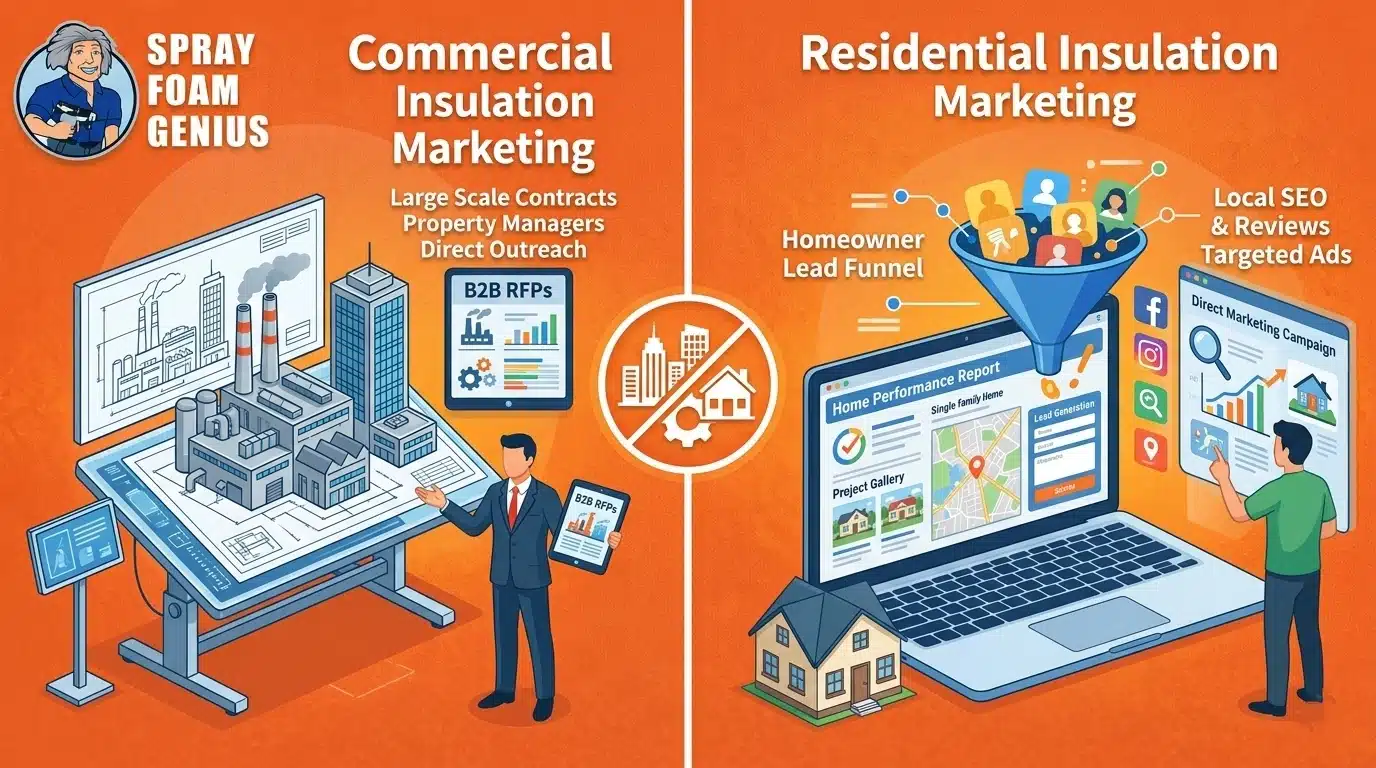
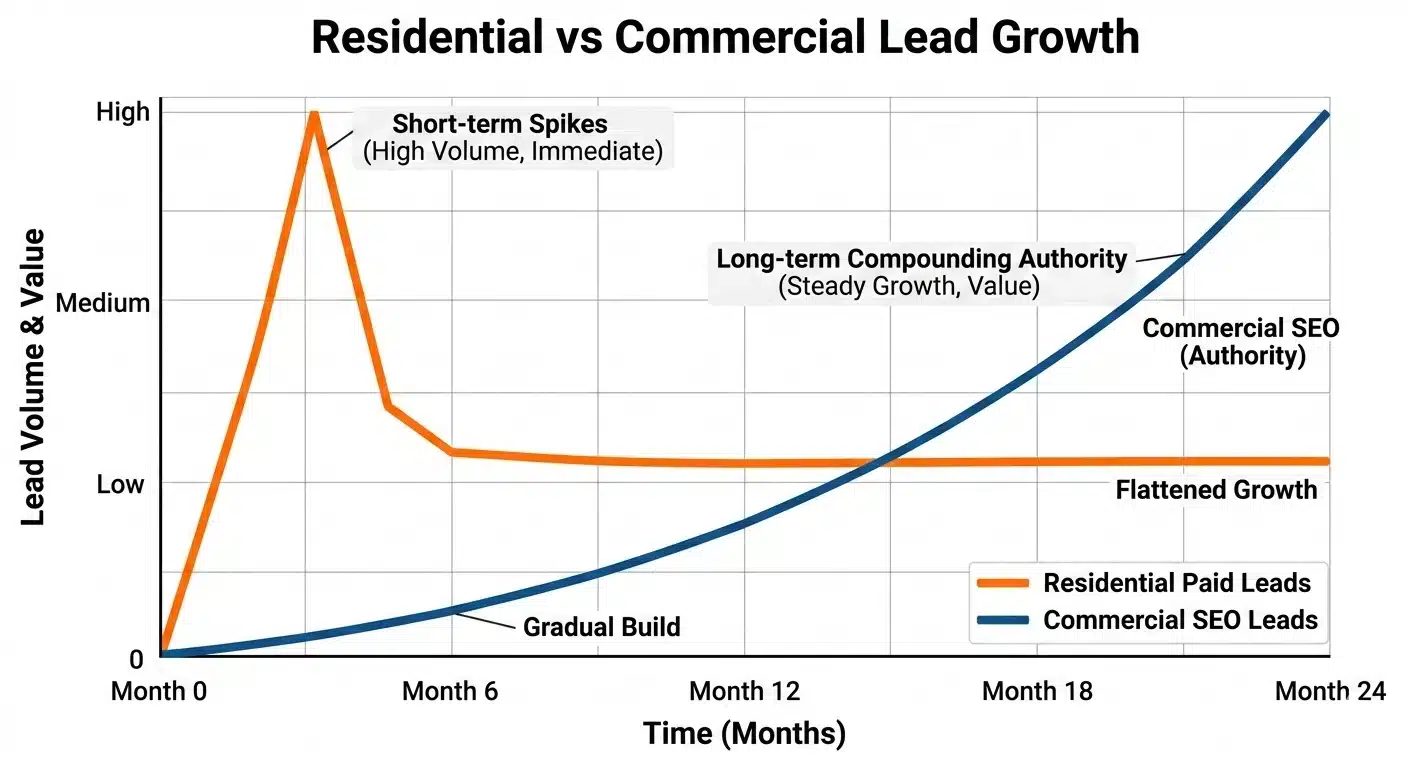
Commercial insulation leads tend to be higher-value but slower to close, while residential leads are faster and transactional. Commercial projects often require relationship-building, bids, and networking, whereas residential marketing leverages online ads and immediate search intent. Short-term, residential leads provide quick cash flow, but long-term, commercial positioning builds authority and repeat contracts; long-term approaches like SEO can become compounding assets rather than just expenses.
Residential channels like paid platforms or lead services provide immediate, predictable volume, whereas commercial SEO and relationship-based strategies compound over time with growing visibility and trust. Paid platforms are transactional, with costs tied directly to leads, while SEO and organic relationships gradually reduce dependency and increase profit per lead. Search engines increasingly reward local authority, a factor explained in depth in the Search Engine Journal Local SEO Guide
In short, residential marketing is fast, transactional, and volume-driven, perfect for new cash flow or testing markets. Commercial marketing is slower, strategic, and relationship-driven, creating a durable, high-value pipeline that compounds over the years. Contractors who balance both see immediate revenue while building long-term authority.
For insulation contractors comparing residential and commercial lead generation strategies and how different marketing channels impact long-term growth, see this spray foam digital marketing guide.
Related reading: How to Use A/B Testing to Improve Your Insulation Marketing
TLDR:
- Residential leads: lower cost per lead, fast conversion
- Commercial leads: higher project value, longer sales cycle
- Paid/lead platforms = rented leads; short cycle
- SEO/organic = owned asset over time
- Local reputation impacts demand
- Paid ads can deliver in 24–48 hours
- Organic search builds trust and cost efficiency (HubSpot Marketing Statistics)
- Strategic mix improves ROI and stabilizes revenue
How Each Lead Source Works
The Core Difference
Commercial Builds:
- Authority & credibility
- Owned visibility
- Repeat contracts
- Lower ongoing competition
Residential Sells:
- Shared platforms
- Price competition
- Spend-tied volume
- Lead dependency
Average Cost Comparison Table
Costs vary by competition, location, and service area
What Contractors Actually Experience
- Shared leads increase competition and pricing pressure
- Many residential shoppers are price-sensitive
- Lead quality varies widely by source
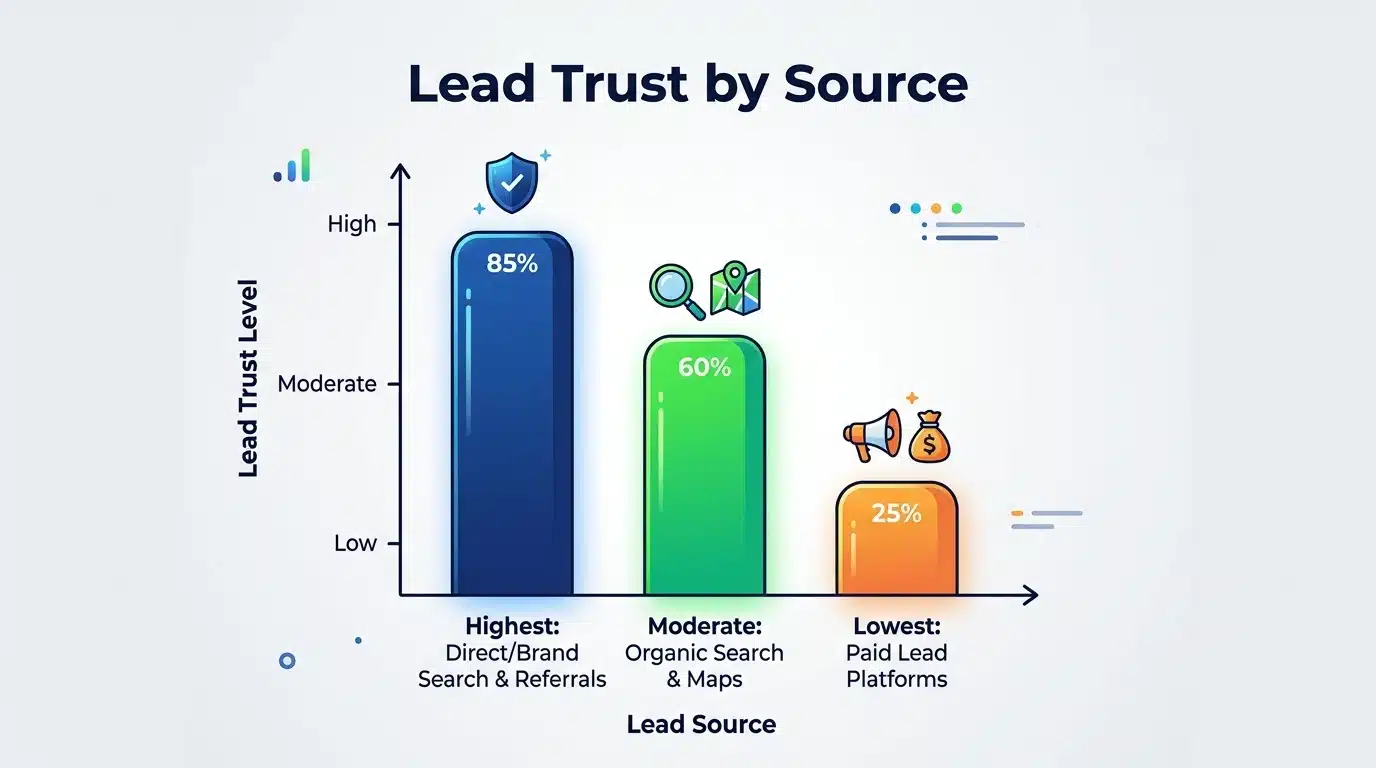
- Organic/brand leads convert better and have higher trust
- Review visibility influences buying behavior
When Each Option Makes Sense
When Paid Platforms Make Sense:
- Startup phase
- New service testing
- Immediate short-term demand
- Seasonal peaks
When SEO / Long-Term Strategy Makes Sense:
- Scaling business
- Reducing dependency on paid leads
- Lowering cost per lead over time
- Building brand authority
Biggest Mistake Contractors Make
Over-reliance on rented channels leads to:
- Dependency on platforms
- Constant price competition
- Weak brand authority
- Revenue instability
Real Scenarios
- New Contractor: Paid ads for immediate cash flow
- Established Scaling: Commercial SEO pipeline
- Tired of Price Shoppers: Prioritize organic authority
- Consistent Inbound Demand: Hybrid SEO + paid mix
Where the Best Leads Actually Come From
- Google Maps & Local Pack: Highest visibility
- Organic Search Rankings: Trust & volume
- Brand Searches: Intent beyond price
- Direct Inbound Calls: Highest conversion
The Real Question
Not: “Which channel is best?”But: “How do we build a predictable, controllable lead generation system?”Focus on sustainability, ownership, and compounding authority
Who Should Focus on Each Channel
Prioritize Long-Term Strategy:
- Established operations
- Seeking consistent scale
- Building brand authority
Benefit From Paid Platforms:
- New entrants
- Immediate revenue goals
- Short-term market testing
Winning Strategy
Hybrid approach:
- SEO & Maps for owned traffic
- Paid for immediate traction
- Select paid platforms strategically
- Diversified pipeline for control + stability
Build Your Predictable Lead System Today
Every market is unique; competition, service area, budget, and goals all matter. Let’s craft a strategy that delivers both immediate revenue and long-term growth
Spray Foam Genius MarketingUSA: 877-840-FOAMCanada: 844-741-FOAM
Stop chasing rented leads, own your growth and control your market
FAQs
How fast can residential leads convert?
Residential leads from paid channels often arrive within 24–48 hours. Conversion depends on targeting, ad quality, and local demand.
Are commercial leads worth the wait?
Commercial leads take longer to close but are higher-value and often repeat. They require relationship-building and strategic follow-up for maximum ROI.
Can I combine paid and SEO?
Yes, combining paid ads for immediate traction with SEO for long-term visibility creates a balanced, predictable lead system.
Why is organic search more cost-efficient long-term?
SEO builds owned traffic and authority, reducing dependency on paid leads. Over time, it lowers cost per lead while improving lead quality.
Should I focus on residential or commercial first?
It depends on business stage: new contractors often start with residential for quick cash flow, while established companies benefit from commercial SEO to scale and secure long-term contracts.