Direct Answer
The insulation companies that win local markets don’t just collect reviews; they strategically leverage them at every stage of the customer journey to increase visibility, build trust, drive conversions, and command higher pricing. This guide is written for insulation business owners, marketing leads, and contractors who want a clear roadmap to turn online reviews into a core competitive advantage.
Winning companies use a combination of review generation systems, negative-feedback rescue workflows, review-driven SEO, and content amplification, each serving a different purpose:
- Generation systems: consistently pull in new reviews from customers.
- Negative-feedback funnels: catch issues before they hit public sites.
- SEO integration: boosts ranking for high‑intent local searches.
- Content amplification: uses reviews in ads, websites, email, and proposals.
Notice there’s no single “best” strategy for everyone; the right mix depends on company size, markets, and existing reputation. Larger multi-region companies can automate at scale, while local contractors might prioritize high-impact local platforms and community testimonials. A reputation management strategy helps insulation businesses structure and prioritize these reputation strategies so they can consistently turn customer feedback into measurable growth and higher conversion rates.
TLDR
- Reviews = conversions: Businesses with 4.5+ star averages on key platforms typically see 20–50% higher lead-to-customer conversion rates (Harvard Business Review).
- System beats spontaneity: A structured review process yields 3–5× more reviews per month than ad-hoc asking.
- Site and SEO gains: Review signals contribute to local SEO, often pushing companies into the “Local 3-Pack” for search results (Wikipedia).
- Risk management matters: A negative review without rescue/response workflows can reduce bookings by up to 30% in competitive markets.
- Content reuse multiplies ROI: Using reviews in PPC ads, email campaigns, sales proposals, and social content increases engagement by 10–25%.
- Quick wins: SMS/QR code requests produce reviews more rapidly than email alone.
- Cost vs. impact: Tech stacks range from free tools to $300–$800/mo platforms; ROI is often highest when automation replaces manual outreach.
- Common pitfall: Ignoring niche platforms (like Google Business Profile or industry-specific review sites) limits visibility where local buyers search.
Why Reviews Matter for Insulation Companies
Review platforms are now primary decision points for local home services buyers. Before calling for a quote, homeowners, property managers, and general contractors often check:
- Google Business Profile
- Facebook reviews
- Industry-specific platforms (HomeAdvisor, Angi, Houzz)
- Specialty local directories and BBB profiles
While star ratings are important, the content of the reviews (keywords, sentiment, detail) influences:
- Search ranking
- Click-through rate on listings
- Trust and social proof
- Perceived expertise
- Price tolerance
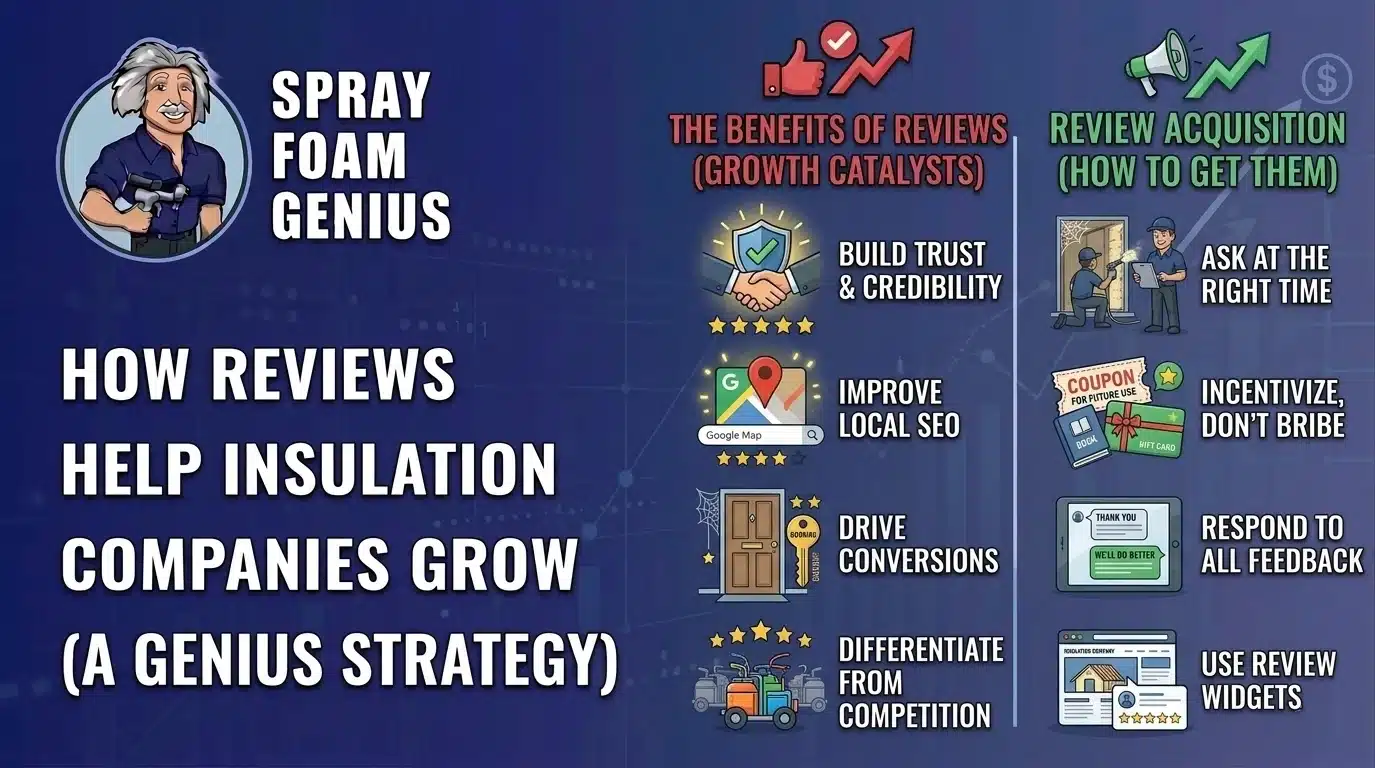
Reviews have become a free, user-generated form of advertising, and the companies that harness them dominate local trust signals.
Core Elements of a Review-Driven Local Market Dominance Strategy
1) Review Generation System
Goal: Continuously collect high-quality reviews from customers.
Key Tactics:
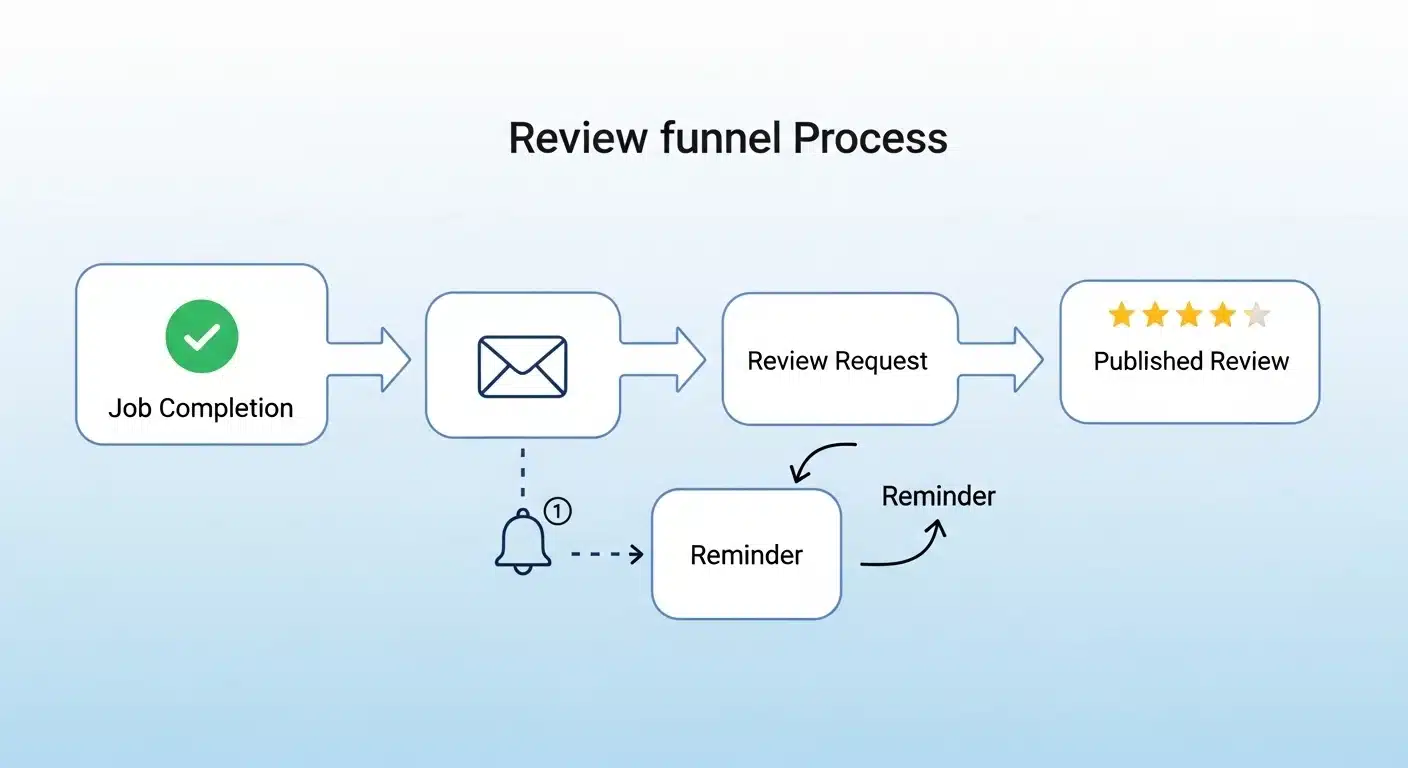
- Ask at peak satisfaction moments (post-job walk-through)
- Use SMS and QR codes at the point of sale
- Automate reminders and follow-ups
- Segment customers by project type for tailored requests
Expected ROI: 4×+ increase in new reviews within 90 days.
Limitations: Requires internal process change and follow-up discipline.
2) Review Response & Negative-Feedback Rescue
Goal: Fix unhappy experiences before they become public and show responsiveness.
Key Tactics:
- Train staff on empathy and follow-up
- Set up alerts for negative sentiment
- Offer fixes or compensation before public posting
Why It Works: People appreciate responsiveness; even those who initially had a bad experience may update ratings.
Table: Response Approach Comparison
| Approach | Expected Response Time | Impact on Reputation | Best Use |
| Manual Observation | Days | Low | Small businesses |
| Automated Alerts | <1 hr | High | Multi-location companies |
| Outsourced Moderation | <1 hr | High | High-volume reviews |
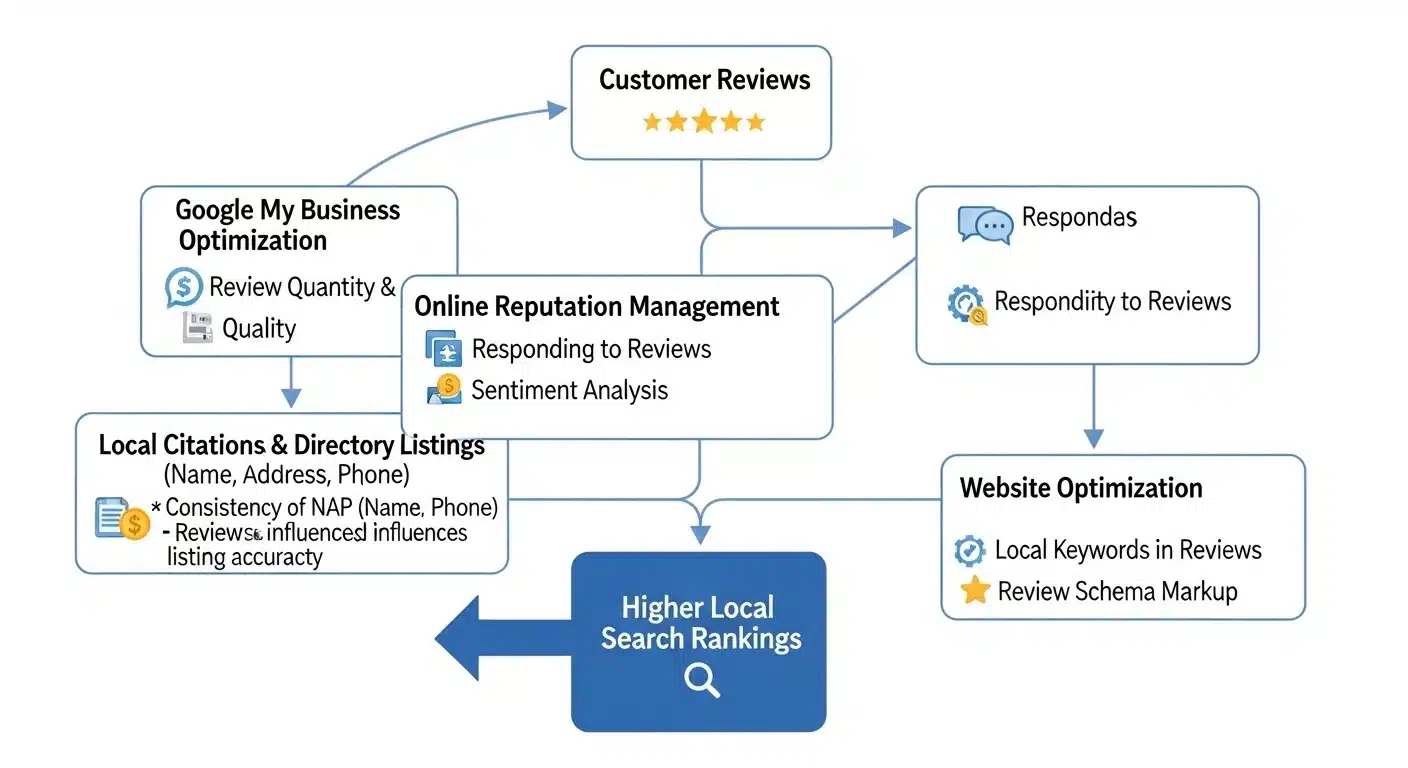
3) Review-Driven Local SEO
Goal: Use review content and signals to improve visibility in local search.
Key Tactics:
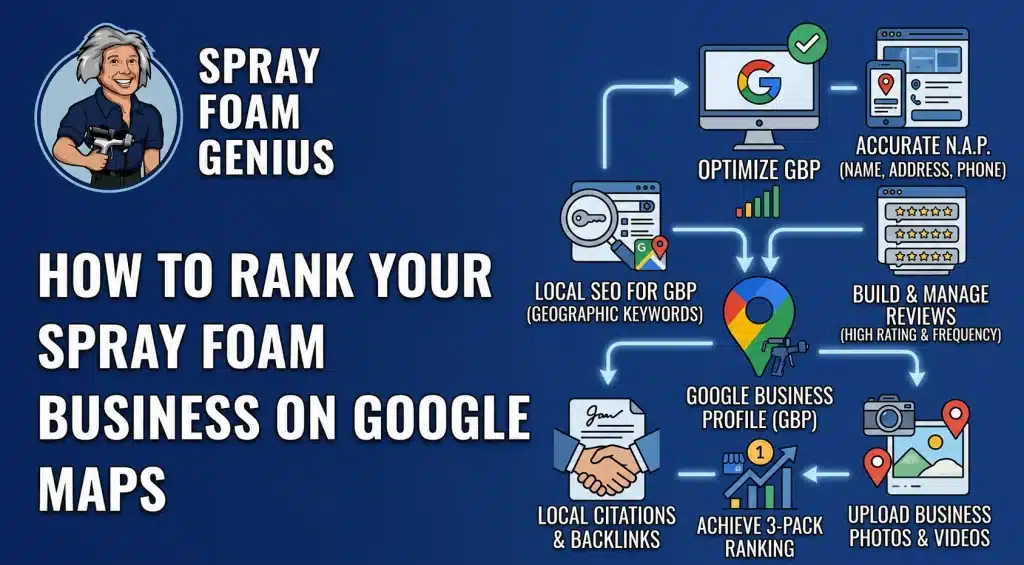
- Optimize Google Business Profile with updated content & review highlights
- Add localized keywords customers use in reviews to on-site content
- Encourage site visitors to sort/filter reviews by service type
Expected Outcomes: Higher search rankings for “insulation contractor near me”, “best insulation installer [city]”, etc.
4) Content Amplification & Conversion Use Cases
Goal: Reuse reviews across customer touchpoints.
Where to Use Reviews:
- Website landing pages
- PPC and social ads (with permissions)
- Case studies and before/after portfolios
- Sales proposals and estimates
Expected Outcome: Higher engagement and lower friction in sales conversations.
Table: Strategy Comparison
| Strategy Type | Best For | Key Tactics | Expected Outcomes | Limitations |
| Review Generation | Consistent volume | QR/SMS requests, automation | More reviews, better ranking | Requires workflows |
| Negative-Feedback Rescue | Reputation protection | Alerts, follow-ups | Fewer public negatives | Needs response discipline |
| SEO Integration | Organic growth | Keyword optimization | Better local rank | Long-term effort |
| Content Amplification | Conversion lift | Ads, site features | More leads + trust | Needs creative assets |
Real-World Benchmarks & Scenarios
Local Contractor in Mid-Sized City
- Starting point: 25 Google reviews, avg. 4.2 stars
- 90-day goal: 100+ reviews, 4.5+ average
- Tactics deployed: SMS requests + review widget on website
- Outcome: Local search impressions ↑ 82%, calls ↑ 35%
Multi-Crew Provider in Competitive Market
- Starting point: 300+ reviews but frequent negatives
- New strategy: Automated alerts + dedicated responder
- Outcome: Public negatives down 40%, average increased to 4.7
Seasonal Surge Scenario
Winter surge leads to many jobs in 6 weeks. The company uses QR codes on final invoices to drive reviews while satisfaction is high, resulting in peak review inflow synchronized with high search demand.
Choosing the Right Approach by Business Context
| Business Type | Recommended Focus | Key Tools / Tactics |
| Single location | Basic system + manual follow-ups | SMS, QR, Google alerts |
| Multi-location | Automated workflows | Software platforms (review management, alerts) |
| Franchise model | Centralized strategy + templates | Brand-wide review campaigns |
| High volume / seasonal | Burst campaigns | QR codes + incentive reminders |
Signs You’ve Found a Strong Reviews Strategy
Look for qualitative indicators:
- Steady review flow rather than spikes
- Proactive negative response workflow
- Review content leveraged in marketing
- Improved local search visibility
- Conversion uplift after review implementation
If these are happening consistently and not just randomly, your strategy is effective.
Take Control of Your Local Market with a Proven Review System
Ready to turn reviews into your #1 growth engine?
At Spray Foam Genius Marketing, we help insulation companies build scalable, automated review systems that boost local visibility and close more jobs.
Contact us:
USA: 877‑840‑FOAM
Canada: 844‑741‑FOAM
Email: [email protected]
Your next review could be your best lead, let’s make every one count.
FAQs
1. How many reviews do I really need to see a local SEO impact?
Most small businesses see a noticeable ranking boost once they break ~50+ recent high-quality reviews, but the impact varies by competition.
2. Should I incentivize customers for reviews?
Direct compensation violates many terms of the review platforms. Instead, make it easy and timely, such as using QR codes or SMS right after job completion.
3. What should I do with negative reviews?
Respond quickly and professionally, attempt to resolve offline, and encourage updated reviews if resolved.
4. Which platforms matter most for insulation companies?
Start with Google Business Profile and industry-specific sites like HomeAdvisor and Angi, then expand to Facebook and local directories.
5. How often should I request reviews?
Create a rhythm tied to job completions; typically, immediate + one follow-up reminder yields the best results.
Sources
- Harvard Business Review – The Impact of Online Reviews on Consumer Choice
- Wikipedia – Online Review
- HubSpot – Best Practices for Soliciting Online Reviews

Spencer is a Google ranking expert and SEO consultant who has helped businesses in the spray foam marketing industry achieve their online marketing goals. Spray Foam Genius Marketing has a proven track record of success, having achieved some impressive results for his clients.
- The Future of Search for Insulation Contractors Goes Beyond Google Rankings - September 30, 2026
- AI Search Is Changing How Homeowners Find Insulation Contractors - September 30, 2026
- Finding Affordable SEO Services for Your Insulation Business Growth - September 16, 2026