
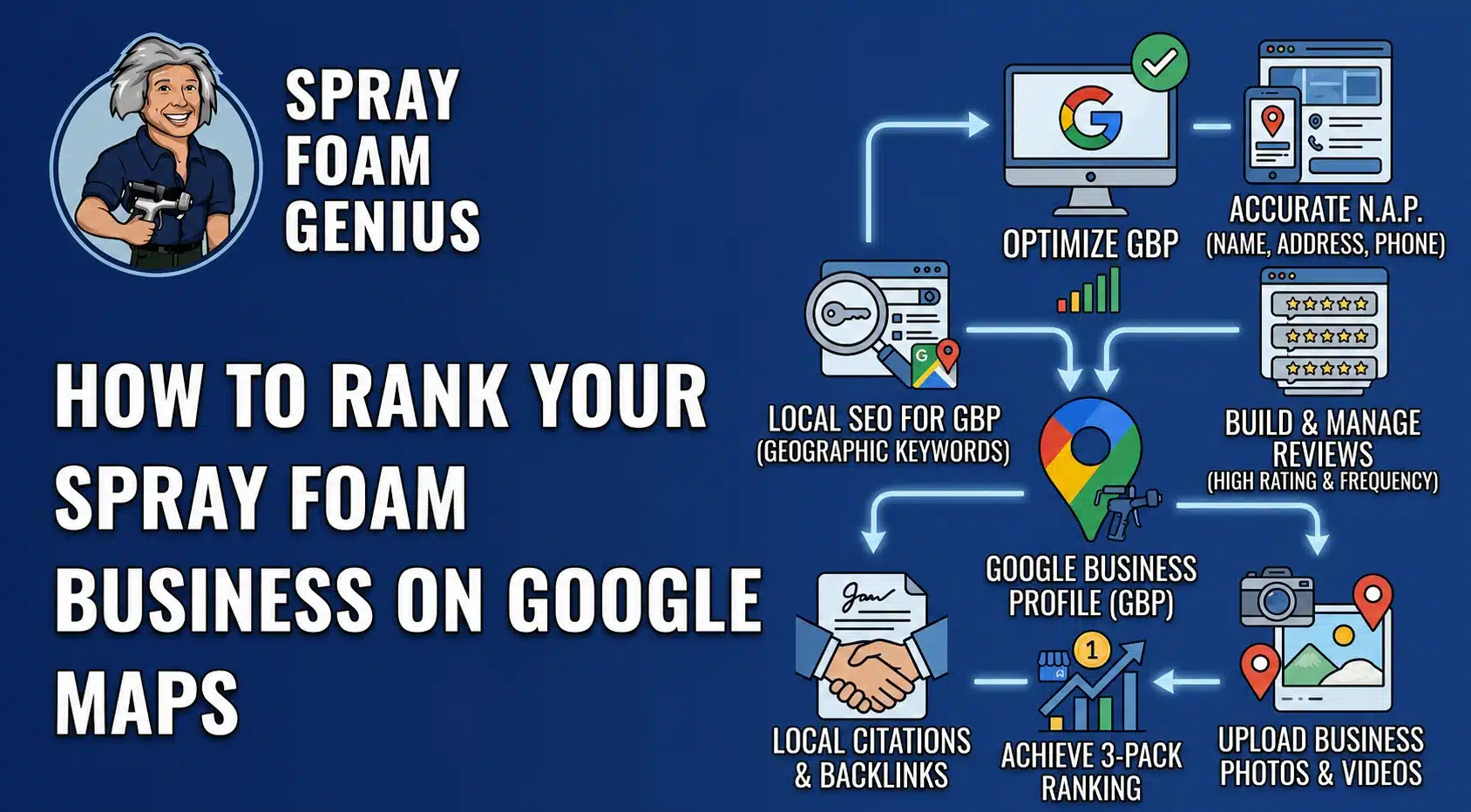
When a homeowner searches for a spray foam or insulation contractor nearby, Google often shows a map with three businesses above the regular website results. This is the local pack, and it is where many calls for local services start. If your company is not there, someone else gets the call.
No one can guarantee you a spot in the local pack, and no one outside Google knows exactly how the results are weighed. What you can do is work on the things Google tells us it looks at, avoid the mistakes that hold contractors back, and measure whether it is working. This guide covers all three.
How Google Decides Who Shows Up
According to Google's Business Profile Help, local results are mainly based on three things:
- Relevance: how well your profile matches what someone is searching for. Complete, accurate information helps.
- Distance: how far your business is from the searcher, or from the location they type in.
- Prominence: how well known your business is, which Google says can include information from across the web, such as links to your site, and the number of reviews and ratings you have.
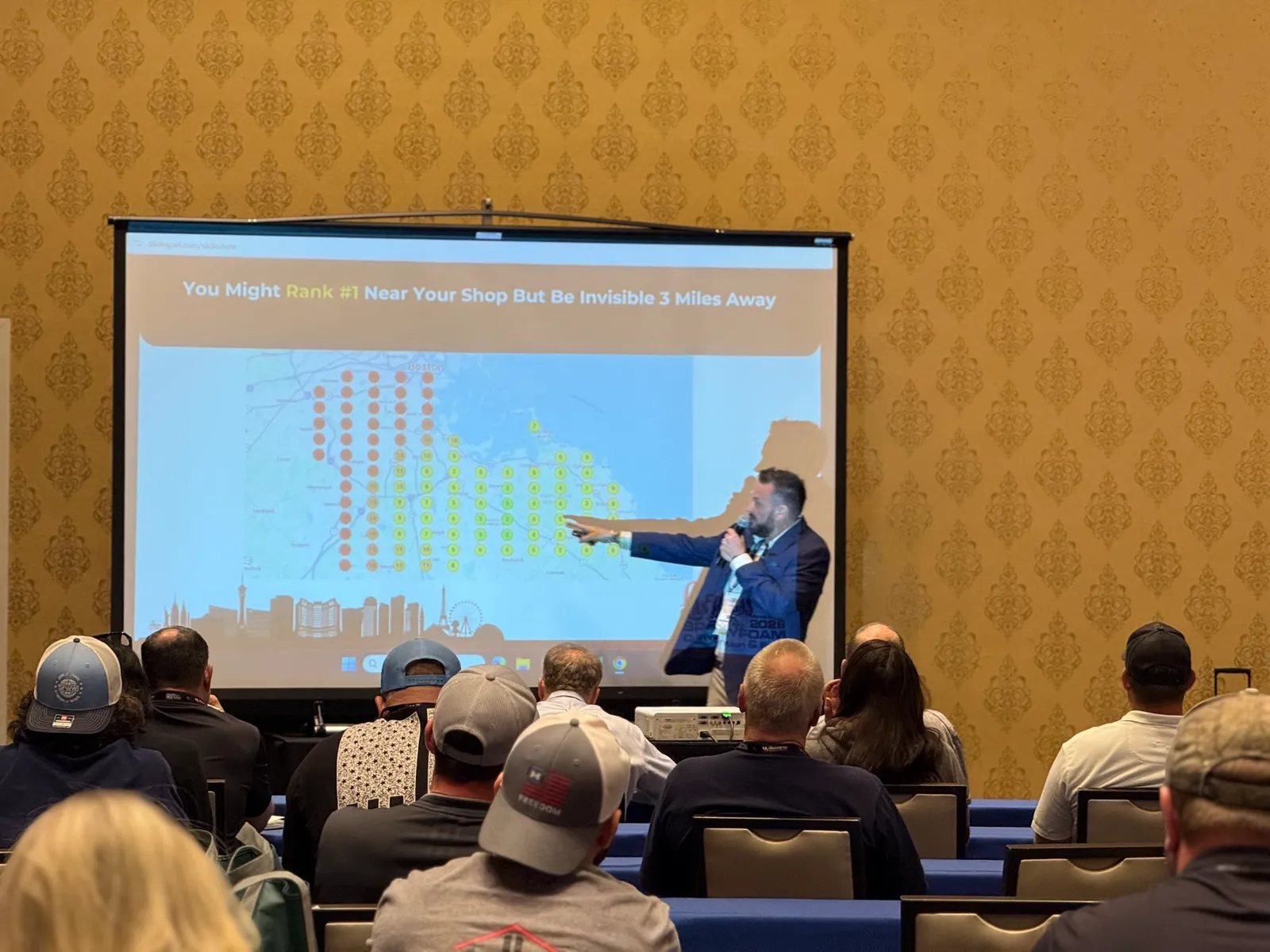
Google also states there is no way to request or pay for a better local ranking. Distance is the part you cannot change, so your effort goes into relevance and prominence. It also means a company a few miles away may legitimately outrank you for a search from their side of town. That is normal, and it is why you should track rankings by area instead of fixating on one spot.
Related reading: Free Ways to Check Where You Rank on Google Maps
Step 1: Get Your Google Business Profile Right
Your Google Business Profile (GBP) is the foundation of everything on Google Maps. The basics:
- Claim and verify the profile, and delete or merge duplicates, including old ones left by a previous owner or employee.
- Use your real business name only. Do not add keywords or city names to it.
- Pick the primary category that best describes your core business. For most insulation contractors that is Insulation Contractor. Add secondary categories only if they are real options that fit.
- Use a physical address that qualifies, not a P.O. box or virtual office, or hide your address and list a realistic service area if you travel to customers.
- Use a local phone number and fill in hours, services, description and website.
- Add real photos of your crew, rig and finished jobs, and post updates now and then so the profile shows you are active.
We cover each of these in detail in our Google Business Profile guide for insulation contractors. If you want it done for you, see our Google Business Profile service.
Step 2: Build a Steady Flow of Reviews

Google says more reviews and positive ratings can help your local ranking, and homeowners read them before they call. A repeatable system works better than occasional pushes:
- Confirm the customer is happy, then ask for a review right after the job.
- Text or email a direct link to your Google review page.
- Train every installer and crew lead to mention it at completion.
- Reply to every review. Thank people and mention the job. Answer negative reviews calmly and offer to fix the problem offline.
Do not offer discounts or gifts in exchange for reviews, and do not ask only happy customers. Google's policy treats incentives as rating manipulation. Customers who mention the service and city in their own words, such as an attic job in your town, help future searchers see that you serve their area. Do not script what they write. For more, see our guide on Google reviews for spray foam businesses.
Step 3: Keep Your Citations and NAP Consistent
A citation is any mention of your business name, address and phone number (NAP) on another site, such as a directory. Your details should match everywhere: your Google profile, website, social pages and directories. Slight differences, such as "ABC Spray Foam LLC" in one place and "ABC Spray Foam" in another, can create confusion and duplicate listings.
Start by searching for your business and noting each listing. Fix the wrong ones, merge duplicates and then add the directories that matter for contractors: major general directories, the Better Business Bureau, any lead-marketplace listings you keep, your local chamber of commerce and the Spray Polyurethane Foam Alliance directory if you qualify. Quality and accuracy beat volume.
Step 4: Make Your Website Support Your Map Listing
Your website and your profile should tell the same story. If your site says nothing about the towns you serve, you give Google and customers less reason to connect you with those places.
Build Real Location Pages
If you serve several cities, create a page for each important one, with content that is actually about that area. A page such as "Spray Foam Insulation in [City]" should be useful to someone who lives there:
- The services you offer in that area and the common problems you see there, such as attic heat, drafty rim joists or damp crawl spaces
- Real photos of jobs you completed nearby
- Reviews or quotes from customers in that area, with their permission
- A clear call to action and your phone number
Do not copy one page and swap the city name. That produces thin, near-duplicate pages that help no one. Link your location pages to your main service pages and your profile to the most relevant page. For the broader approach, read our local SEO guide for spray foam contractors.
Cover the Basics Properly
Clear titles and headings that say what the page is about, a fast site that works well on phones, and a visible click-to-call button all help customers and fit the fundamentals in Google's SEO Starter Guide. LocalBusiness structured data is optional. It can help Google understand your business details, but it does not guarantee a ranking.
Step 5: Earn Local Links and Mentions

Google lists links to your site among the things that can contribute to prominence, so earn them the honest way. Ideas include:
- Sponsoring a local team or event that lists sponsors on its website
- Partnering with local builders, architects, HVAC companies or real estate agents who list their trusted vendors
- Being listed in industry association directories you actually qualify for
- Providing a helpful quote or project story to a local news outlet or community blog
Do not buy links or join link schemes. A few relevant, real links are worth more than a pile of low-quality ones.
Step 6: Track What Is Happening
Ranking changes depending on where the searcher is, so being number one is rarely the whole story. Track these things regularly, at least monthly:
- Calls, direction requests, messages and website clicks from your profile's performance data
- The searches that led people to your profile
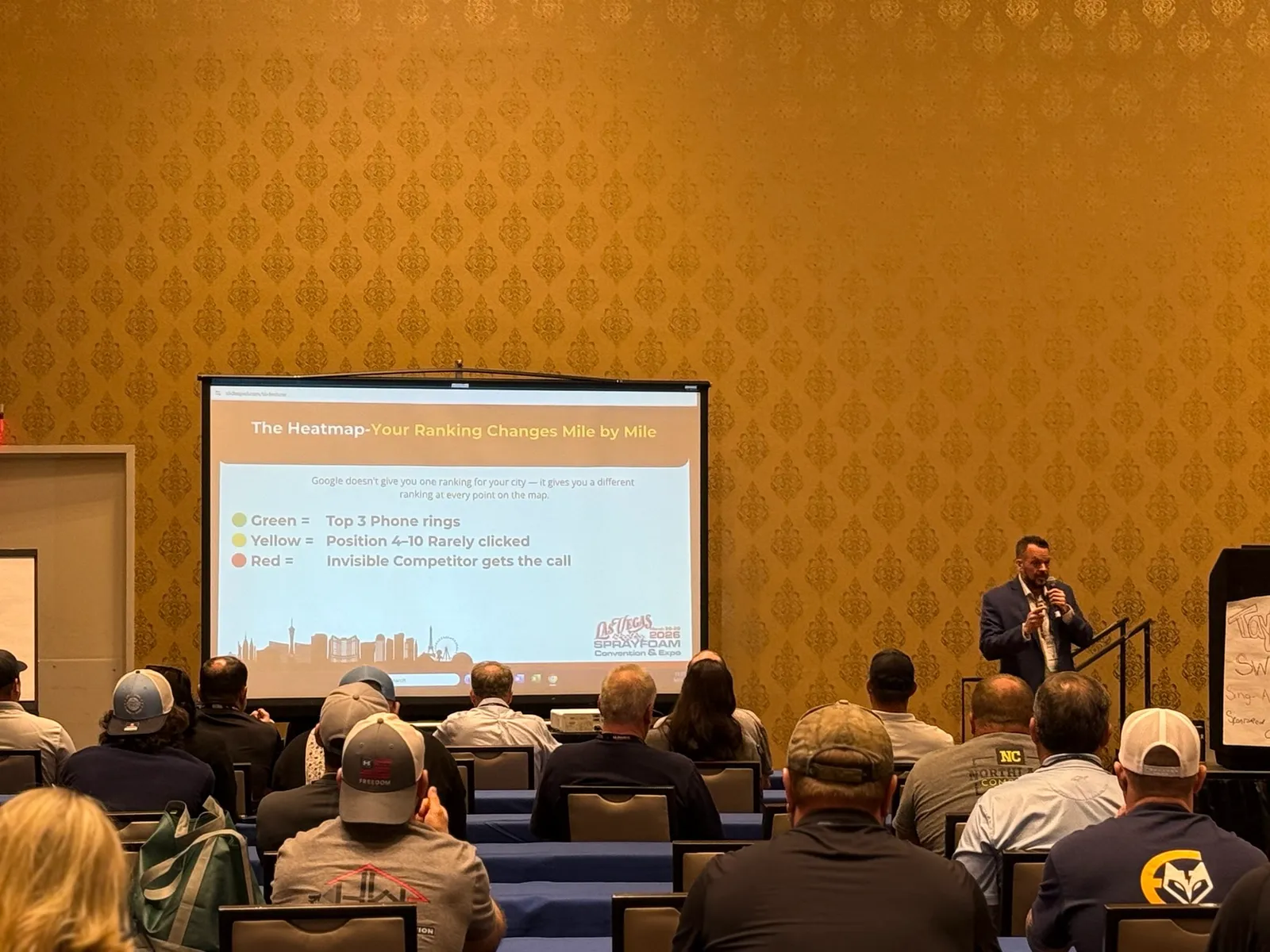
- Rankings across a grid of locations around your base using a local rank tracking tool, so you can see where you show up and where you do not
- Review count, rating and how fast new reviews arrive
- Booked jobs that started from the profile or a tracking number, not just calls
Compare changes to what you did that month. Local search can move slowly, and one week tells you little. Focus on trends in calls and booked jobs, not just map positions.
Common Mistakes That Hold Contractors Back
- A P.O. box, virtual office or fake address on the profile
- Keywords added to the business name
- Duplicate listings left behind by a previous owner, employee or marketing company
- Different names, numbers or addresses across the web
- Ignoring or arguing with negative reviews
- Location pages that are copies with one word changed
- Setting up the profile once and never updating it
If you want to know where your company stands, we offer a free marketing audit. We will look at your profile, reviews and local visibility with you. Call 877-840-3626 or email info@sprayfoamgeniusmarketing.com.
Frequently Asked Questions
How long does it take to rank on Google Maps?
It depends on how complete your profile is, how much competition you face and how many reviews you already have. Nobody can promise a timeline or a position. Fix the basics first, then keep up the review and content routine, and watch your calls over time.
Does your website need to rank on Google to appear in the map results?
Not necessarily. The local results draw heavily on your Google Business Profile, but your website still matters. It supports relevance and gives customers somewhere to learn more and contact you.
How many reviews do you need to appear in the local pack?
There is no fixed number. Look at the businesses you are competing with in your area, and aim to match or beat them on both rating and recent activity while keeping every review genuine.
Can you put keywords in your Google Business Profile name?
No. Google does not allow unnecessary information such as keywords in the business name, and doing so can get the profile suspended. Use your real business name and put service details in the services and description sections.
Can you rank in a city where you have no office?
It is harder. Distance is a core factor, and Google only allows a separate profile where you have a real, staffed location. You can list the areas you serve on your existing profile and build useful location pages and local reviews, but there is no guarantee of results.
Do Google Business Profile posts improve rankings?
Google does not say that posts directly affect ranking. They are still worth doing because they keep information fresh for customers, show recent work and give people a reason to call.
What should you do about a fake negative review?
Flag it to Google for removal, and reply calmly and professionally, stating that you have no record of the customer. Future customers will see how you handled it.
Further Reading
Official guidance from Google: