Direct Answer
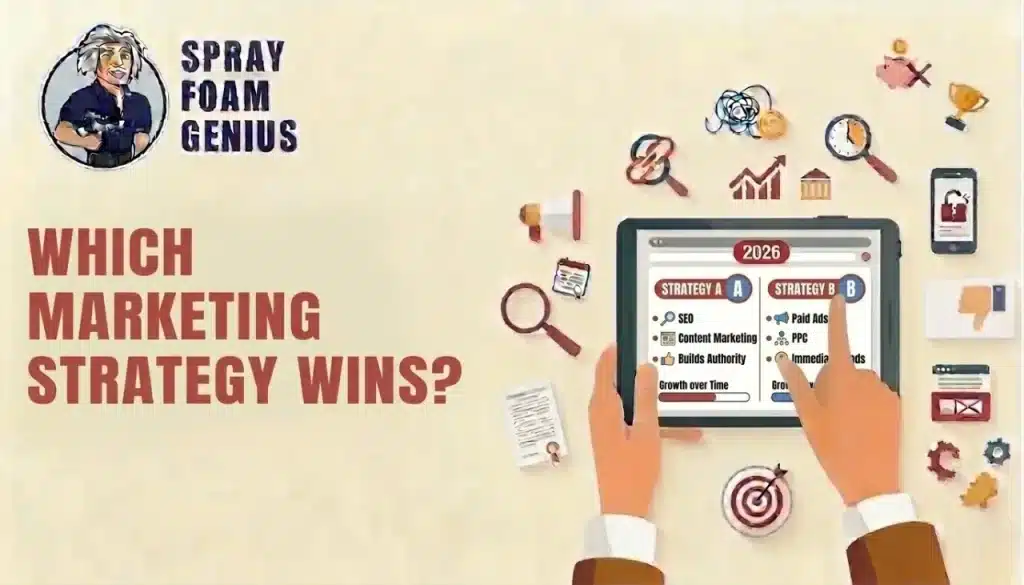
For insulation companies, They Ask You Answer (TAYA) often produces stronger long-term revenue growth than traditional marketing because it focuses on educating buyers, building trust, and capturing high-intent search traffic before competitors.
Traditional marketing, such as print ads, radio, trade shows, and outbound sales, works mainly by interrupting potential customers. It can generate short-term brand visibility, but it rarely builds compounding digital assets that continue generating leads over time.
They Ask You Answer, a strategy popularized by the book They Ask, You Answer by Marcus Sheridan, focuses on answering the exact questions customers search online. Through SEO driven content, pricing transparency, and educational videos, insulation contractors can own search visibility and attract buyers already researching insulation solutions.
The biggest difference comes down to ownership and scalability. Traditional marketing requires continuous spending for exposure. TAYA builds owned assets such as articles, videos, and guides that continue generating leads long after they are published.
For insulation companies seeking predictable inbound leads and lower long-term acquisition costs, They Ask You Answer typically outperforms traditional marketing. However, traditional marketing can still support brand awareness and local visibility, especially in competitive regional markets.
For insulation contractors looking to build predictable inbound leads using education-based marketing strategies like TAYA, see this marketing guide for spray foam contractors.
TLDR
- Traditional marketing leads often cost between $200 and $900 per lead, while inbound content strategies can drop below $50 to $150 per lead over time.
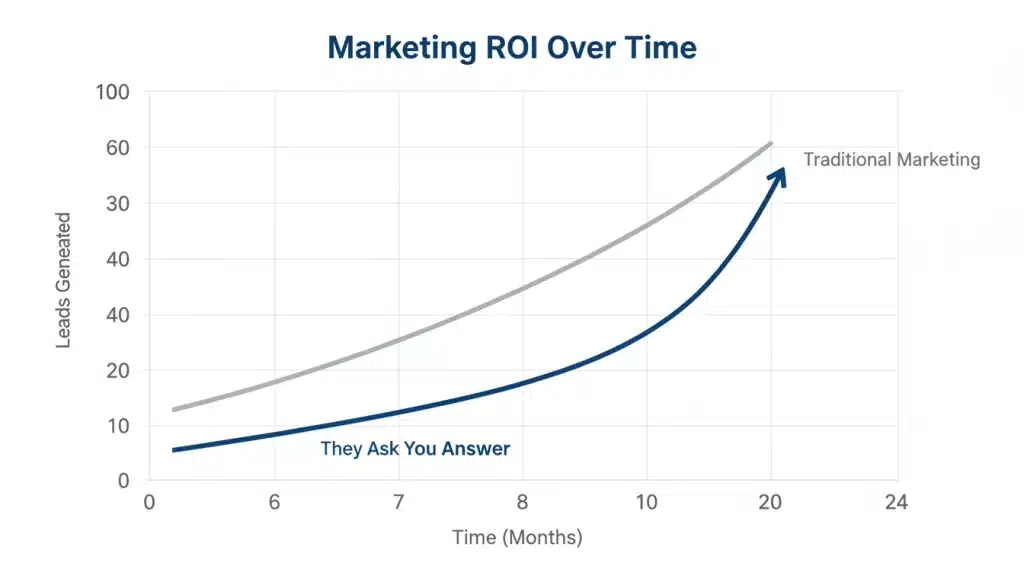
- Traditional marketing can generate leads quickly, while TAYA typically takes 3 to 6 months to build meaningful traffic.
- TAYA builds owned digital assets such as blog content and search rankings, while traditional marketing rents attention.
- Traditional campaigns stop working when spending stops, while SEO content can generate leads for years.
- Educational content builds stronger buyer trust before the first sales conversation.
- Traditional marketing works best for quick visibility, while TAYA works best for long-term, predictable lead generation.
- Companies using TAYA frequently become local authority brands in their market.
Understanding the Two Marketing Approaches
What Is the They Ask You Answer Strategy
They Ask You Answer is an inbound marketing framework focused on answering customer questions openly and transparently online.
The strategy centres around content that addresses topics such as:
- Pricing questions
- Product comparisons
- Installation processes
- Energy savings
- Common insulation problems
For insulation companies, this often means publishing content such as:
- “How Much Does Spray Foam Insulation Cost?”
- “Fiberglass vs Spray Foam: Which Is Better?”
- “Is Spray Foam Safe for Homes?”
When homeowners search for these answers, the contractor’s website appears in search results and captures high-intent traffic.
According to research from HubSpot, companies prioritizing blogging and inbound strategies generate 67 percent more leads than those relying mainly on outbound marketing.
What Is Traditional Marketing for Insulation Companies
Traditional marketing includes offline or interruption-based promotion channels such as:
- Radio advertising
- Billboards
- Direct mail campaigns
- Trade show booths
- Newspaper ads
- Cold outreach
These channels aim to create awareness, but they often reach audiences before they are actively researching insulation services.
Because the audience may not be ready to buy, conversion rates are typically lower.
Side-by-Side Comparison
| Factor | They Ask You Answer | Front-loaded content investment |
| Lead Source | Organic search traffic | Paid exposure |
| Cost Structure | High-throughput educational content | Continuous ad spend |
| Lead Quality | High intent | Mixed intent |
| Scalability | Compounds over time | Limited without budget |
| Trust Building | High through educational content | Low to medium |
| Time to Results | 3 to 6 months | Immediate visibility |
| Ownership | Owned digital assets | Rented media space |
Cost Comparison for Insulation Companies
Understanding marketing economics is important when deciding between strategies.
| Marketing Channel | Typical Monthly Cost | Estimated Leads |
| Local radio ads | $2,000 to $8,000 | 10 to 30 |
| Direct mail campaigns | $1,500 to $6,000 | 10 to 25 |
| Trade shows | $5,000 to $20,000 | 20 to 60 |
| SEO content strategy | $3,000 to $8,000 | 30 to 120 after growth |
Over time, inbound strategies often deliver a lower cost per lead because traffic continues arriving without additional advertising spend.
Real World Scenario: Two Insulation Companies
Company A: Traditional Marketing
Strategy
- $5,000 per month on radio ads
- $2,000 per month on direct mail
- Occasional home shows
Results
- 30 leads per month
- Cost per lead is about $233
- Leads stop immediately if advertising stops
Company B: They Ask You Answer Strategy
Strategy
- $4,500 per month on SEO content and video
- Three articles per week answering insulation questions
Results after eight months
- 80 organic leads per month
- Cost per lead is about $56
- Leads continue growing without proportional cost increases
Why TAYA Works Especially Well for Insulation Companies
Insulation projects involve significant homeowner research before a decision is made.
Before hiring a contractor, customers commonly ask questions such as:
- How much does insulation cost
- Which type of insulation is best for my home
- Is spray foam worth the investment
By publishing transparent answers, insulation companies become a trusted authority before the sales conversation even begins.
Research from Google Consumer Insights shows that more than 80 percent of home service buyers research online before contacting a contractor.
This means the contractor who answers those questions first often earns the project.
When Traditional Marketing Still Makes Sense
Traditional marketing still has value in certain situations.
Situations where it works well include:
- Launching a new insulation company
- Expanding into new geographic areas
- Supporting seasonal promotions
- Building local brand awareness
For example, a billboard campaign during winter insulation season may create strong short-term call volume.
However, relying only on this strategy usually requires continuous spending to maintain lead flow.
The Ideal Strategy: Hybrid Marketing
Many successful insulation companies combine both strategies.
Example hybrid strategy
| Marketing Layer | Purpose |
| SEO content | Capture search traffic |
| Educational videos | Build trust |
| Paid ads | Accelerate lead generation |
| Local sponsorships | Build brand awareness |
This approach balances immediate lead generation with long-term digital authority.
Grow Your Insulation Business with Smarter Marketing
Stop Renting Attention. Start Owning Your Leads
If you are ready to build a predictable pipeline of insulation leads, the right marketing strategy makes a significant difference.
Spray Foam Genius Marketing helps insulation contractors dominate search results, generate qualified leads, and grow revenue using proven inbound marketing strategies.
USA: 877‑840‑FOAM
Canada: 844‑741‑FOAM
[email protected]
Build the marketing system your insulation company can rely on for years instead of relying only on the next advertising campaign.
FAQs
Is They Ask You Answer only for large companies?
No. Many small insulation contractors succeed with this strategy because answering common customer questions requires expertise rather than a large marketing budget.
How long does SEO content take to generate leads?
Most insulation companies begin seeing measurable traffic within three to six months, with stronger lead generation typically appearing between six and twelve months.
Do insulation companies still need paid ads?
Paid ads can accelerate lead generation, especially while SEO content is still building authority and search rankings.
What type of content works best for insulation marketing?
High-performing content typically includes pricing guides, product comparisons, installation explanations, and energy savings discussions.
Can traditional marketing hurt ROI?
Not necessarily, but relying only on traditional marketing often results in higher lead costs and limited scalability compared to inbound strategies.
Sources
HubSpot Marketing Statistics
https://www.hubspot.com/marketing-statistics
Google Consumer Insights
https://www.thinkwithgoogle.com/consumer-insights/
They Ask, You Answer by Marcus Sheridan
https://www.amazon.com/They-Ask-You-Answer-Revolutionary/dp/1119610141

Spencer is a Google ranking expert and SEO consultant who has helped businesses in the spray foam marketing industry achieve their online marketing goals. Spray Foam Genius Marketing has a proven track record of success, having achieved some impressive results for his clients.
- The Future of Search for Insulation Contractors Goes Beyond Google Rankings - September 30, 2026
- AI Search Is Changing How Homeowners Find Insulation Contractors - September 30, 2026
- Finding Affordable SEO Services for Your Insulation Business Growth - September 16, 2026