
Direct Answer
The real problem in insulation marketing isn’t the quality of the product; it’s visibility and customer perception. Many insulation companies assume that word-of-mouth or referrals alone will drive growth, but the top 10% understand that consistent, strategic marketing creates trust and demand. This article explores the hidden factors that distinguish high-performing insulation businesses from average performers and provides actionable insights to elevate marketing efforts (Small Business Administration, Harvard Business Review).
TLDR
- Companies investing 20–30% of their revenue in multi-channel marketing generate 3–4x more leads annually than those relying solely on referrals (Small Business Administration, Think with Google).
- Paid ads, particularly local Google Ads and Facebook campaigns, account for roughly 40–50% of lead generation for top performers (WordStream, HubSpot).
- Strong online visibility, including high-quality website content and local SEO, influences 60% of homeowners’ decision-making before contacting a contractor (Moz, National Association of Realtors).
- Top insulation companies actively nurture leads through email campaigns and retargeting ads, increasing conversion rates by 15–25% (HubSpot, MarketingProfs).
- Clear branding and consistent messaging improve recognition and referral rates, especially in competitive markets (Harvard Business Review).
- Data-driven customer segmentation allows high performers to target high-value prospects effectively, reducing wasted marketing spend (Think with Google, HubSpot).
- Reputation management and online reviews can increase inbound inquiries by up to 20%, signaling trustworthiness to new customers (HomeAdvisor, Houzz).
The Real Problem Most Insulation Companies Don’t See
Customers rarely shop for insulation with the same mindset companies assume. Most searches are problem-driven rather than product-driven. Real-world examples include:
- “Best spray foam insulation near me”
- “Reduce energy bills with home insulation”
- “Attic insulation cost 2026”
Customers often engage in multiple touchpoints before contacting a contractor, including reading online reviews, checking local business listings, and comparing competitors. Many insulation companies underestimate this multi-step decision process, focusing on cold calls or traditional advertising alone, leaving a gap between their perception and actual customer behavior (National Association of Realtors, Energy Star).
To better understand how insulation contractors can align marketing with real customer behavior, explore this spray foam marketing guide overview.
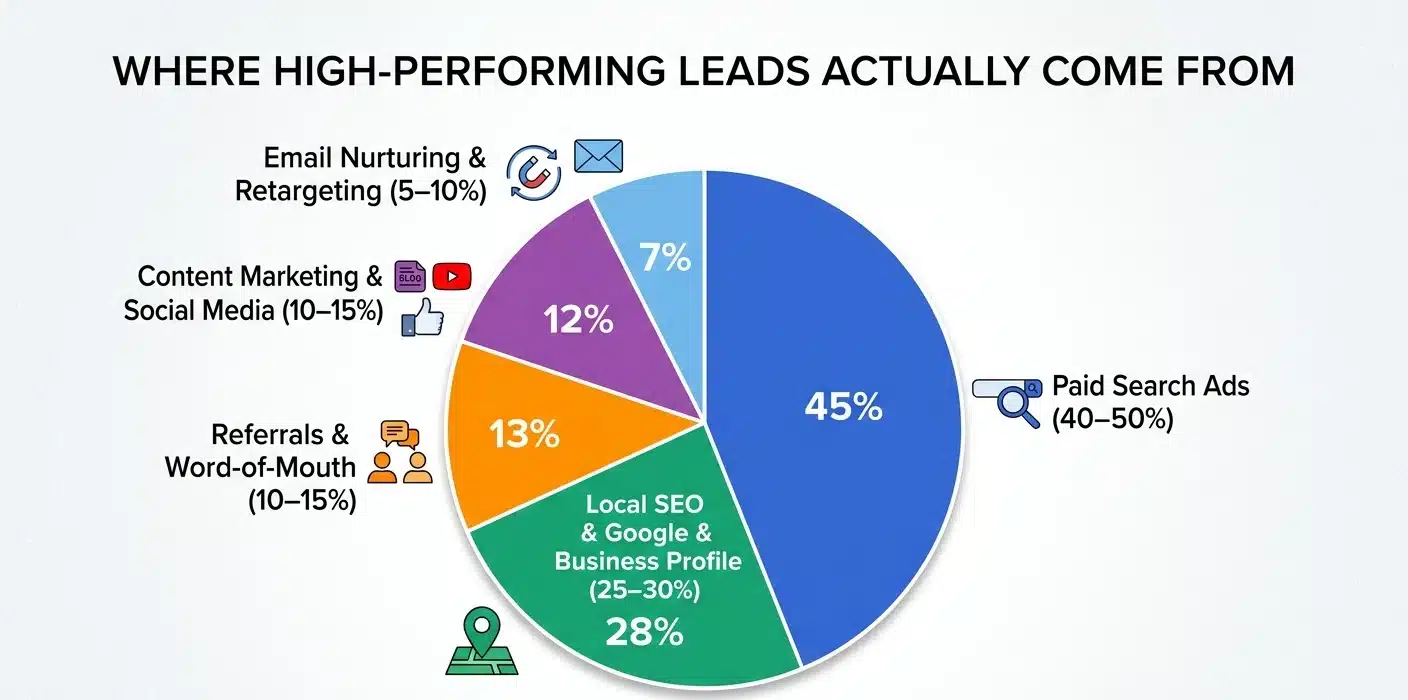
Where High-Performing Leads Actually Come From
- Paid Search Ads (40–50%): Google Ads and Bing campaigns target homeowners actively seeking insulation solutions (Think with Google, WordStream).
- Local SEO & Google Business Profile (25–30%): Optimized local listings improve visibility in high-intent searches (Moz, HubSpot).
- Referrals & Word-of-Mouth (10–15%): Still valuable, especially in neighborhoods with older homes (HomeAdvisor).
- Content Marketing & Social Media (10–15%): Educational blogs, YouTube videos, and posts build authority and trust (MarketingProfs).
- Email Nurturing & Retargeting (5–10%): Re-engages previous website visitors or inquiries (HubSpot, Think with Google).
Top Reasons Insulation Companies Struggle to Get Leads
1. Over-reliance on Referrals
- Assumes satisfied customers will generate all leads.
- Neglects digital channels where 70% of prospects begin research (National Association of Realtors).
2. Poor Online Presence
- Outdated websites and low-quality content fail to capture search traffic (Moz, HubSpot).
- Missing local SEO elements like Google Business updates or local citations.
3. Inconsistent Messaging
- Confusing branding or an unclear value proposition reduces trust (Harvard Business Review).
- Competitors with consistent messaging dominate mindshare.
4. Ignoring Paid Marketing
- Hesitation to invest in Google or Facebook ads results in missed immediate opportunities (Think with Google, WordStream).
5. No Lead Nurturing
- One-time contact attempts result in low conversion rates (HubSpot, MarketingProfs).
- Top companies implement automated follow-ups to stay top-of-mind.
6. Failure to Track Data
- Lack of analytics prevents understanding of which channels generate the highest ROI (Small Business Administration, HubSpot).
7. Neglecting Reviews & Reputation
- Negative or absent online reviews reduce credibility, especially among new homeowners (Houzz, HomeAdvisor).
What Successful Insulation Companies Are Doing Differently
Step-by-Step Process
- Awareness (Traffic): Paid ads, SEO, and social media strategy content drive visitors to the website (Think with Google).
- Interest (Leads): Clear CTA, lead forms, downloadable guides, and live chat capture information (HubSpot).
- Consideration (Nurturing): Email drip campaigns, follow-up calls, and retargeting ads build trust (MarketingProfs).
- Decision (Conversion): Personalized proposals, competitive pricing, and testimonials close the sale (HomeAdvisor).
- Retention & Advocacy: Post-project follow-ups encourage referrals and repeat business (Houzz).
Comparison (Short-Term vs Long-Term Strategies)
Short-Term (Paid Ads)
- Pros: Immediate leads, measurable ROI, targeted reach (Think with Google).
- Cons: Requires ongoing investment, stops producing leads if paused.
Long-Term (SEO & Content)
- Pros: Sustainable, compounding results, builds authority (Moz).
- Cons: Slower to show results, requires consistent effort.
Who Struggles Most vs Who Wins
Underperformers
- Rely solely on word-of-mouth.
- Ignore digital marketing and SEO.
- Have inconsistent branding.
High Performers
- Invest consistently in multi-channel marketing (Small Business Administration).
- Track data and optimize campaigns (HubSpot).
- Maintain a strong online presence and reputation (Houzz).
- Nurture leads effectively (MarketingProfs).
Biggest Misconception
Misconception: “Insulation sells itself through referrals.”
Correct Approach: Customers research online first; marketing is critical for visibility and trust. Treat every marketing touchpoint as an opportunity to educate, build authority, and guide decision-making (Harvard Business Review).
Real Question Contractors Should Ask
Instead of asking, “How can I get more leads?” contractors should ask: “How can I create consistent visibility and authority that attracts high-intent homeowners?” (Think with Google).
Elevate Your Insulation Business Today
High-performing insulation companies don’t leave growth to chance. Strategic marketing ensures visibility, authority, and consistent leads. Transform your business with expert guidance.
Contact Spray Foam Genius MarketingUSA: 877-840-FOAMCA: 844-741-FOAMEmail: info@sprayfoamgeniusmarketing.com
Empower your insulation business with marketing that converts. Trust Spray Foam Genius Marketing to guide the way.
FAQs
What is the most effective marketing channel for insulation companies?
Google Ads and local SEO are the most effective, generating 40–50% of high-intent leads (Think with Google,WordStream).
How important are online reviews for insulation contractors?
Extremely important; businesses with 4.5+ star ratings see up to 20% more inbound inquiries (HomeAdvisor, Houzz).
How much should insulation companies invest in marketing?
Top performers allocate 20–30% of revenue to marketing for maximum reach and lead generation (Small Business Administration, Think with Google).
What role does content marketing play?
Content marketing builds authority, educates homeowners, and influences 10–15% of leads through blogs, videos, and social posts (MarketingProfs).
Should insulation companies focus on short-term or long-term marketing?
A combination works best: paid ads generate immediate leads, while SEO and content provide sustainable growth (Moz, Think with Google).
Sources:
Small Business Administration – https://www.sba.govHarvard Business Review – https://hbr.orgThink with Google – https://www.thinkwithgoogle.comNational Association of Realtors – https://www.nar.realtorWordStream – https://www.wordstream.comHubSpot – https://www.hubspot.comMoz – https://moz.comMarketingProfs – https://www.marketingprofs.comHomeAdvisor – https://www.homeadvisor.comHouzz – https://www.houzz.comEnergy Star – https://www.energystar.gov