
Google Ads usually bring spray foam leads that are closer to buying, because the homeowner typed in a search and is looking for someone now. Facebook Ads usually bring more leads for the money, but many of those people were not shopping yet, so more of them need follow-up before they book. The better channel is the one that gives you the lowest cost per sold job in your market, and you only find that out by tracking both all the way to the signed contract.
Why the same budget buys two different kinds of lead
The difference starts with what the homeowner was doing when they saw your ad.
On Google, they were searching. Someone who types "spray foam insulation near me" or "attic insulation contractor" already has a problem and is ready to talk to someone about it. Your ad shows up at the moment they are looking. If you want the full picture of how search ads are priced, our post on Google Ads cost for insulation contractors walks through it.
On Facebook and Instagram, they were scrolling. They were not looking for an insulation contractor. Your ad has to stop them, remind them of a problem they already feel (a hot upstairs, a high power bill, a cold floor), and get them to raise a hand. Some of those people are ready. Many are curious and a few months away. We cover how those ads are built on our Facebook Ads page.
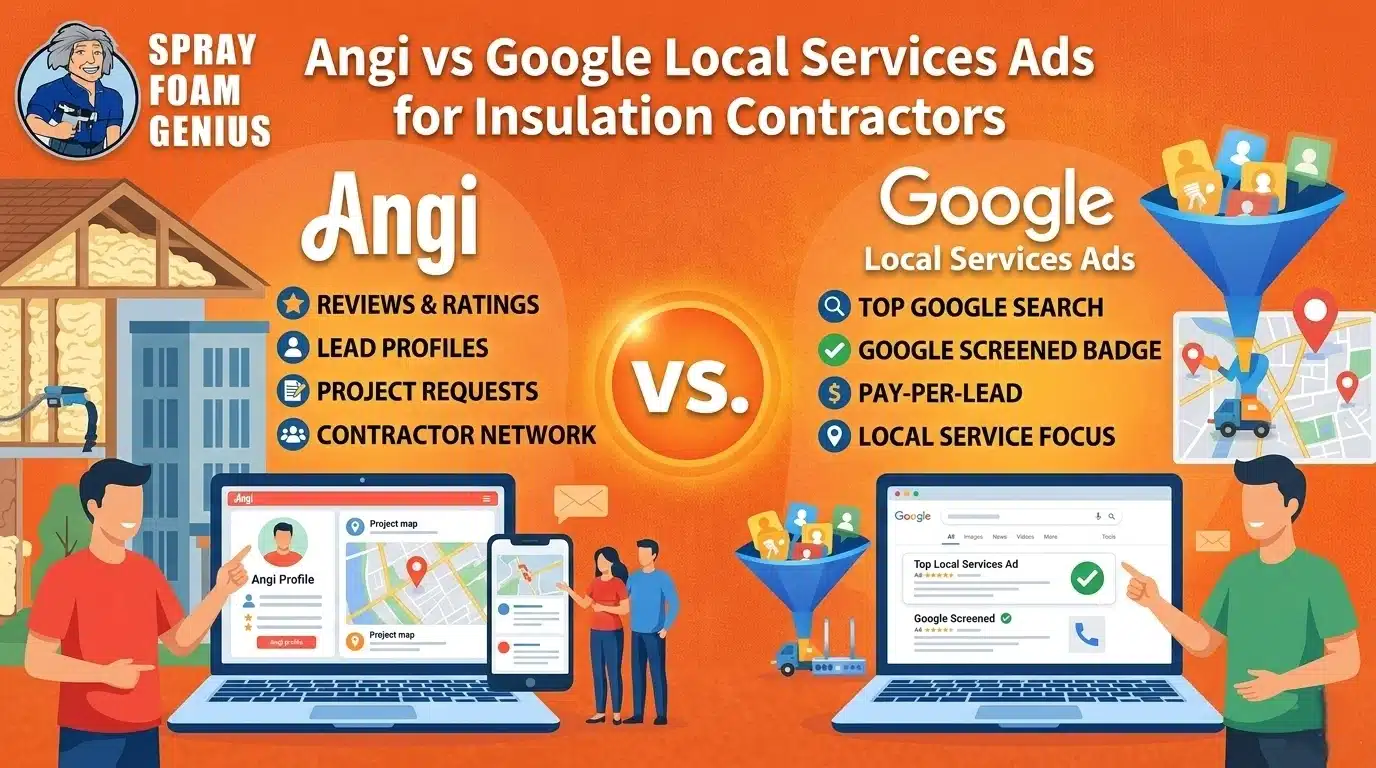
Related reading: Angi, HomeAdvisor and Google Local Services Ads for Insulation Contractors: What Is Worth It?
What contractors usually notice first
When owners run both, a few patterns keep coming up on our calls:
- Facebook produces more form fills, and each one looks cheaper.
- A bigger share of Facebook leads do not pick up, give a wrong number, or say they were "just looking."
- Google leads are fewer, and each one costs more, but more of them turn into estimates.
- Facebook leads often take longer to close, and some come back weeks later.
None of that makes Facebook bad. It just needs to be judged differently.
The number that settles it: cost per sold job
Cost per lead is the number most likely to fool you. Compare the channels this way:
- 1. Ad spend for the month, per channel.
- 2. Leads, per channel.
- 3. Leads you actually reached, per channel.
- 4. Estimates or inspections booked, per channel.
- 5. Jobs sold and revenue, per channel.
Divide spend by jobs sold to get cost per sold job. A channel with cheap leads and a low close rate can cost more per job than a channel with pricey leads and a high close rate. The reverse can also be true, which is why you track it instead of guessing.
To do this you need each lead tagged by where it came from. Our guide to tracking marketing ROI for spray foam contractors shows how to set that up, and our list of marketing KPIs to track monthly covers what to watch.
Spray foam jobs can close weeks after first contact, so give it time. We always recommend testing a channel for at least 60 to 90 days before deciding whether it is working.
Facebook leads need a different follow-up
A Google lead often expects your call. A Facebook lead may have forgotten the form an hour later.
What helps with Facebook leads:
- Call fast, while they still remember the ad.
- Send a text right away that names the ad or offer they responded to.
- Plan on several tries by call and text, and check back in a few weeks with leads who are not ready yet.
If your crew or office cannot keep up with that, Facebook will look worse than it really is. Our post on why insulation leads are not turning into jobs goes deeper on speed and qualifying.
When Google Ads is the better first choice
Start with Google if:
- You want calls from people who need the work done soon.
- Your office can answer the phone during the day.
- You serve a market where people search for spray foam or insulation by name.
When Facebook Ads earns its place
Facebook makes sense when:
- Search volume in your area is small, so Google alone cannot fill the calendar.
- You have strong before and after photos or short job videos.
- You have someone who will follow up quickly and more than once.
- You want to stay in front of homeowners who visited your site and did not call.
It can also help in slow seasons; see our year-round marketing plan.
Why many contractors end up running both
For many spray foam companies the answer is both. Google catches people who are searching right now. Facebook reaches the people who will be searching later and keeps your name in front of them.
If you are not sure where your budget should go, a free Market Visibility Audit shows how you show up in your market today.
What it costs
Ad spend for both channels is paid straight to Google or Meta and is separate from any management fee. How we price management, and how plans change by market size and competition, is laid out on our pricing page. If you want to sanity-check a budget, the break-even calculator shows how many extra jobs a month it takes to cover it.
FAQs
Are Facebook leads lower quality than Google leads?
Not always, but they tend to be earlier in the buying process. More of them need follow-up before they book. Judge them by cost per sold job, not cost per lead.
Which is cheaper, Facebook Ads or Google Ads?
Facebook usually costs less per lead. Google often costs less per sold job, but that depends on your market and your follow-up. Track both to know. For management pricing, see our pricing page.
How long should I test a channel before deciding?
We recommend at least 60 to 90 days. That gives leads enough time to turn into estimates and sold jobs, so you are judging the channel on real results and not on a few weeks of form fills.
Should I use Facebook lead forms or send people to my website?
Both can work. We explain the tradeoff on our Facebook Ads page.
Do I need SEO if I am running ads?
Ads stop when you stop paying. SEO and Google Maps build leads that keep coming. See SEO vs Google Ads for insulation contractors.
Not sure which channel fits your market?
Book a call with us and we will look at your market, your budget and how you handle leads today, then tell you honestly where we would start. We work month to month, so there is no long-term contract to sign.